

1931 Stinson Junior S
Built by Stinson, powered by Lycoming, and first flown by Century Air Lines — three companies owned by one man, E.L. Cord — this Junior carried passengers at the very birth of what became American Airlines.
Built by Stinson, powered by Lycoming, and first flown by Century Air Lines — three companies owned by one man, E.L. Cord.
Built by Stinson, powered by Lycoming, and first flown by Century Air Lines — three companies owned by one man, E.L. Cord.
An Airplane I Looked For in All the Right Places
This was a challenging airplane to acquire, and I mean that as the highest compliment. I found it on an off-the-beaten-track private airstrip in the gold-rush country near Ione, California, sitting in a hangar that, for an antique aviation enthusiast like me, was a literal treasure trove. Picture American Pickers meets a brand-new museum curator and you'll have the right idea. The Stinson had been for sale for quite a while, and I think the owners had grown a little weary of tire-kickers. I kick the tires too, of course — but I also crawl all over an airplane, and when I did, I found that even though this one hadn't flown in seventeen years, it was in remarkably good condition.
I was drawn to it as an airplane. But the draw was made stronger by the chance to work with owners unlike any I'd met before. It took a year and a half to reach an agreement with David and Greg Baumbach, and every bit of that process was a pleasure. They have an amazing collection of rare airplanes and a deep love and appreciation for antique aviation, and getting to know them was as much a part of this acquisition as the airplane itself.
Built, Powered, and Flown by One Man's Empire
What drew me to this Stinson in the first place was its history — and the history runs through one of the most colorful industrialists of the Jazz Age, Errett Lobban Cord.
By 1931, Cord had assembled an integrated transportation empire, and this one airplane sat squarely inside it. Stinson Aircraft, which built it in Wayne, Michigan, was a Cord company. Lycoming, which built the 215-horsepower radial bolted to its nose, was a Cord company. And the airline that first put it to work — Century Air Lines — was a Cord company too. This Junior was manufactured, powered, and operated entirely by entities under one roof. There aren't many airplanes you can say that about, and to me that made it irresistible.
At the Birth of an Airline
Cord founded Century Air Lines in January 1931 as an ambitious low-fare passenger carrier out of Chicago's Municipal Airport — today's Midway. Century held no airmail contracts and survived on passenger revenue alone, which was almost unheard of in that era, and Cord placed what newspapers called the largest commercial airplane order ever received by a manufacturer: roughly a hundred Stinsons and spare engines. Our Junior, Serial 8039, came into the fleet as a utility and executive ship alongside the big trimotors.
Then the airplane found itself at one of the hinge points of American aviation. Financial pressure led Cord to propose deep pilot pay cuts, which set off the famous Century Airlines Pilots' Strike of 1932 — one of the earliest labor actions in commercial aviation and a milestone in the history of the Air Line Pilots Association. Under public and political pressure, Cord relented, and on April 2, 1932 he sold Century to the Aviation Corporation of Delaware, the parent of American Airways. This very airplane was formally transferred into American Airways on November 4, 1932 — and within little more than a year, American Airways became American Airlines.
That is the story this airplane helps tell. It is a physical link between an automobile-and-engine empire, a scrappy low-fare airline, a landmark pilots' strike, and the founding of one of the great airlines of the world. You can stand next to it in the hangar and trace the whole airmail-and-airline industry through a single cabin monoplane.
Three on the Certificate, Five on the License, Four in the Cabin
The Junior began life as the smaller sibling of something bigger. In 1927 Stinson built the six-place SM-1 Detroiter, a roomy cabin airliner that sold well to the airlines but was simply too big and too costly to appeal to private owners. So Stinson shrank it — shorter wings, a shorter fuselage, lighter engines — and called the result the Junior, sometimes the “Detroiter Junior.” That family resemblance still fools people. I once spent a good while with a seller who was certain his Junior was a Detroiter, and the data plate even said so, but a Detroiter Junior is not a Detroiter — the big airplane is the rarer and more valuable one, and the distinction matters.
The two were never the same airplane and never shared a type certificate; the Detroiter is ATC #16, and the Junior carried its own. And yet the paperwork on Serial 8039 holds a wonderful little contradiction. The Approved Type Certificate for the Junior, ATC 423, describes it in the shorthand of the day as “3PCLM” — a three-place cabin landplane monoplane, meaning three passengers and a pilot. But the airplane's original 1931 Department of Commerce license application lists a seating capacity, exclusive of pilot and crew, of five.
These were fluid, fast-moving days in American aviation, and it is tempting to imagine how that “5” found its way onto the form. Century Air Lines was a hard-charging, low-fare operation that would have wanted every seat it could wring out of a utility airplane. Stinson, its sister company under Cord, had no reason to crowd the bigger Detroiter's market by advertising a five-place Junior. And with a boss like E.L. Cord — impatient, hard-driving, always in a hurry — it is easy to picture someone simply writing “5” on the application on the theory that if the government stamped it, that was blessing enough. We can't know that it happened that way. But the application was approved, and the number still sits in the file today.
For our purposes we call it what Joseph Juptner called it in his definitive U.S. Civil Aircraft, and what the FAA calls it today: a four-place airplane — pilot and three — and that is how it will fly at Mustang Field. But I love that the old license application still whispers “five,” a small reminder that in 1931 the rules of American aviation were still being written, sometimes one application at a time.
The Long Road West
After its airline years the Stinson did what so many golden-age airplanes did — it went west and passed through a long line of caretakers. It flew for a private owner out of the Chicago suburbs and northern Indiana, then to Elmer Browne at Henry Ford's airport in Lansing, Illinois, and onward through more than twenty documented owners across the decades.
Two of them matter especially. In 2006 it came into the hands of William “Bud” Field, one of the most influential figures in Northern California's antique aircraft world — a man who at his peak owned seventeen airplanes at once, helped found EAA Antique/Classic Chapter 29, and mentored Walt Bowe of the Ala Doble Flying Collection, today among the finest Golden Age collections anywhere. From Field's estate the airplane went in 2012 to Frederick W. Patterson III, a renowned collector of Golden Age aircraft and engines in the California wine country. It is good company for an airplane to keep, and every one of those hands is part of why Serial 8039 survives in the condition it does.
Getting It Home
Wanting the airplane and getting it home safely are two different problems, and this one was a puzzle. The airplane sat on a remote strip, and the obvious answer — take it apart and truck it — is a tall order with a cabin Stinson this size and a location that far off the map.
That's where my friend Jimmy Rollison came in. Jimmy and I first met over a Waco. I tried for a couple of years to buy that airplane from its owner and never could, and in the end Jimmy got it — which, instead of making us competitors, made us friends. The first time I visited his hangar it was to see that Waco, and we spent a couple of hours bonding over it. As it happens, Jimmy had flown this very Stinson into the strip seventeen years earlier and knew the airplane well. He offered to fly it out to his hangar at Yolo, California, give it a thorough annual, and then bring it on to the museum. The chance to work with Jimmy was too good to pass up — and the excuse to go back out to the Baumbachs' strip and spend more time with them and their collection was almost as exciting to me as retrieving the airplane.
It will fly again, the way everything in this Collection flies. And when it does, it will carry a century of American aviation history with it.
Related Aircraft in the Collection
By the early 1930s, America's business travelers were looking for a way to get somewhere faster than the train could carry them — and they found it twice over: in the airline ticket and in the personally owned cabin airplane. Three other airplanes in the Collection tell that story alongside this Stinson.
- 1928 Stearman C3MB — an open-cockpit mail plane that also carried passengers for National Parks Airways. When the air-mail reorganization of 1934 forced much of the industry to remove the executives tied to the old aviation holding companies, National Parks Airways and American Airways — the airline that flew this Stinson — were among the carriers that carried on under their existing management.
- 1934 Fairchild 24 C8A — Fairchild, like Stinson, was turning to smaller, more affordable cabin airplanes just as the big airline orders were drying up.
- 1936 Waco YKS-6 — a standard-cabin Waco from the years when Waco was building comfortable executive transportation for the owner who flew himself.
Provenance documented from the FAA Civil Aviation Registry registration file (206 pp.) and airworthiness file (21 pp.); full report on file with The Caldwell Collection.
“An airplane I looked for in all the right places.”
A computer rendering made from reference photos, not footage of the airplane
Drawn from reference photos
From every angle
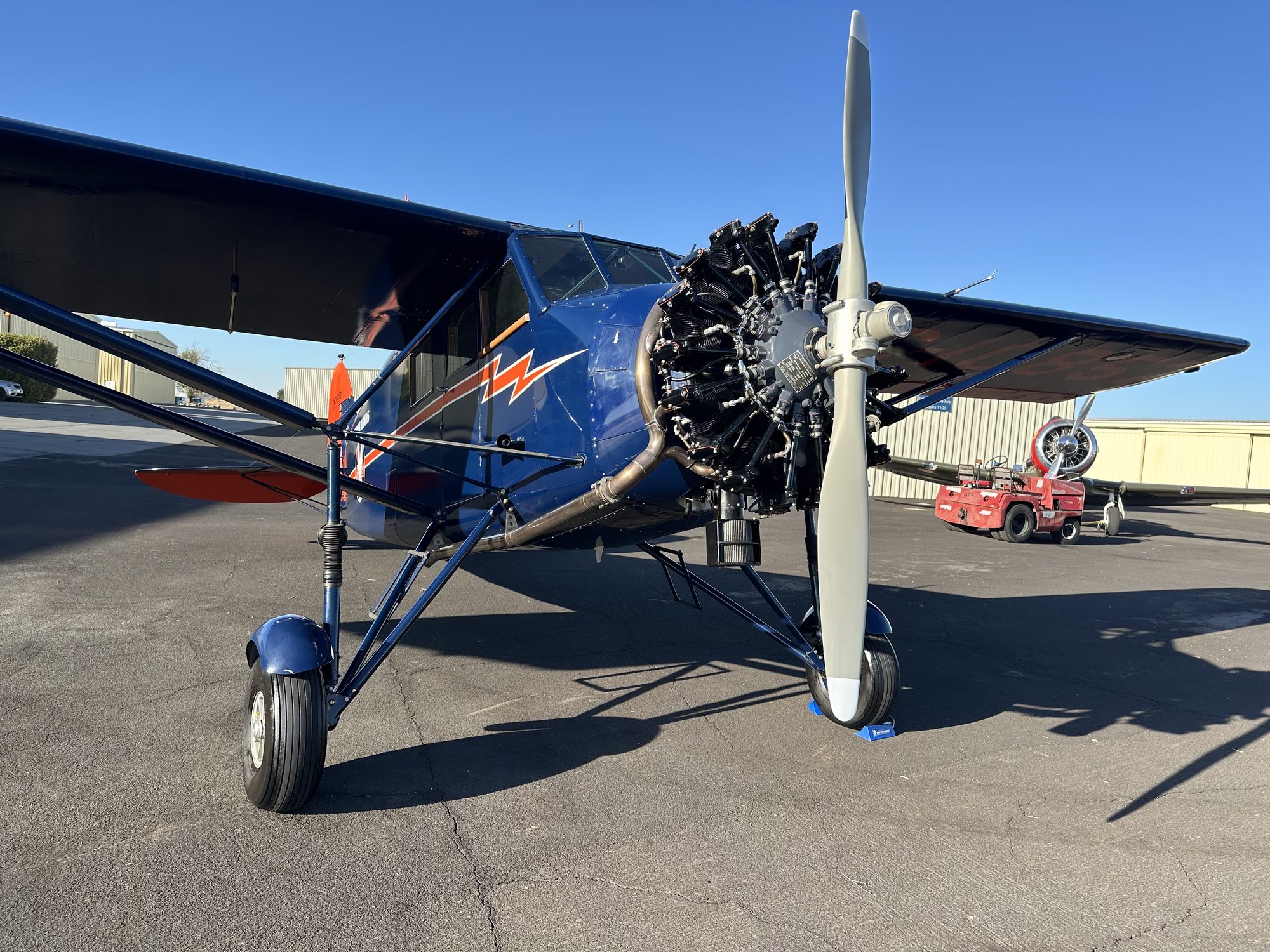
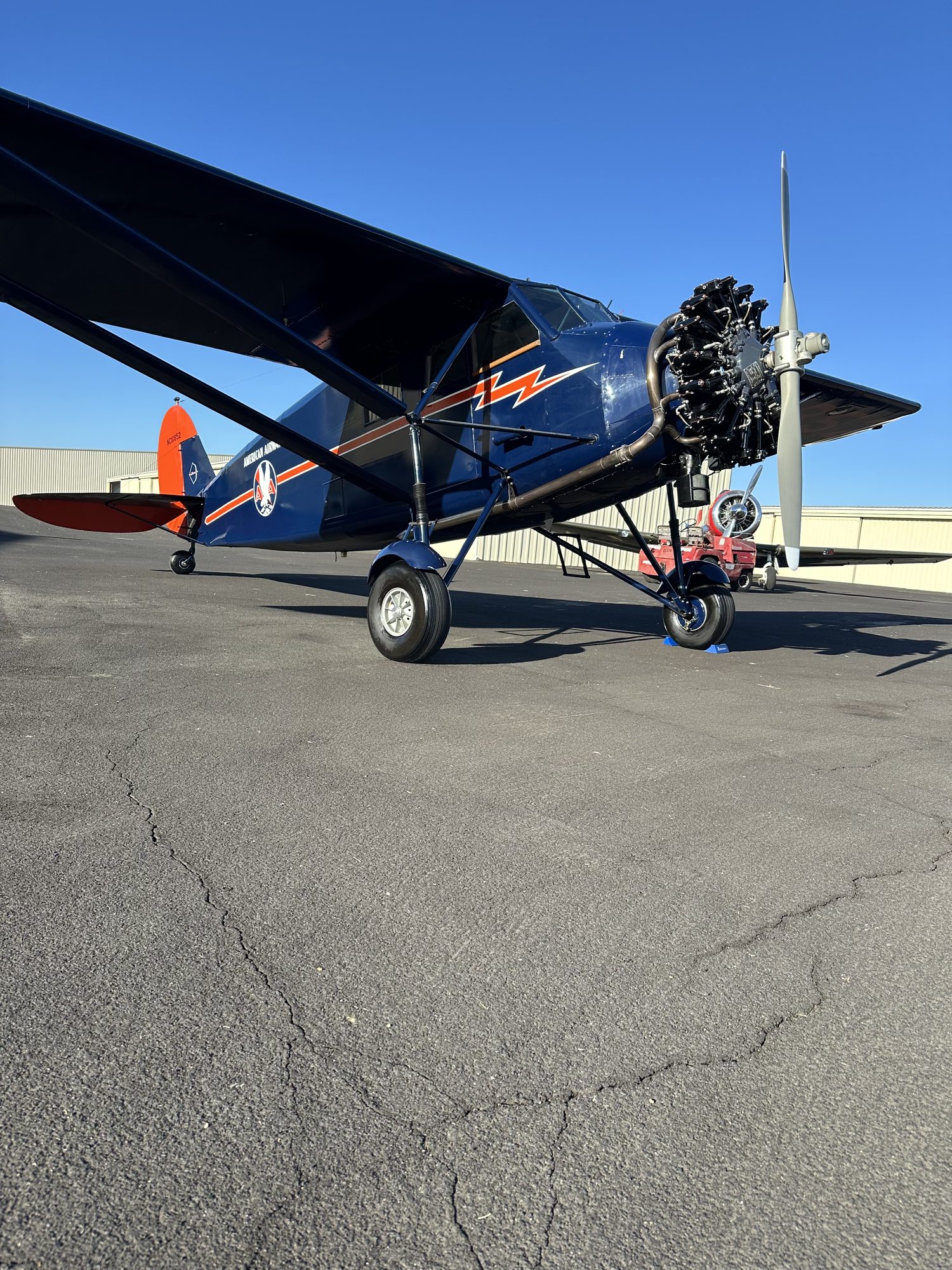
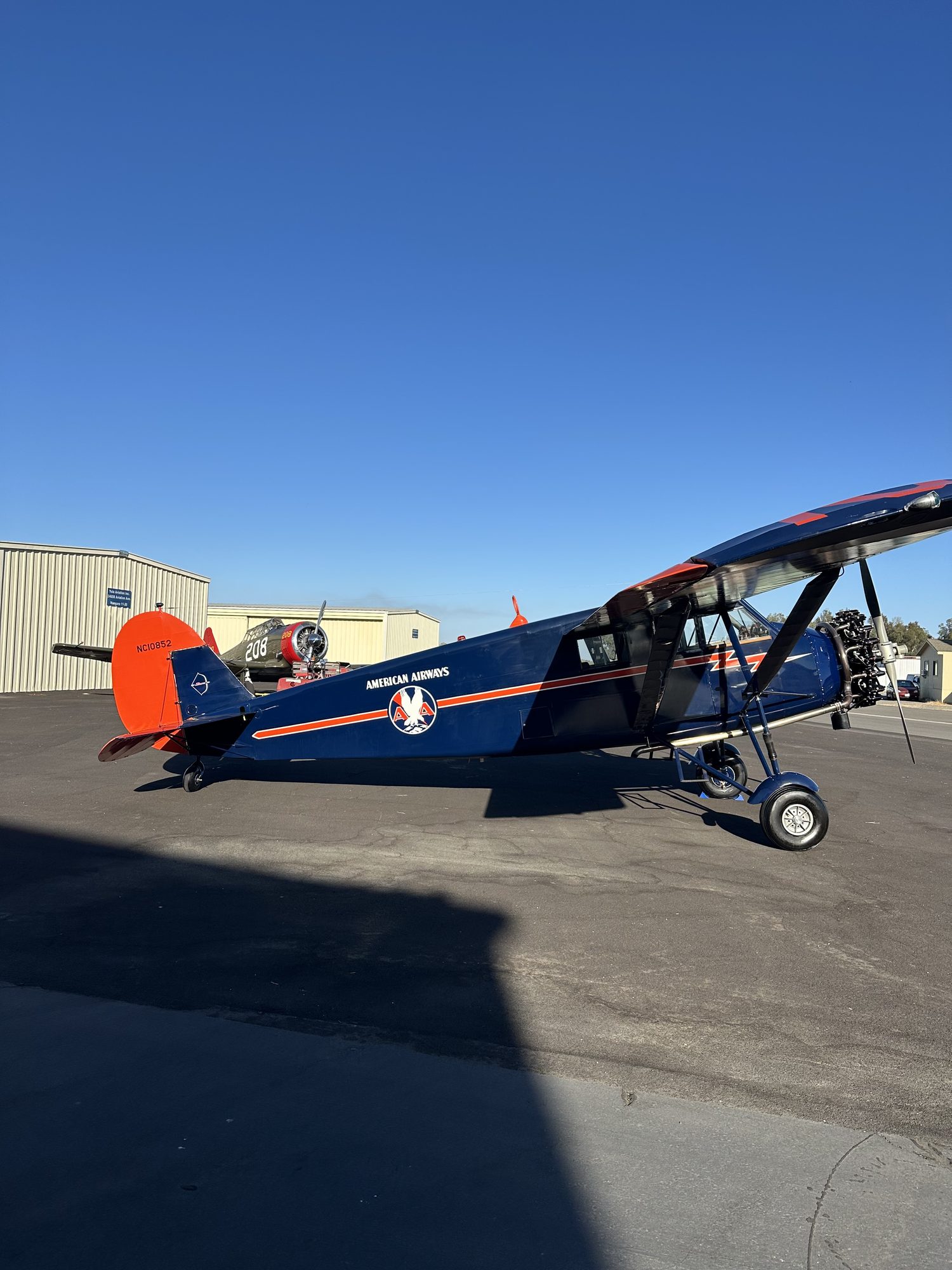
See the 1931 Stinson Junior S in person
The Collection is open Tuesday–Friday 10am–4:30pm and Saturday 10am–2pm, free admission. You can see this aircraft up close in Hangar 3, where the same shop that maintains and restores the whole Collection works on site. It's airworthy and on display in the hangar.
Follow the Collection on Facebook, Instagram and YouTube ↗ for new acquisitions, restoration progress, and flying days.
You might also like

Fairchild KR-21
A hands-on classic featuring a Kinner B-5 radial — the third Fairchild in the Collection, headed to Oshkosh for the 100th Anniversary Celebration.
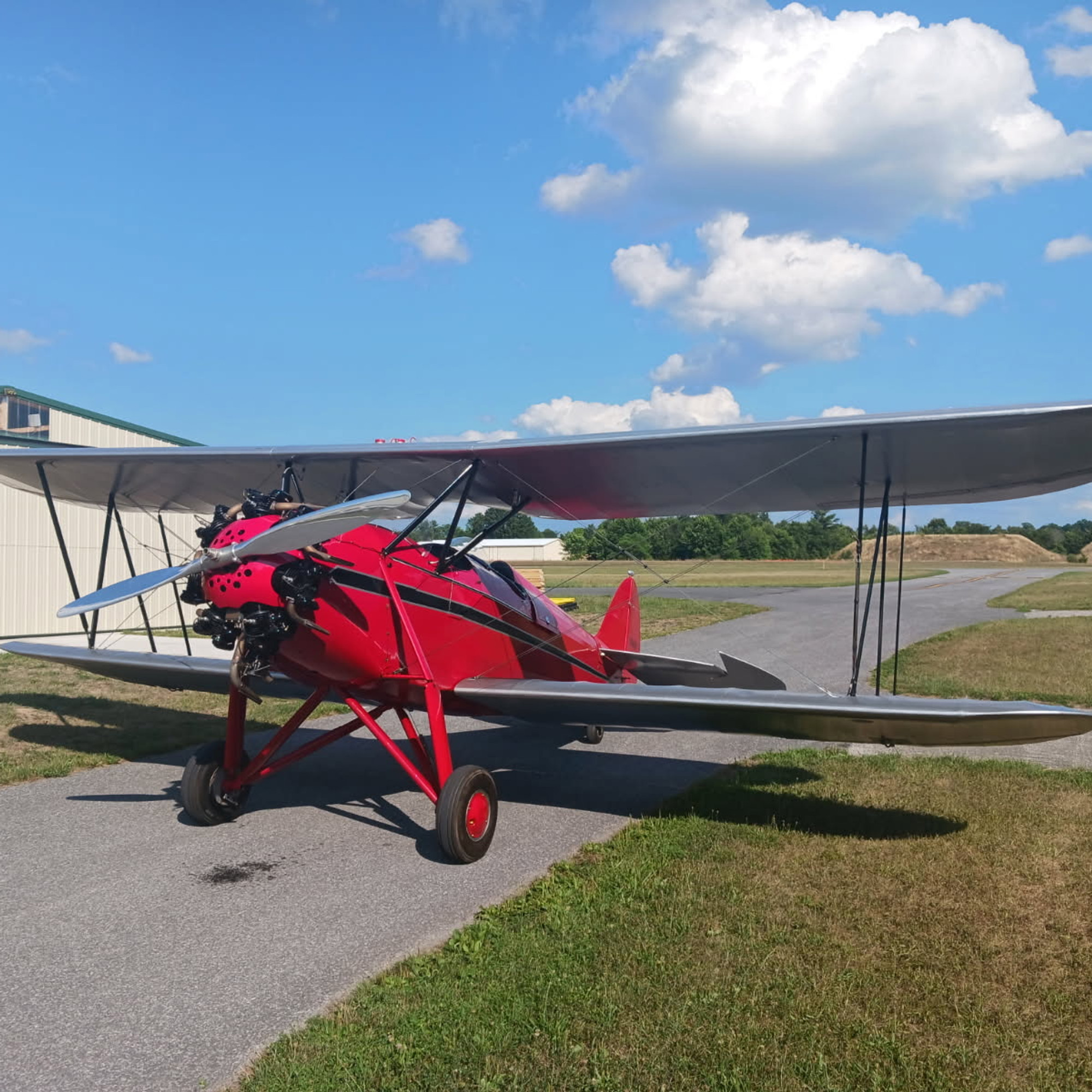
Great Lakes 2T-1A
Serial 83, built in Cleveland in June 1930 and believed to be the oldest Great Lakes still flying — fifty years in one Iowa family before it came to the Collection.

Waco RNF
The 86th Waco model produced and one of the first F-series biplanes. Originally powered by a 125 hp Warner Scarab, now upgraded to a 145 hp Warner Super Scarab.