

1936 Porterfield 35-70
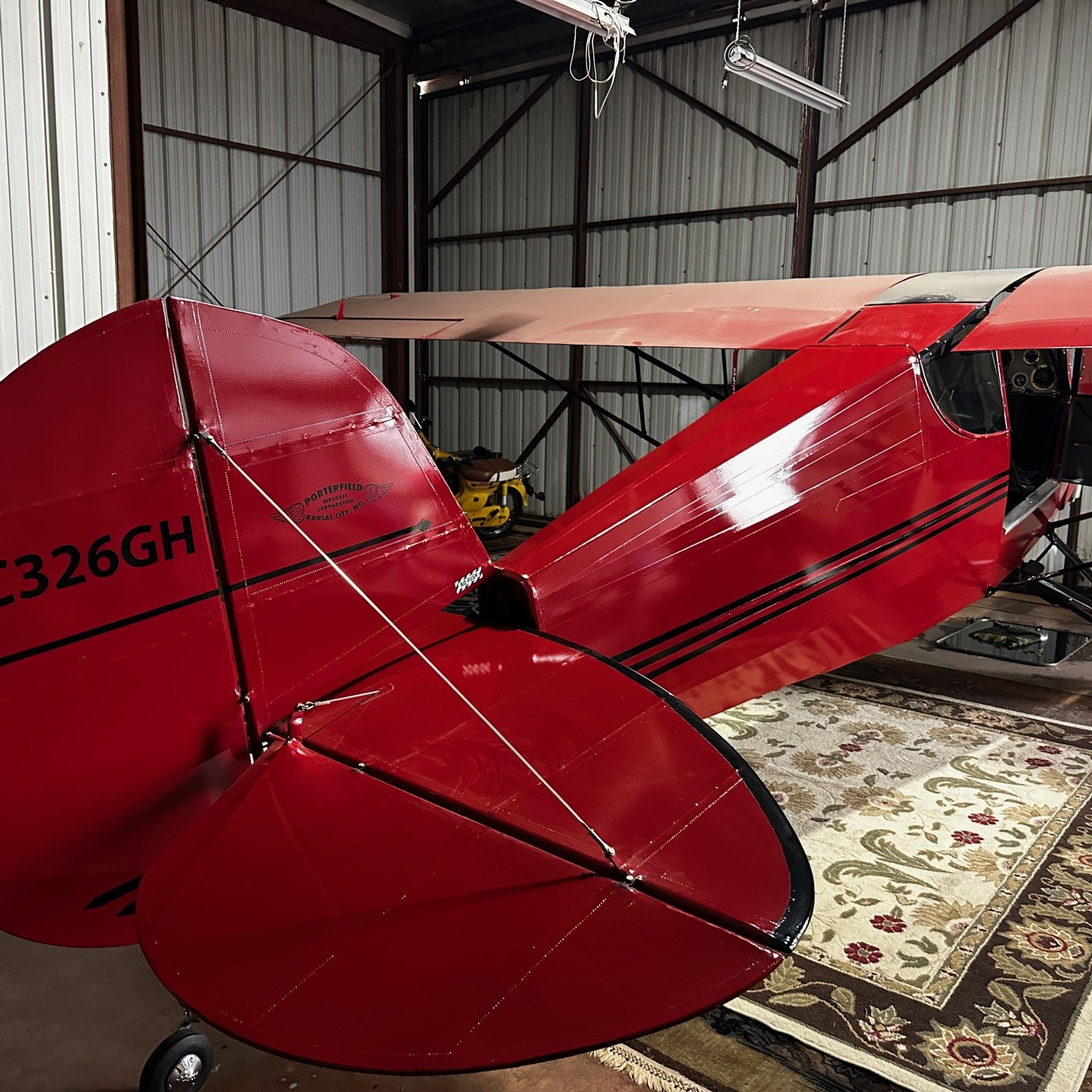
Originally called the “Wyandotte Pup” and designed simply enough that Wyandotte High School students built them — before Edward Porterfield put his own name on it.
One of the inexpensive Depression-era lightplanes, powered by a LeBlond 5DF radial — one of the last "greaser" motors with manual rocker greasing.
Light, Lean, and Legendary: The 1936 Porterfield 35 Flyabout
The Porterfield began its brief existence, like many aircraft builders, in the middle of the Golden Age of aviation in 1934. Edward Porterfield, a flight school owner, was not satisfied with the trainers available in the 1920’s and began designing and building a better mousetrap. When the stock market crashed in 1929 the country lost most of its airplane builders but a number who focused on lightweight inexpensive aircraft had a potential future. In those days expensive “sport” aircraft like Wacos could be built for the wealthy who were surviving the depression but the other end of the market was served by companies like Aeronca, Taylorcraft and Porterfield.
The Porterfield Model 35 Flyabout was originally designed by Noel Hockaday and was simple enough to be built by students at Wyandotte High School. Originally called the “Wyandotte Pup” Porterfield saw its potential and bought the design. Eventually over 240 airplanes were constructed.
One of the prominent features of Porterfield aircraft are their narrow cabins. Called “Skinny Birds” they can be a tight fit for today’s pilots. But they tell an important story of 1930’s aviation and represent the other end of the public flying spectrum from planes in the Collection like the Wacos and Travel Airs.
The Collection’s example was built in 1936 and featured a LeBlond radial engine of 70 horsepower. When it was restored an 85 horsepower LeBlond 5DF engine was installed giving it slightly better climb performance. The LeBlond radial engine was first developed beginning in the 1920’s. The DF model was introduced n 1930 and has 266 cubic inches. It features 3 bearings supporting the crankshaft but is one of the last radial “greaser” motors which did not have overhead oiling of the cylinders requiring manual greasing of the rocker boxes before flight.
The LeBlond company sold to the Rearwin Aircraft Company in 1937 and were renamed Ken-Royce after the Rearwin founder’s two sons. Rearwin built it own tandem seated trainer aircraft similar to the Porterfield and the two planes may be mistaken for one another by the unpracticed eye.
The Skinny Bird

A computer rendering made from reference photos, not footage of the airplane
Drawn from reference photos
From every angle
See the 1936 Porterfield 35-70 in person
The Collection is open Tuesday–Friday 10am–4:30pm and Saturday 10am–2pm, free admission. You can see this aircraft up close in Hangar 3, where the same shop that maintains and restores the whole Collection works on site. It's part of our flying fleet. On flying days it may be out on the line.
Follow the Collection on Facebook, Instagram and YouTube ↗ for new acquisitions, restoration progress, and flying days.
You might also like

Fairchild KR-21
A hands-on classic featuring a Kinner B-5 radial — the third Fairchild in the Collection, headed to Oshkosh for the 100th Anniversary Celebration.
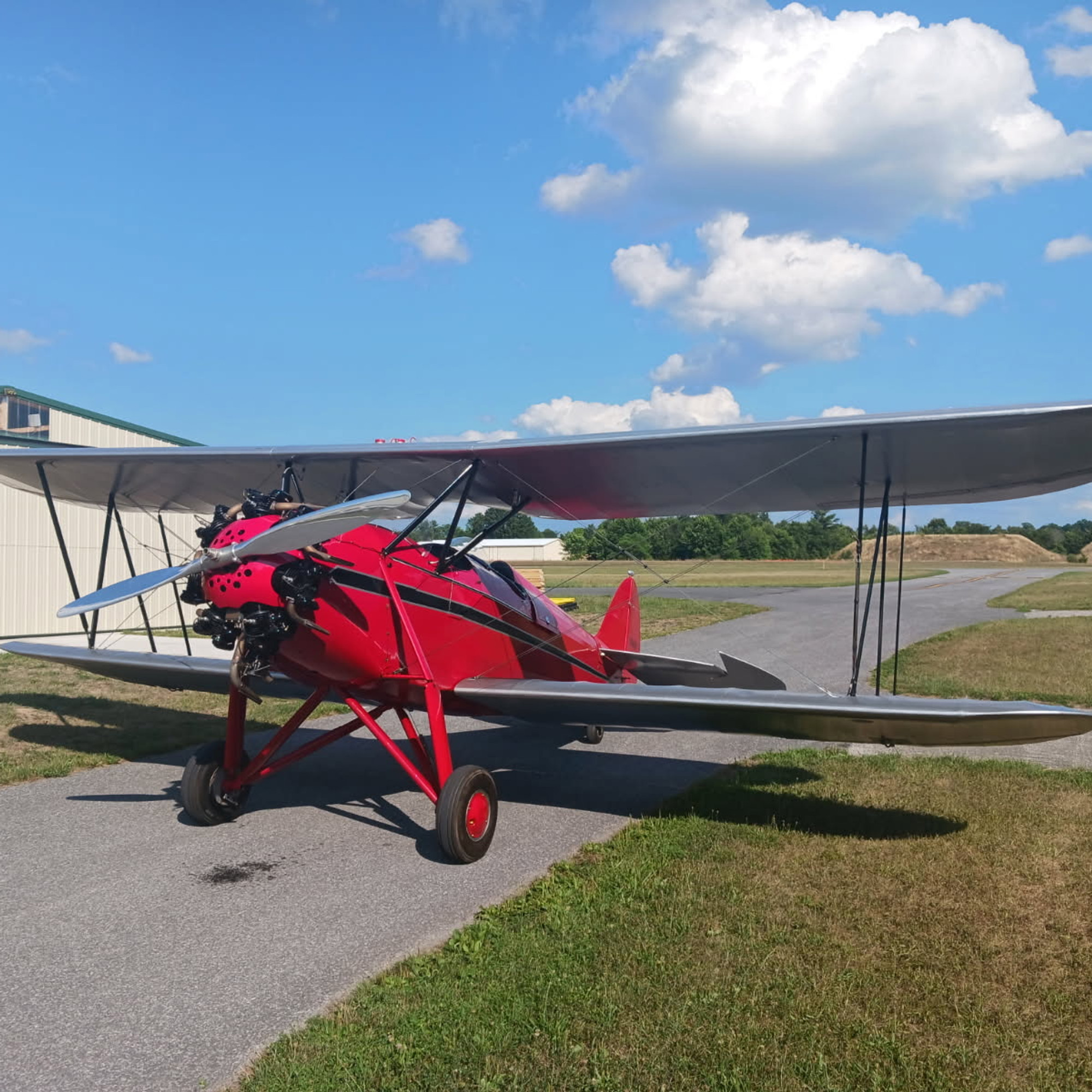
Great Lakes 2T-1A
Serial 83, built in Cleveland in June 1930 and believed to be the oldest Great Lakes still flying — fifty years in one Iowa family before it came to the Collection.

Waco RNF
The 86th Waco model produced and one of the first F-series biplanes. Originally powered by a 125 hp Warner Scarab, now upgraded to a 145 hp Warner Super Scarab.