

1940 Culver Cadet
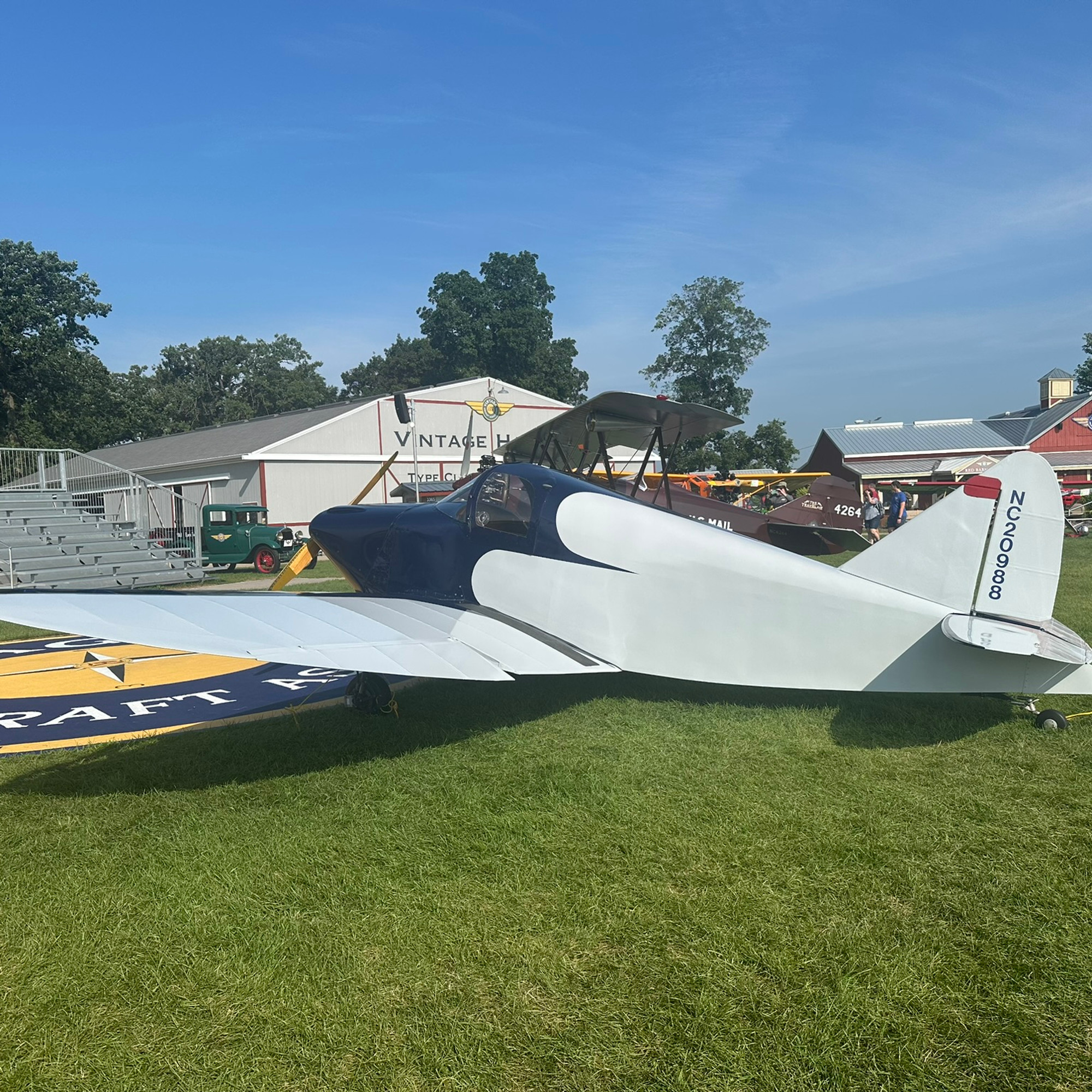
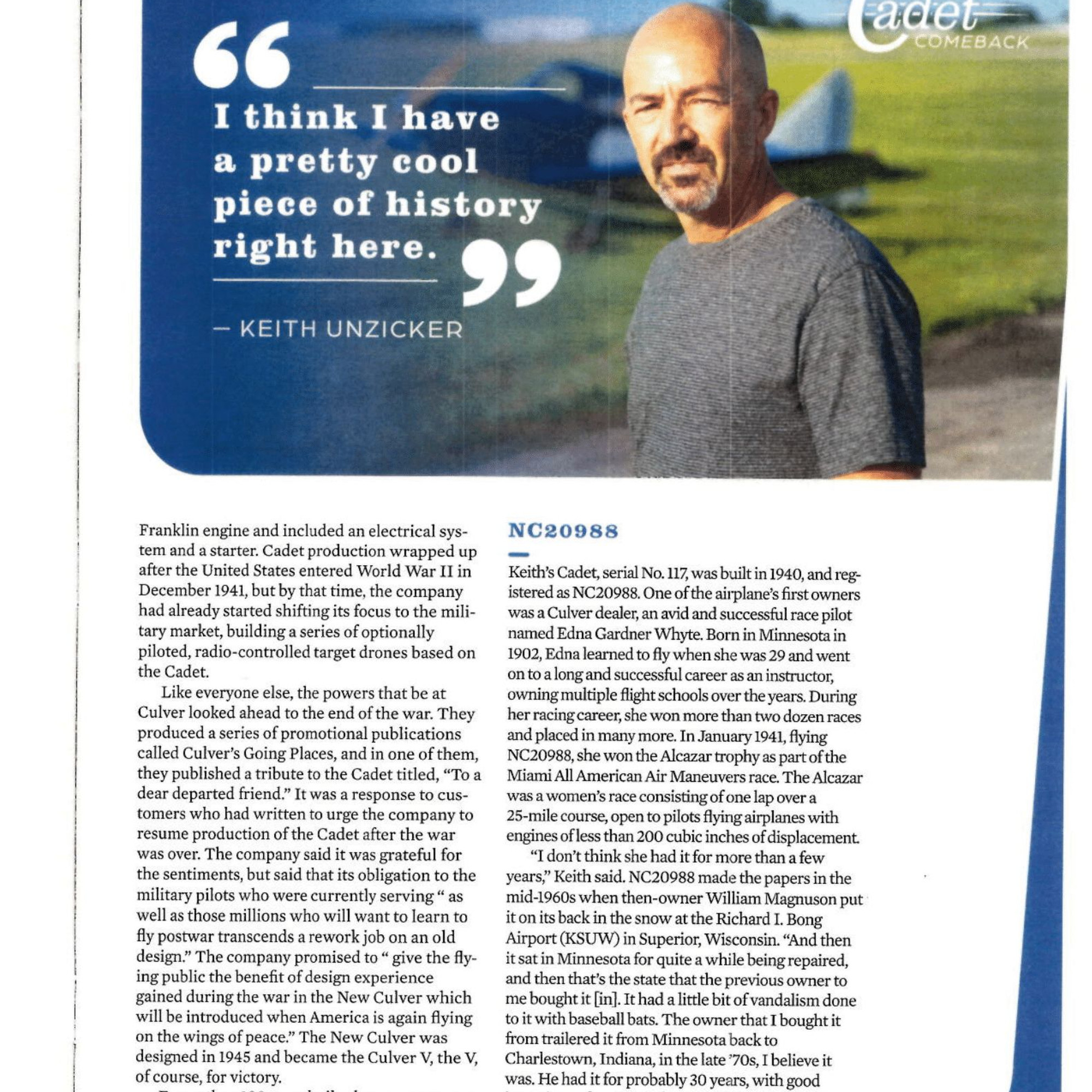
Sold new in 1940 by record-setting race pilot Edna Gardner Whyte — who flew this same aircraft to a win at the 1941 Alcazar Trophy the following year.
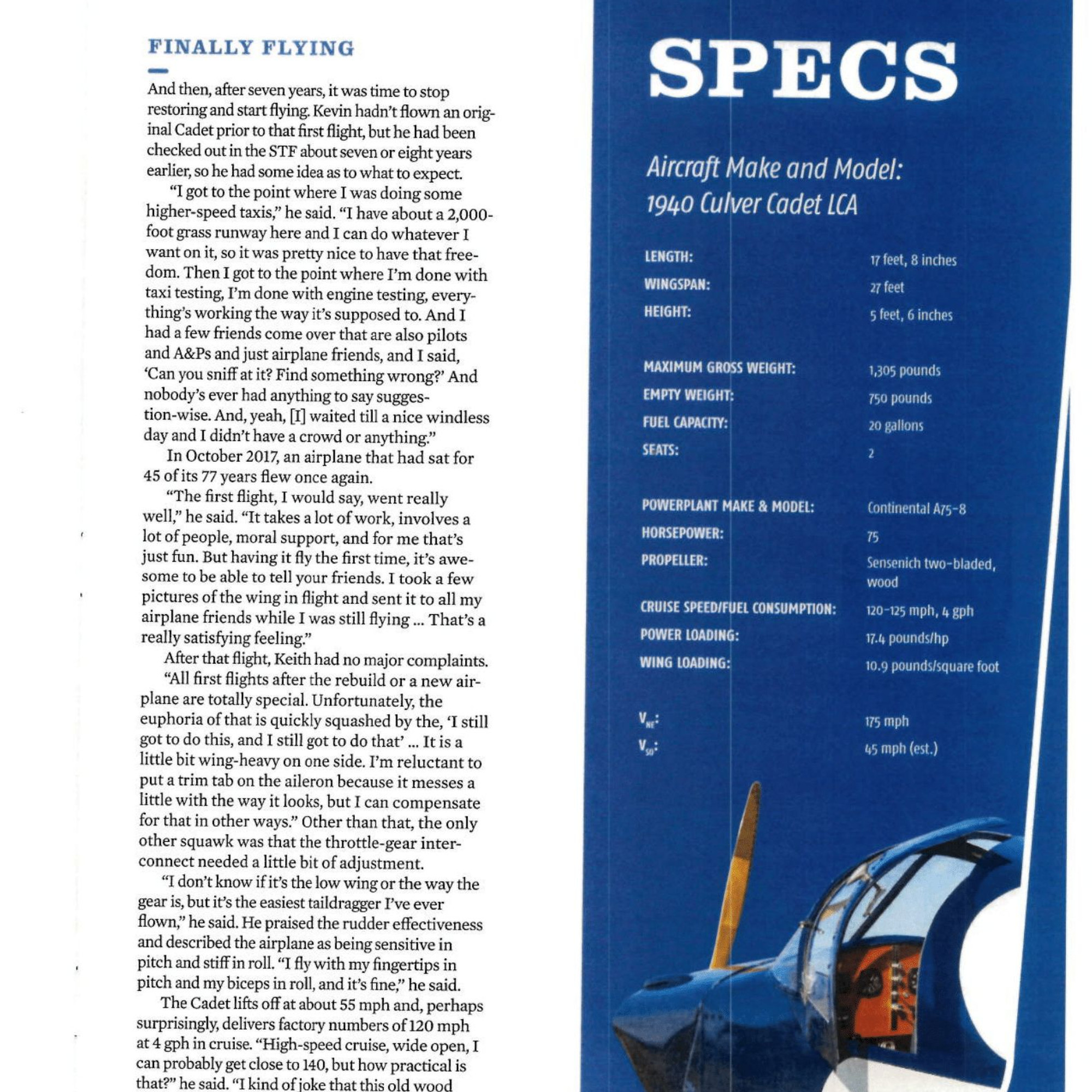
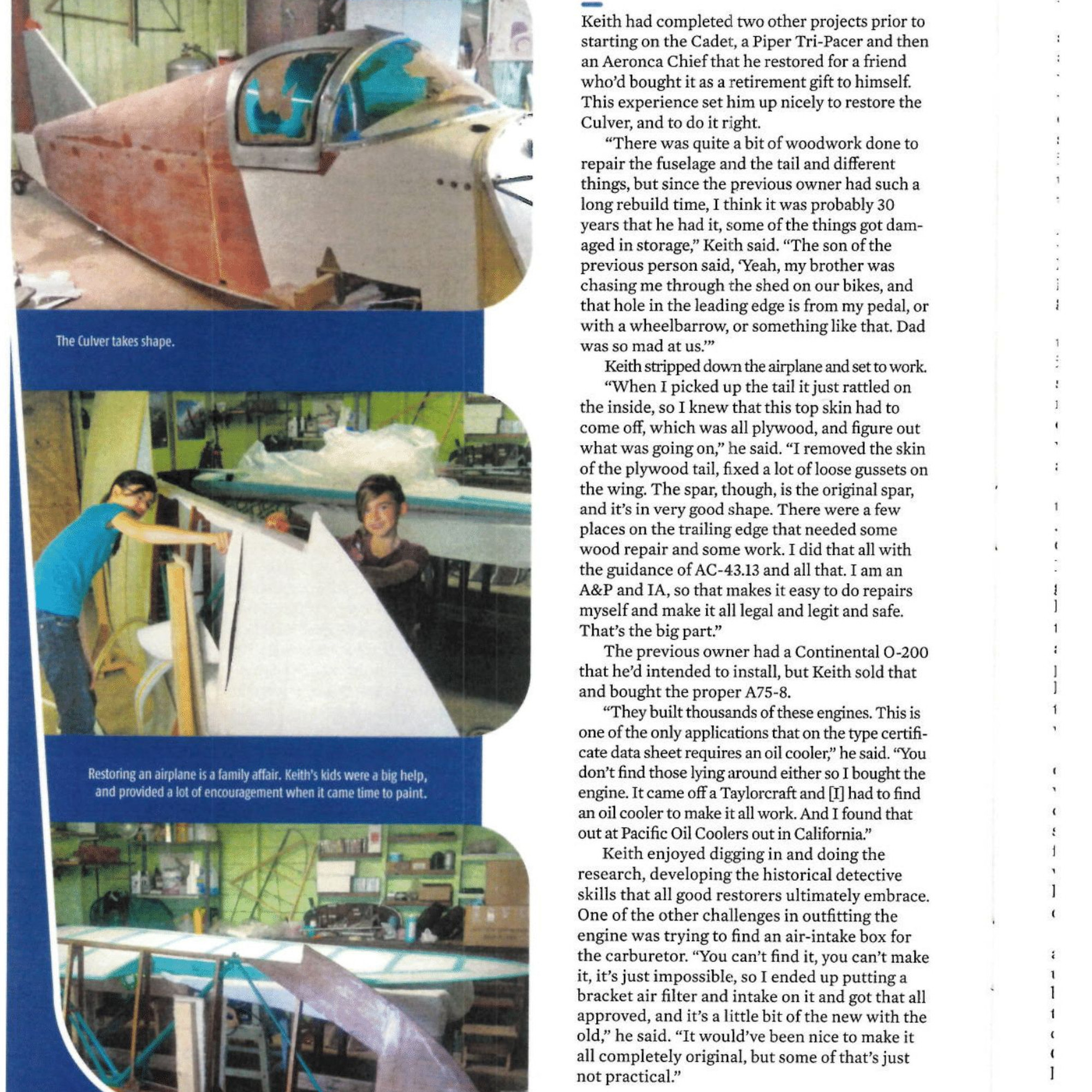
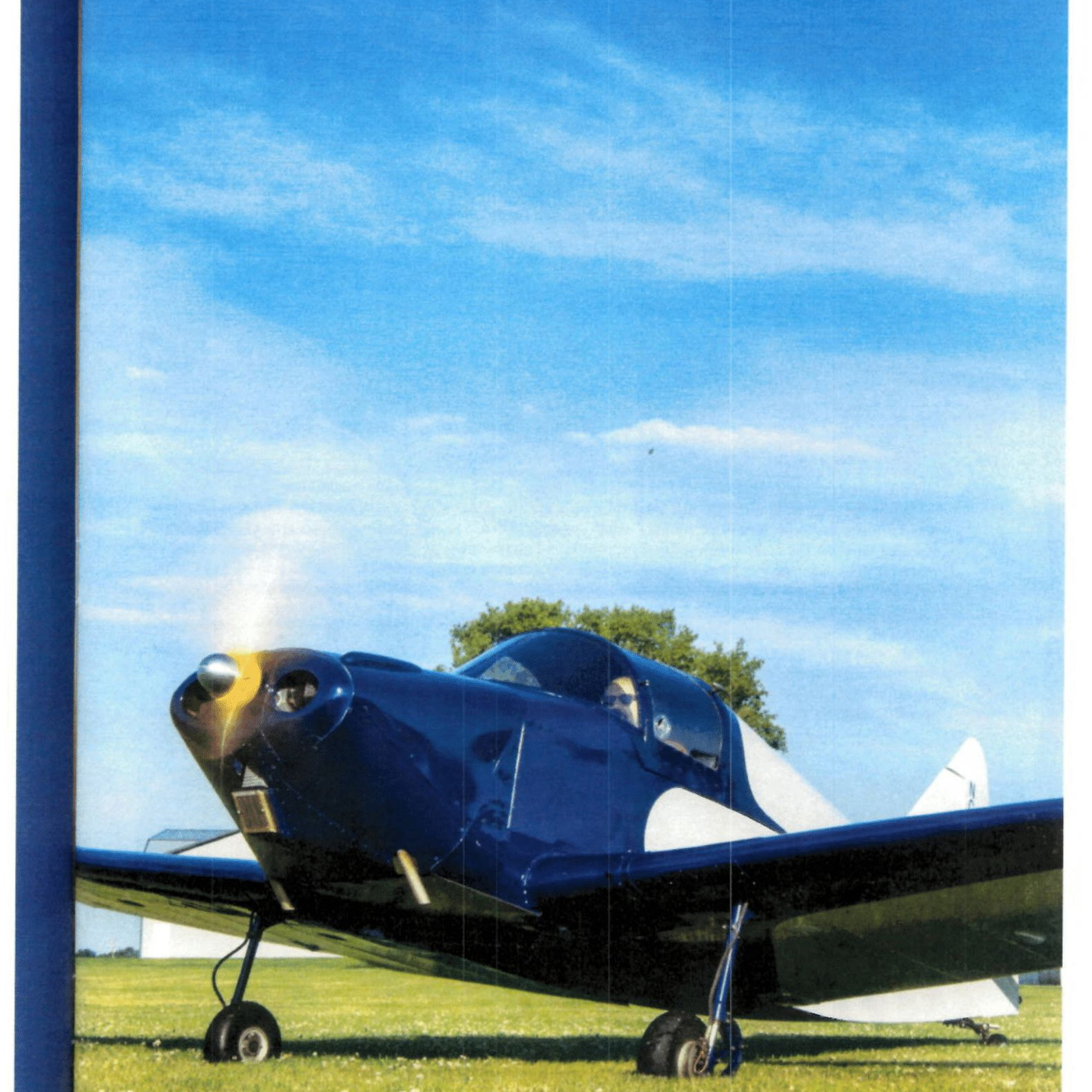
Serial #117 — a streamlined retractable-gear monoplane, restored by Keith Unzicker over seven years. Burns just 4 gallons per hour.
1940 Culver Cadet: Reporting to Mustang Field Cadet 117
There are at least three famous names connected to the Culver Cadet. Al Mooney, who went on to create his own aircraft company and build a wildly successful singe engine airplane series after the war had progressed through his own first failed company, then was a designer for Bellanca and Monocoupe. Monocoupe failed late in the 1930’s and some of Mooney’s plans were purchased by Culver Aircraft and Mooney went with them, designing the Cadet just before the war began with the first aircraft delivered in 1940.
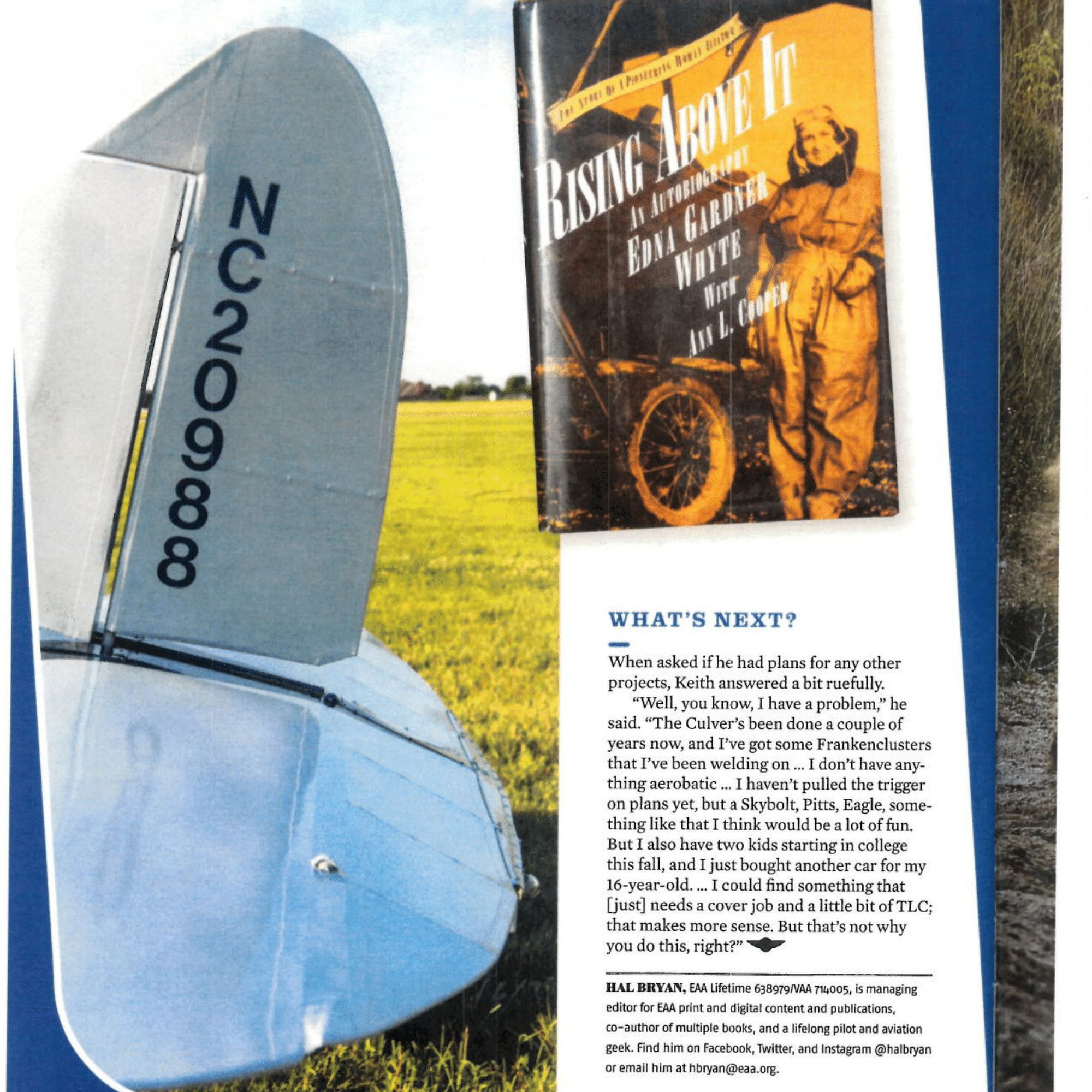
Wiley Post was a Culver dealer as was a prolific race pilot, Edna Gardner Whyte, who originally sold NC20988 in 1940 but went on to race it in 1941, winning the Alcazar Trophy. Another famous name attached to Culver and the Cadet is Walter Beech who bought Culver Aircraft with partner Charles Yankey in 1941.
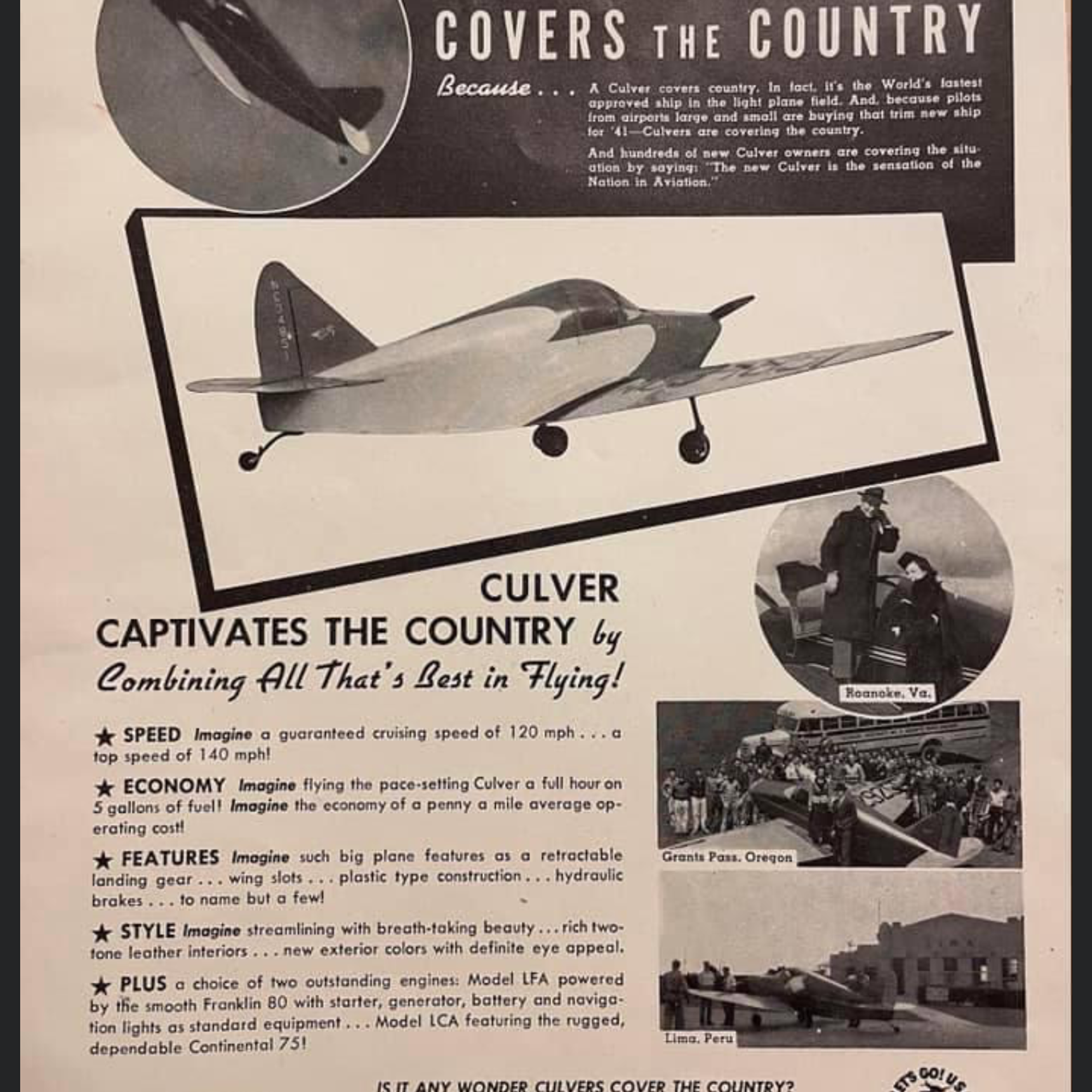
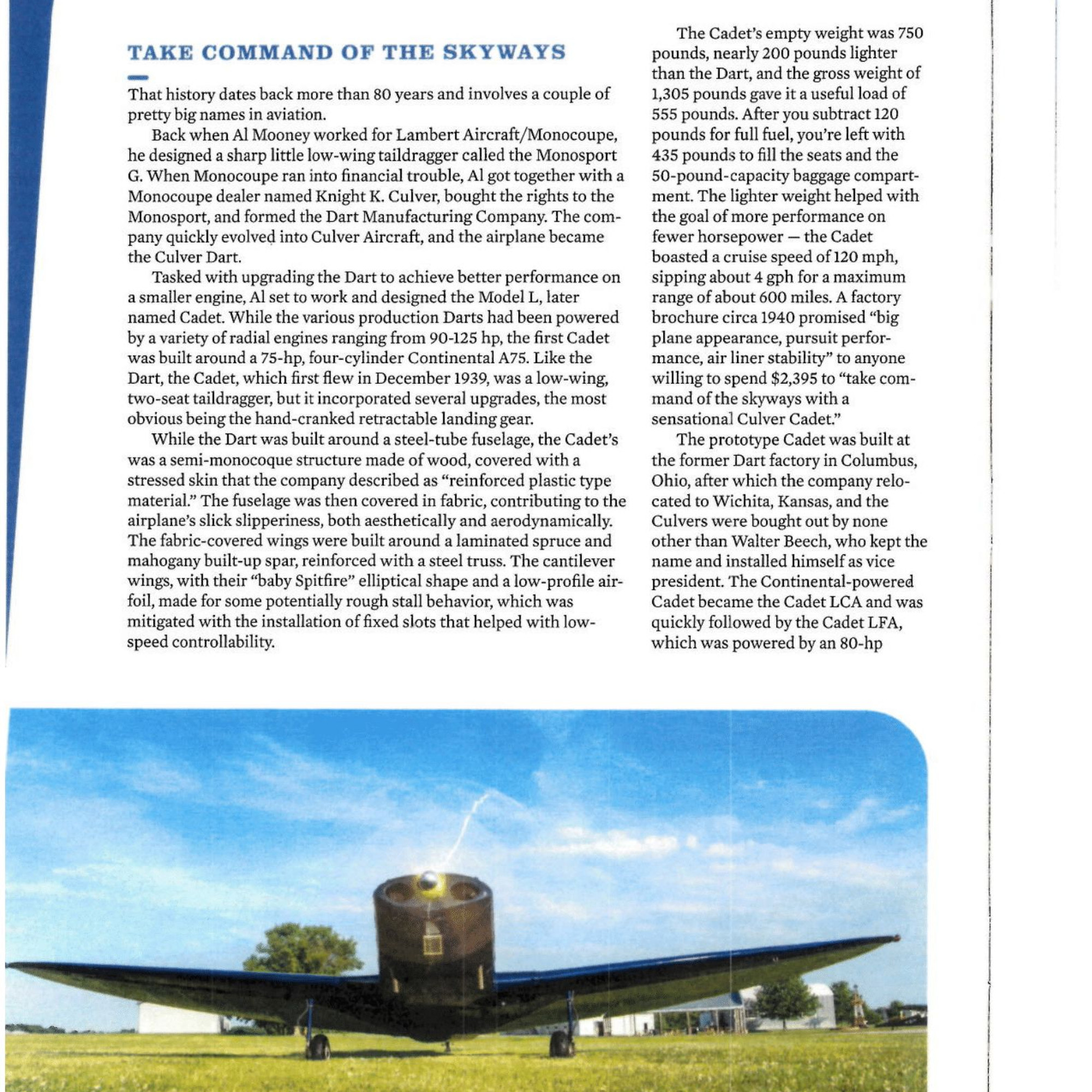
The Cadet was a revolutionary plane for its time. It was constructed using a semi-monocoupe fuselage instead of the typical welded steel tubes with fabric and it sported retractable landing gear. It also featured an elliptical wing like the Spitfire fighter designed in the same period.
Using a four cylinder Continental A75 engine, the Cadet was very aerodynamic which allowed it to reach speeds of up to 140 miles an hour. This streamlined construction, retractable gear and flat engine were new to general aviation at the end of the 1930’s and allowed a fast, inexpensive airplane presaging what was to come after the war. It was a popular airplane and 350 were sold. It remains popular today and 76 examples remain on the FAA registry. The Army asked Culver to put a nosewheel on the plane and turn it into a drone target aircraft which they did and thousands of those were produced.
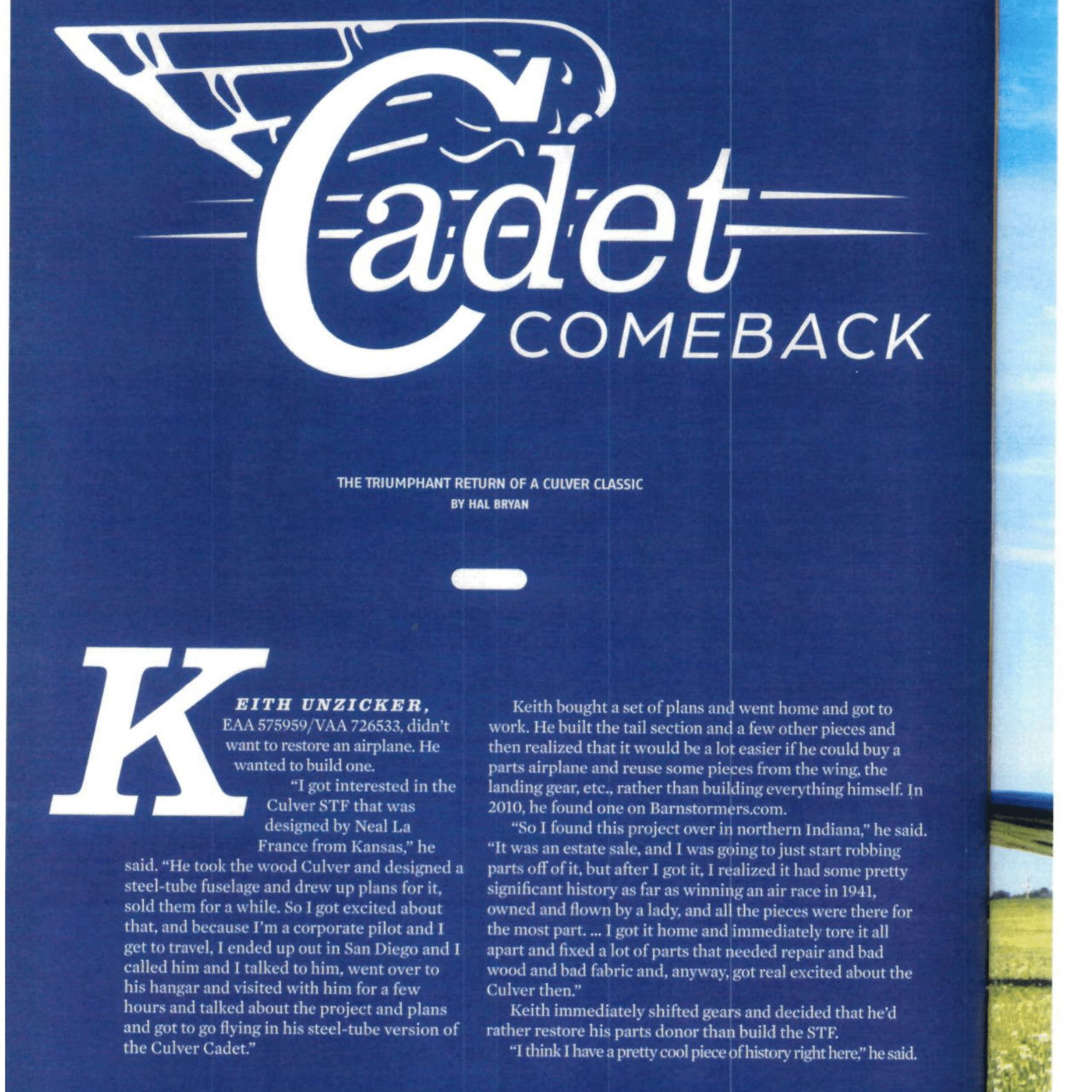
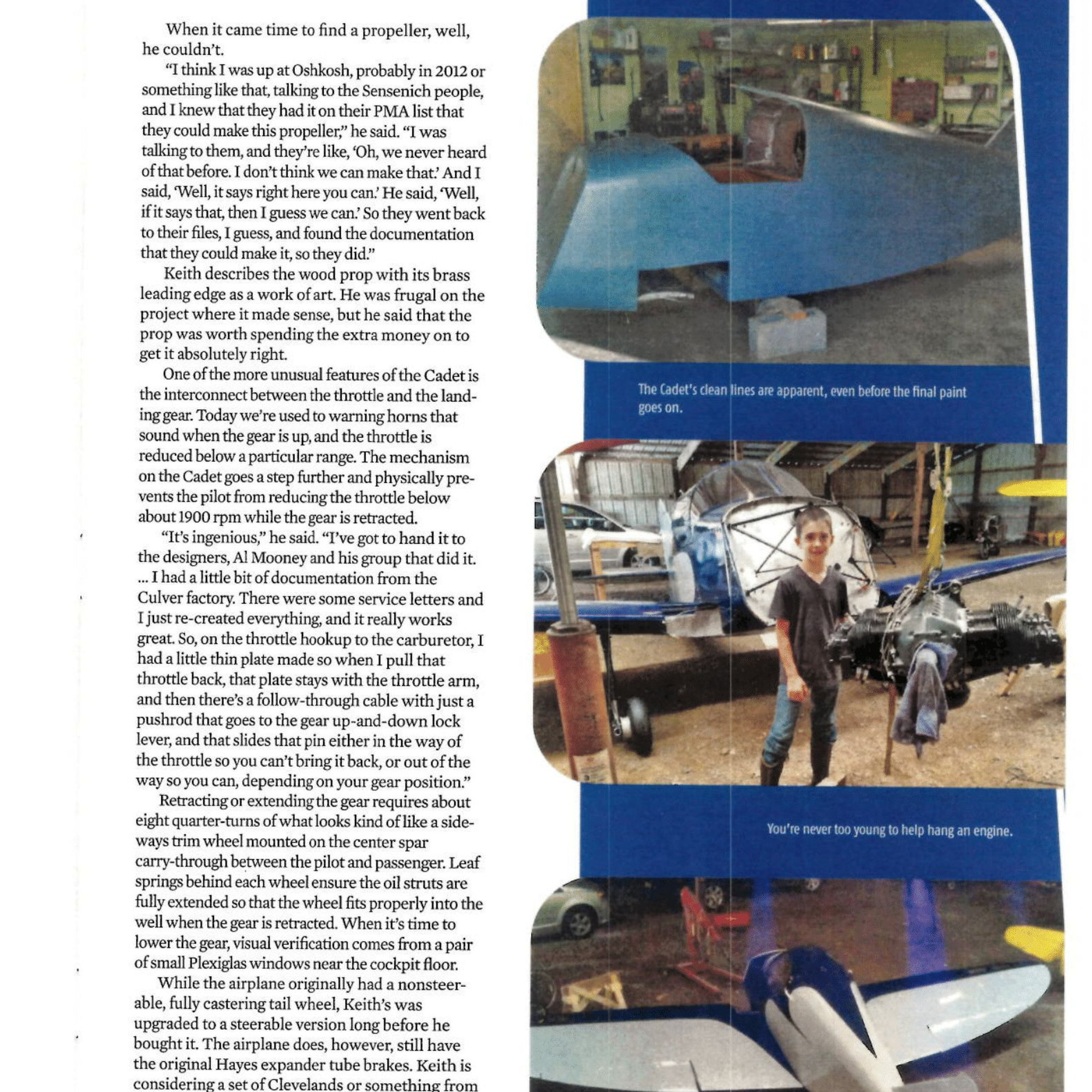
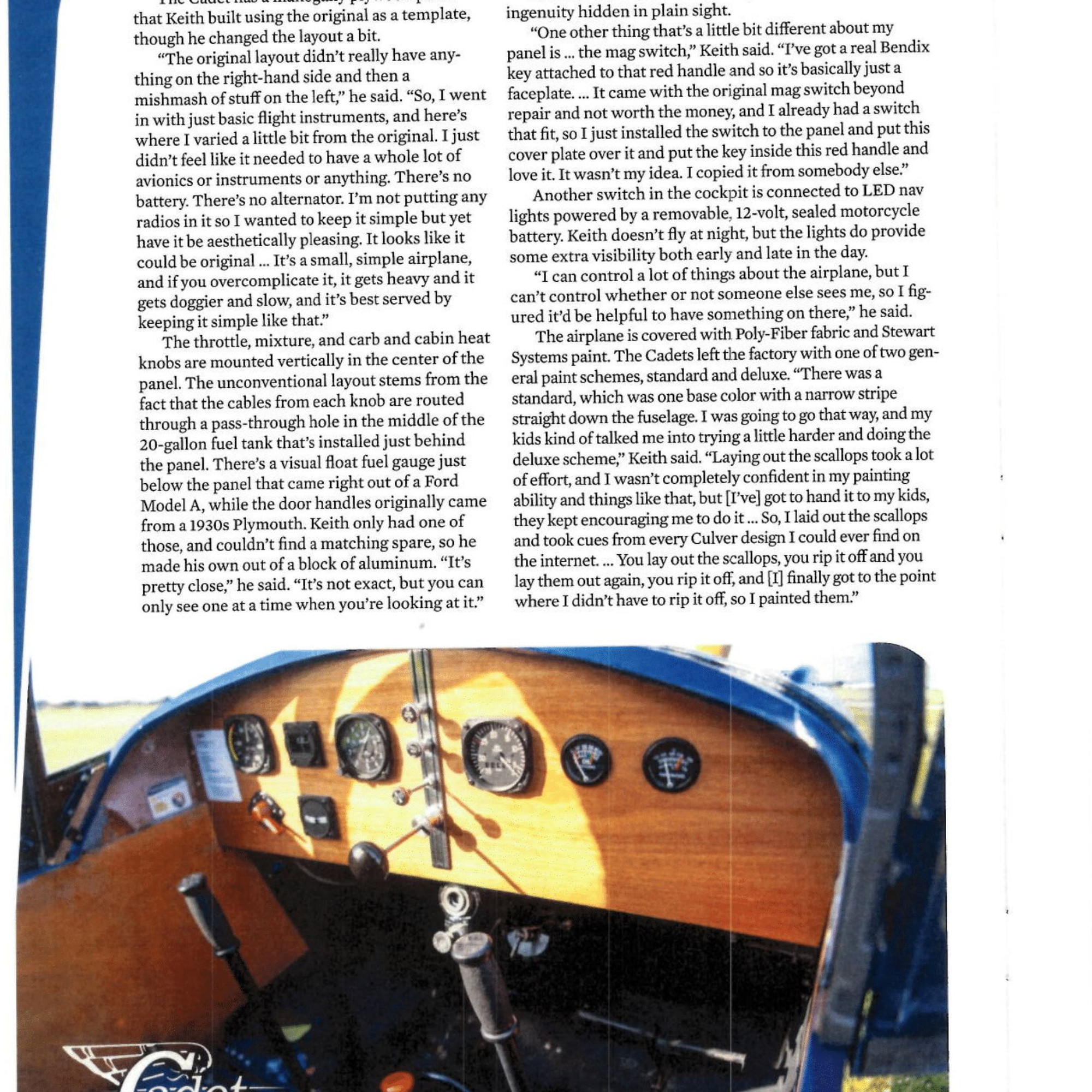
The Collection’s Cadet LCA, serial number 117, features the original specified engine which is relatively rare today and was restored by Keith Unzicker in 2017 after a seven year restoration. Like many antiques flying today #117 spent most of its life not flying. Keith finished the plane in Culver’s upgraded, art deco, paint scheme and was faithful to the airplane’s design and equipment. It does not have an electrical system nor does it have a radio or transponder. It’s an economical airplane to fly burning just 4 gallons of gas per hour to deliver a 120 mile per hour cruise speed from the A75 equipped with a Sensenich prop.
The Racer’s Revision

A computer rendering made from reference photos, not footage of the airplane
Drawn from reference photos
From every angle
See the 1940 Culver Cadet in person
The Collection is open Tuesday–Friday 10am–4:30pm and Saturday 10am–2pm, free admission. You can see this aircraft up close in Hangar 3, where the same shop that maintains and restores the whole Collection works on site. It's airworthy and on display in the hangar.
Follow the Collection on Facebook, Instagram and YouTube ↗ for new acquisitions, restoration progress, and flying days.
You might also like

Waco UPF-7
The classic Waco open-cockpit trainer — graceful lines and predictable flight characteristics that convert skeptics into fans.

Waco UPF-7
NC32071 — a champion of craftsmanship, this second UPF-7 carries its own distinct service history.

Waco ZPF-7
A Jacobs R755B2-powered UPF-7 variant with constant-speed prop, restored by Rare Aircraft in stunning green and cream livery.