Albert R. "Al" Jacobs
1894–1960
The Philadelphia engineer behind the radials pilots call "Shakey Jake"
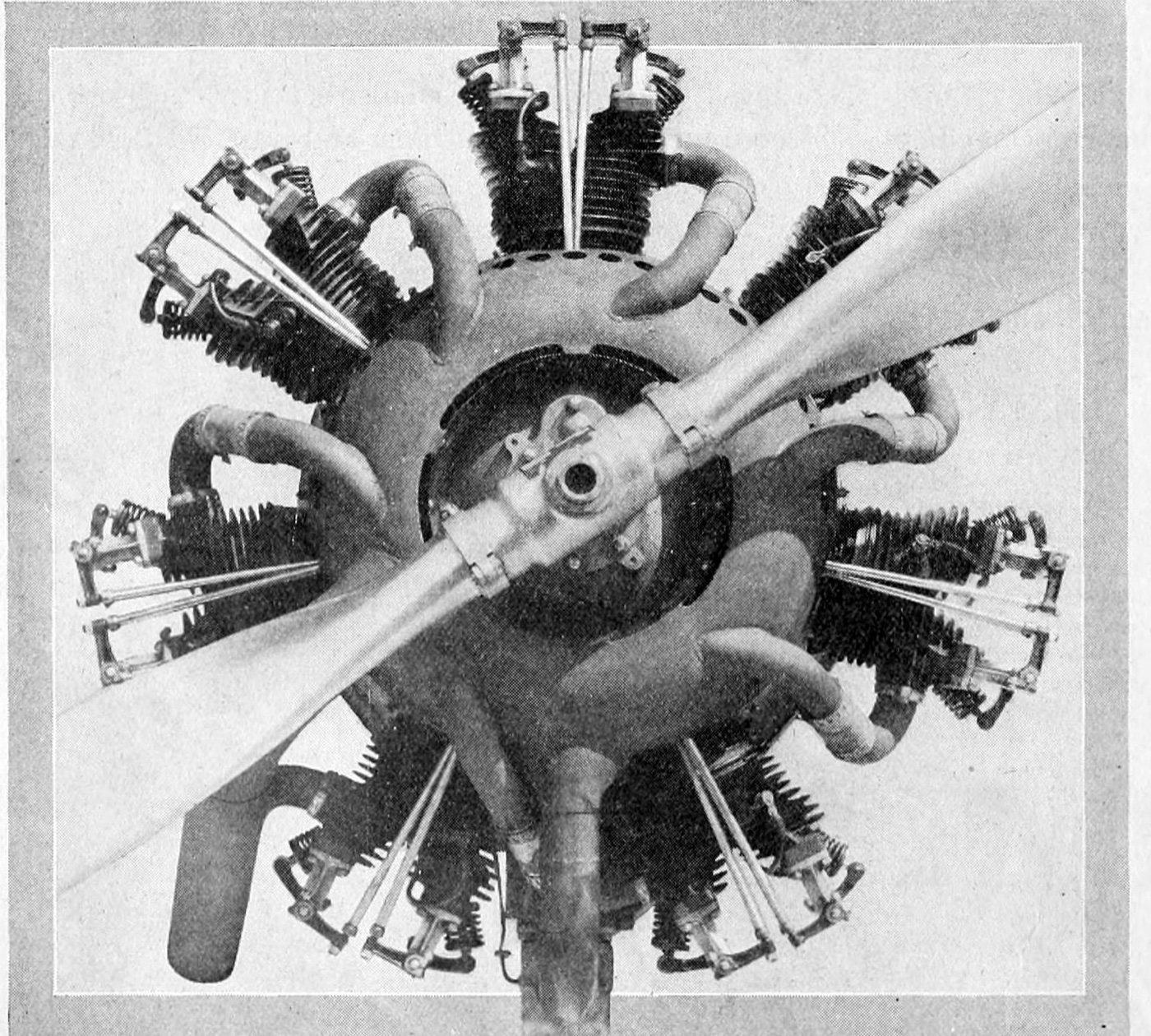
Pilots still call the Jacobs radial "Shakey Jake," and the nickname has outlived the memory of the man whose name is on the engine. Albert Raymond Jacobs was born in Philadelphia in 1894 and went to school at Girard College there. In 1917 he was running a new garage in York Springs, Pennsylvania, and that summer he married Stella Binder of Philadelphia. He was drafted that November, transferred to the 158th Aero Squadron, and qualified as an inspector of airplane engines. On February 5, 1918, he was shaving aboard the troopship Tuscania when a German submarine torpedoed it off the coast of Ireland. He was picked up by a destroyer and finished the war in France as a master electrician.
Back in Philadelphia he became secretary-treasurer and chief engineer of Fischer & Jacobs, Inc., an experimental engine shop organized in 1926. There he and another engineer, Henry M. McFadgen, developed a seven-cylinder radial. In September 1928 Jacobs flew it himself, in a Waco 10, in the transcontinental air derby to the National Air Races in Los Angeles. He drew the first takeoff slot, but his airplane came down at Gardner, Kansas, and dropped out of the race. In 1929 the engine, the 140-horsepower LA-1, received Approved Type Certificate No. 31, and Jacobs and McFadgen formed a new company to build it. By May 1930 it was called the Jacobs Aircraft Engine Company, with Jacobs as president, and Waco was using the engine in its Waco 140. By 1932 the company had moved to Pottstown, Pennsylvania.
The engine that made the company's name was the 225-horsepower L-4, approved in February 1934. It was followed by the 285-horsepower L-5 in 1936 and the 330-horsepower L-6 in 1938. The military called them the R-755, R-830 and R-915. By then Jacobs was vice president and chief engineer, and J. Story Smith was president. During the war twin R-755s powered the Cessna AT-17 and UC-78 Bobcat trainers and transports. According to the Aircraft Engine Historical Society, Pottstown built about 20,300 Jacobs engines during the war, plus 11,614 Pratt & Whitney engines under license.
Peacetime was harder. Republic Industries bought the company from Jacobs in 1945. He bought it back in 1947, defaulted, and lost it to Republic again in 1950. He then worked as a consulting engineer for Lycoming until he retired in 1954. The company built R-755s for the Cessna 195 into the 1950s and was dissolved in 1957. Most of its type certificates went to Clarence E. Page of Oklahoma City, whose firm built new engines under the name Jacobs-Page. Albert Jacobs died on September 2, 1960. Where he is buried has not been found.
In Waco's model codes the first letter names the engine: "Y" stands for the Jacobs L-4 and "Z" for the larger L-5. Our 1935 Waco YMF-5 and 1936 Waco YKS-6 fly behind Jacobs engines. So does our 1936 Waco ZPF-6, which left the factory with a 285-horsepower L-5 and now has a later Jacobs R-755. The 1941 Waco ZPF-7 on loan to the Collection is a Jacobs airplane too. Each of these four airplanes flies behind the line of engines Al Jacobs first took into the air himself in 1928.