Charles W. "Charlie" Meyers
1896–1972
The test pilot behind the Great Lakes Sport Trainer
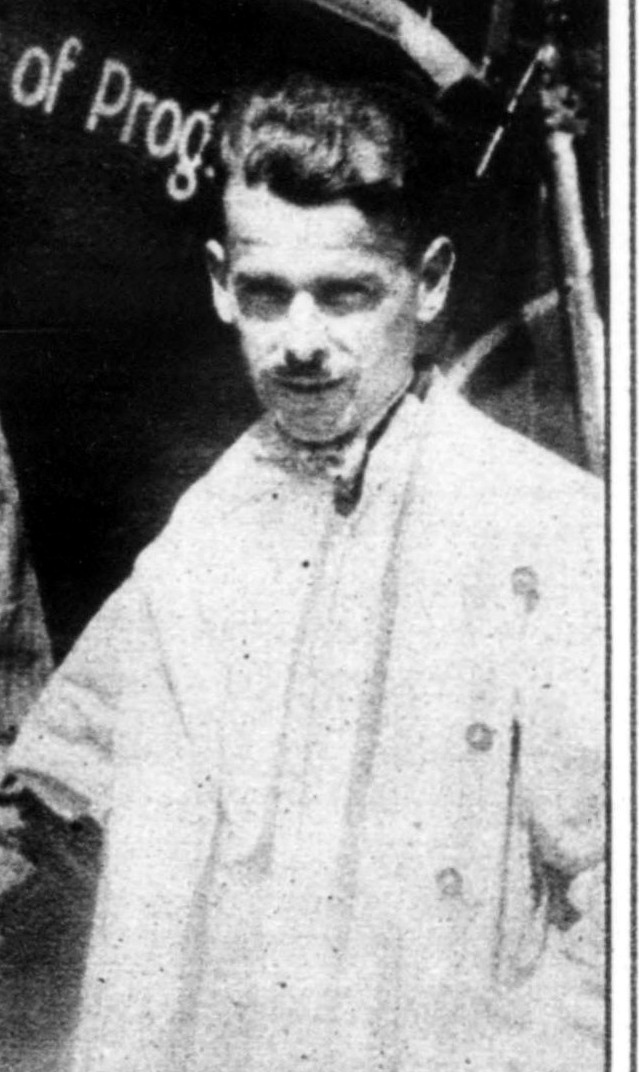
Everyone knows the Great Lakes by its swept-back top wing, but few know the test pilot who designed it and then raced it. Charles William "Charlie" Meyers was born on May 29, 1896, in Columbus Junction, Iowa, and grew up in Glen Ridge, New Jersey. He built his own gliders as a teenager, and his first glider flight, on June 29, 1913, later earned him membership in the Early Birds of Aviation. He worked as a mechanic for the Aero Marine Plane and Motor Company in 1915 and soloed a Curtiss pusher on Long Island in 1916.
He then joined the Royal Flying Corps in Canada and served in England through the end of the war. After five years of barnstorming, in 1924 he joined the Advance Aircraft Company, the Waco company, in Troy, Ohio, as test pilot and design engineer. His sister Hattie married two of Waco's founders, George "Buck" Weaver and, after Weaver's death, Sam Junkin. His airline's 1957 retirement profile credits him with designing and test flying the Waco 10 and the Waco Taperwing, and in September 1927 he won Class B of the National Air Derby from New York to Spokane in a Waco 10.
Late in 1928 Waco's sales manager, Charles F. Van Sicklen, left to help form the Great Lakes Aircraft Corporation in Cleveland and offered Meyers a job. The new company, owned by the holding company Allied Motor Industries, had bought the factory the Glenn L. Martin Company left behind when it moved to Baltimore, and it kept building Martin's Navy torpedo bomber as the TG-1. Meyers tested the bomber, but with a young engineer named Cliff Leisy he also designed the Sport Trainer, Model 2T-1, around the American Cirrus engine, another Allied product. The prototype was ready for testing in March 1929. It first had a straight upper wing, and the swept-back top wing that became its trademark arrived with the 2T-1A. As chief test pilot, Meyers raced it too, placing second in the 1929 Miami-to-Cleveland Derby and third in the 1930 Cirrus Derby.
The Sport Trainer proved one of the best-handling sport biplanes ever built, and airshow pilots took to it. Tex Rankin bought his famous Great Lakes in 1931, and Dorothy Hester set outside-loop records in a 2T-1A that year. But the Depression erased more than half of some 650 deposits, the price fell from $4,990 to $3,150 in 1930, and only about 264 Sport Trainers were built. Meyers left in November 1931 to fly for Eastern Air Transport, later Eastern Air Lines, and flew as a captain until November 1956. After Great Lakes closed in 1935, Doug Champlin revived the design in the 1970s, building new airplanes in Wichita and Enid, Oklahoma. Meyers died on October 1, 1972, and is buried at Florida National Cemetery in Bushnell.
Our 1930 Great Lakes 2T-1A, built in Cleveland in June 1930 with the American Cirrus engine the type was designed around, comes from the line Charlie Meyers started in the old Martin plant. Every loop it flies carries on the work he began there.