Jennings W. "Jack" Rose
c. 1901–1979
The Chicago pilot who built a three-dollar-an-hour biplane
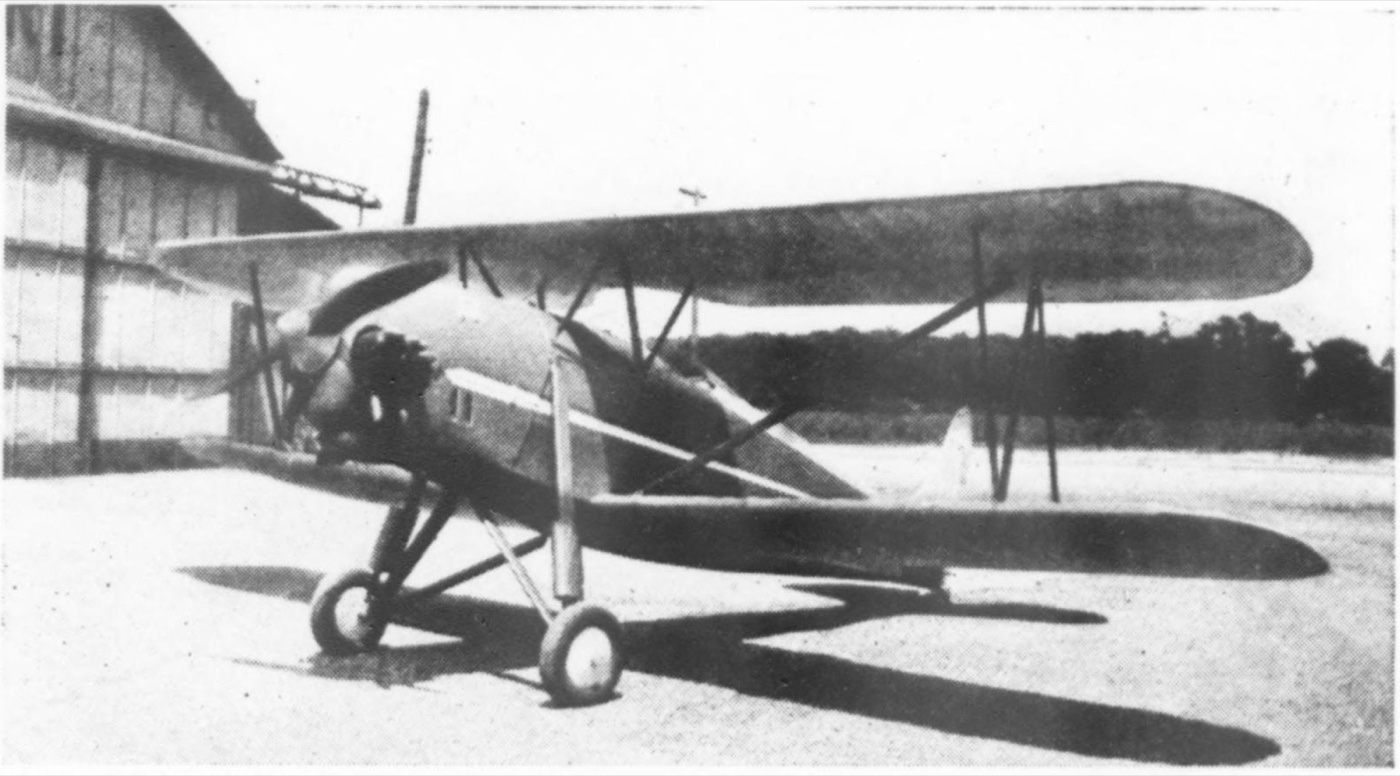
Jack Rose wanted an airplane a flying school could rent out for three dollars an hour and still make money, at a time when solo time cost $7.50 to $10. What he built was the Parrakeet, a stubby single-seat biplane that was still being built from his design forty years later. Jennings W. Rose, known as Jack, was born about 1901 and saw the Wright brothers fly an exhibition in 1910. In 1917 he was a construction hand at Chanute Field in Rantoul, Illinois. In 1923 he became an Army flight cadet at Brooks Field, Texas, and soloed a Curtiss JN-6H after 11 hours. He finished training as a civilian, became a flight instructor in 1924, barnstormed in 1925 and 1926, and by 1929 held a transport pilot's license.
Rose began designing his own small biplane in the late 1920s, and the Parrakeet dates from about 1929. He preferred the British double-r spelling, though the magazines often printed it "Parakeet." The Rose Aeroplane and Motor Company was incorporated in Chicago in July 1931, and his first prototype, NX12084, flew on a tiny Heath Henderson engine. An improved prototype was test-flown at Pal-Waukee airport near Chicago in 1934 with a 37-horsepower Continental A-40, and the government approved the design for production in August 1935. The price was $975, ready to fly. In February 1936 *Popular Aviation* reported five finished airplanes on the line and twenty more planned.
The twenty were never built. Rose's company completed eight certified Parrakeets between 1935 and 1941, and along the way it tried Franklin and Poyer engines and an engine Rose designed himself, the four-cylinder Rose Tornado. The war stopped production, and the shop turned to subcontract work on aircraft parts. Afterward Rose licensed the design, first to Blackhawk Aircraft, for whom he welded airframes himself, and in 1948 to Foster Hannaford. Hannaford sold plans to homebuilders as the Hannaford Bee, and their dispute was settled out of court.
The Parrakeet's second life came from New Mexico. Doug Rhinehart, an Antique Airplane Association member who had restored several original Parrakeets and flew one in airshows across the Southwest, obtained a license from Rose in the mid-1960s to build five new airplanes under the original type certificate. His Rhinehart-Rose Manufacturing company, with its letterhead in Farmington, built them in Farmington and nearby Aztec as the A4-C, a strengthened version with a 100-horsepower Continental O-200. The first was registered in 1969. Rhinehart died after a crash near Aztec in the spring of 1978, and the last of the five was finished after his death. Jack Rose died in 1979 after a long illness. Where he is buried has not been found.
Our 1972 Rose-Rhinehart Parrakeet A4-C, serial number 506, is the second of those five factory-built airplanes. Jack Rose did not build it, but it was built under his license and to his design, more than forty years after he first drew the Parrakeet. It is a Golden Age sport biplane built new in the 1970s.