Jean A. Roché (1894–1981) and the Aeronca founders
The Army engineer whose garage-built flivver became the Flying Bathtub
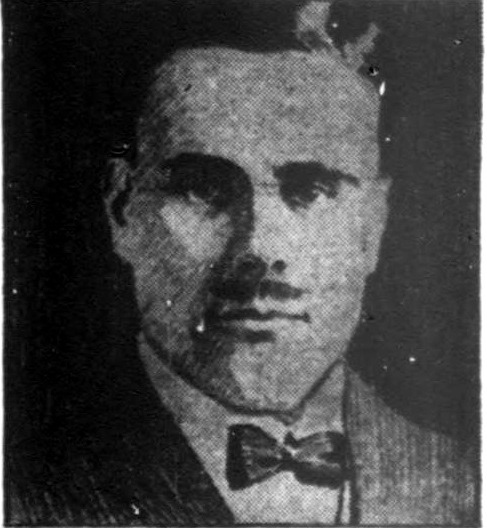
Aeronca had money, officers and a factory site before it had an airplane. The airplane came from Jean Alfred Roché, an Army engineer who built it in his spare time. Roché was born in France in 1894 and was 12 when his family arrived in New York in 1906. He studied mechanical engineering at Columbia University and made his first glider flights in 1911, which later made him one of the Early Birds of Aviation. In 1917 he followed the Army's aviation section to McCook Field in Dayton, Ohio, where he worked as an Army engineer.
In 1923 Roché and a McCook colleague, John Dohse, began building a small high-wing monoplane in a garage on Watts Street. A borrowed Henderson motorcycle engine could not lift it, so they fitted a 29-horsepower Morehouse engine. On September 1, 1925, during a taxi test, Dohse gave it too much throttle and the airplane flew. When a crack-up in 1926 destroyed the Morehouse, Army engineers Robert Galloway and Roy Poole built a 107-cubic-inch, two-cylinder engine of about 26 horsepower, and that engine became the Aeronca E-107.
In November 1928, a group of Cincinnati business leaders formed the Aeronautical Corporation of America. The officers elected that December were Keller, an executive of the Dow drugstore chain, as president, Taylor Stanley as vice president, the Cincinnati attorney and future U.S. senator Robert A. Taft as secretary, banker J. J. Castellini as treasurer and Conrad Dietz as general manager. They planned a factory at Lunken Airport and first meant to build Dietz's designs, but after a demonstration at Wright Field in the spring of 1929 they bought Roché's airplane, and in July 1929 Roché was named president and chief engineer. He kept his Army job and held the post only briefly. The production C-2 appeared late in 1929, sold for under $1,500 and earned the nickname Flying Bathtub. Aeronca sold 164 in 1930 and 1931. The U.S. Centennial of Flight Commission calls Aeronca the first company to build a commercially successful light aircraft. In 1931 came the C-3, which seated two side by side.
The Ohio River flood of early 1937 put all of Lunken Airport under water, and the factory lost its tooling and nearly all its drawings. New airworthiness rules ended C-3 production that same year. Aeronca moved to Middletown, Ohio, in 1940. There it built the Chief, wartime trainers and from 1945 the Champion, or "Champ." Aeronca stopped building light airplanes in 1951 and sold the Champion design to Champion Aircraft.
Roché moved to Langley Field, Virginia, in 1939. He worked there as an Air Corps and later Air Force engineer alongside the NACA laboratory until he retired in 1960. He held about twenty patents and was elected to the Virginia Aviation Hall of Fame. He died at his home in Hampton, Virginia, in February 1981, at 86. His graveside service was held at Parklawn Memorial Park in Hampton.
Our 1936 Aeronca C-3 comes from the two-seat line that grew out of Roché's garage-built airplane. It is Aeronca's everyman airplane, and it tells the Collection's story of affordable flight as well as anything in our hangars.