
Marc Birkigt
1878–1953
The Swiss engineer whose aluminum V-8 became the American "Hisso"
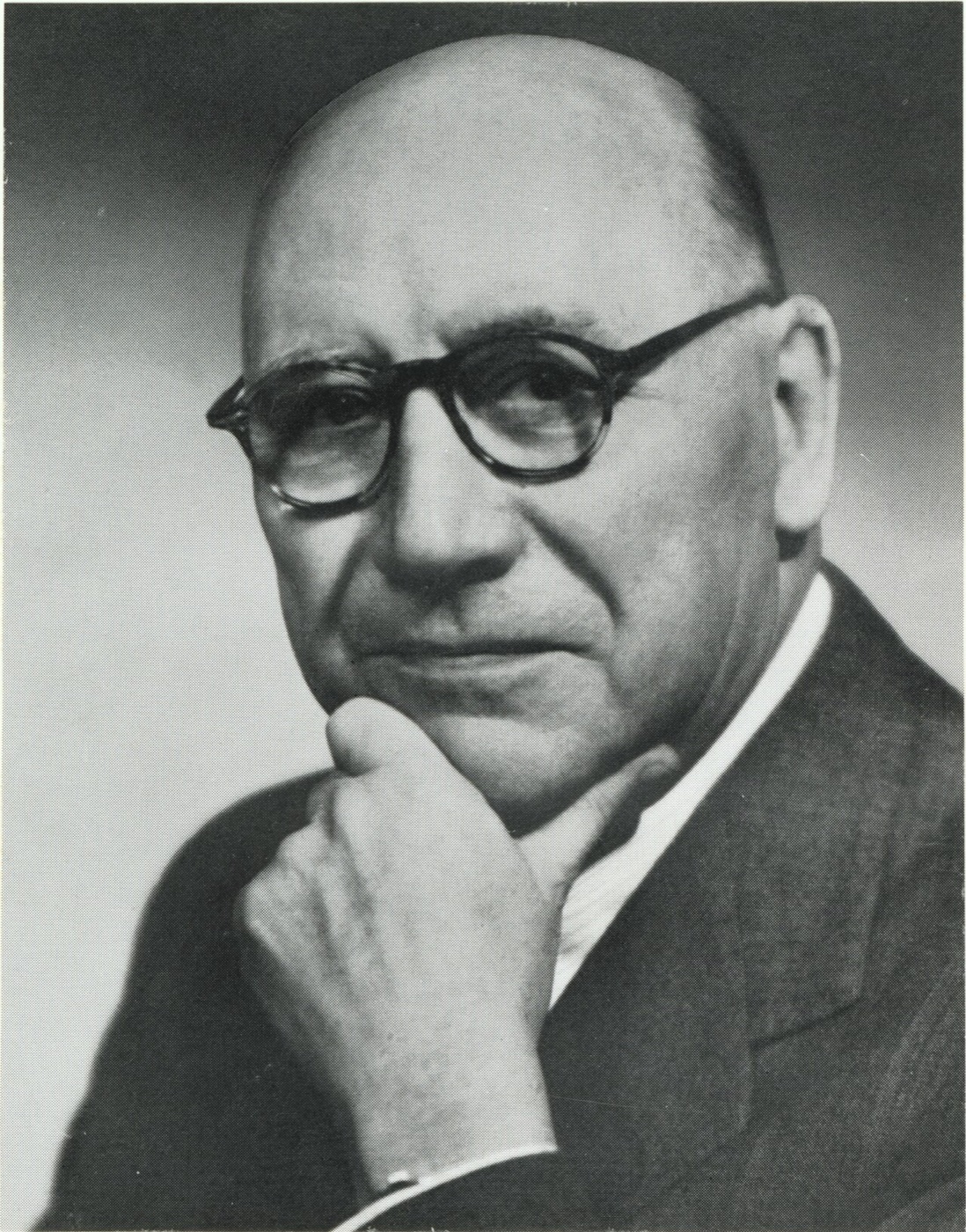
American pilots of the 1920s knew the "Hisso" well, and few of them could have named the quiet Swiss engineer who designed it. Marc Birkigt was born in Geneva on March 8, 1878, the son of a German father, and earned his diploma at the Geneva School of Mechanics. Around 1899 he was called to Barcelona to work for Emilio de la Cuadra, whose electric vehicles failed. Birkigt designed gasoline engines for him instead, and on June 14, 1904, he joined the Catalan industrialist Damián Mateu in founding Hispano-Suiza Fábrica de Automóviles in Barcelona. The name means "Spanish-Swiss."
King Alfonso XIII bought the cars, backed the company and lent his name to one of its models, and French demand grew so quickly that Hispano-Suiza opened a factory at Levallois-Perret, outside Paris, in 1911, moving to Bois-Colombes in 1914. That year Birkigt designed a new aircraft engine: a water-cooled V-8 with cast aluminum cylinder blocks and steel liners, giving about 150 horsepower when most Allied engines made far less. The French army tested it in 1915, and about twenty firms built nearly 50,000 of them during the war, under license in France, Britain, the United States, Italy, Russia and Japan. It powered the SPAD VII and SPAD XIII and the British S.E.5 and S.E.5a. Georges Guynemer, who flew his SPADs with the Escadrille des Cigognes, the "Storks" squadron, publicly thanked Birkigt for the engine, and the squadron's flying stork became Hispano-Suiza's emblem.
After the war the stork went onto the radiator cap of Birkigt's H6, shown at the Paris Salon in October 1919. Its 6.6-liter overhead-camshaft six was in effect half of a planned V-12 aero engine, and its servo-assisted four-wheel brakes were good enough that Rolls-Royce built them under license. The French company ended car production in the mid-1930s to concentrate on aero engines.
Birkigt settled at Versoix, on Lake Geneva, around 1930. In 1933 he began a new 20 mm automatic cannon, patented it in 1938, and that year founded Hispano Suiza (Suisse) SA in Geneva to build machine tools and light armament. The gun, the HS.404, armed French fighters and was built under license in the United States and in Britain, where it became the Royal Air Force's main fighter cannon from 1941. Birkigt was made a grand officer of the Legion of Honor and received an honorary doctorate from the Swiss Federal Institute of Technology in Zurich. He died at Versoix on March 15, 1953, and is buried in the Versoix cemetery with his wife, Eugénie. The French company joined Snecma in 1968 and lives on in today's Safran group.
In the United States his V-8 was license-built by Wright-Martin, later Wright Aeronautical, as the Hisso Model A and Model E. The Travel Air 3000 was built around the Hisso, and our 1927 Travel Air 3000, now under restoration, is being restored with one. Its provenance report records a Hispano-Suiza Model A rated at 150 horsepower, which the restoration will confirm.
Our engines from this story
- Hispano-Suiza V-8
- Flies in: 1927 Travel Air 3000 NC1084