
The Stinson Family
Four flying children, a mother who ran the business, and a name that stayed on airplanes for decades
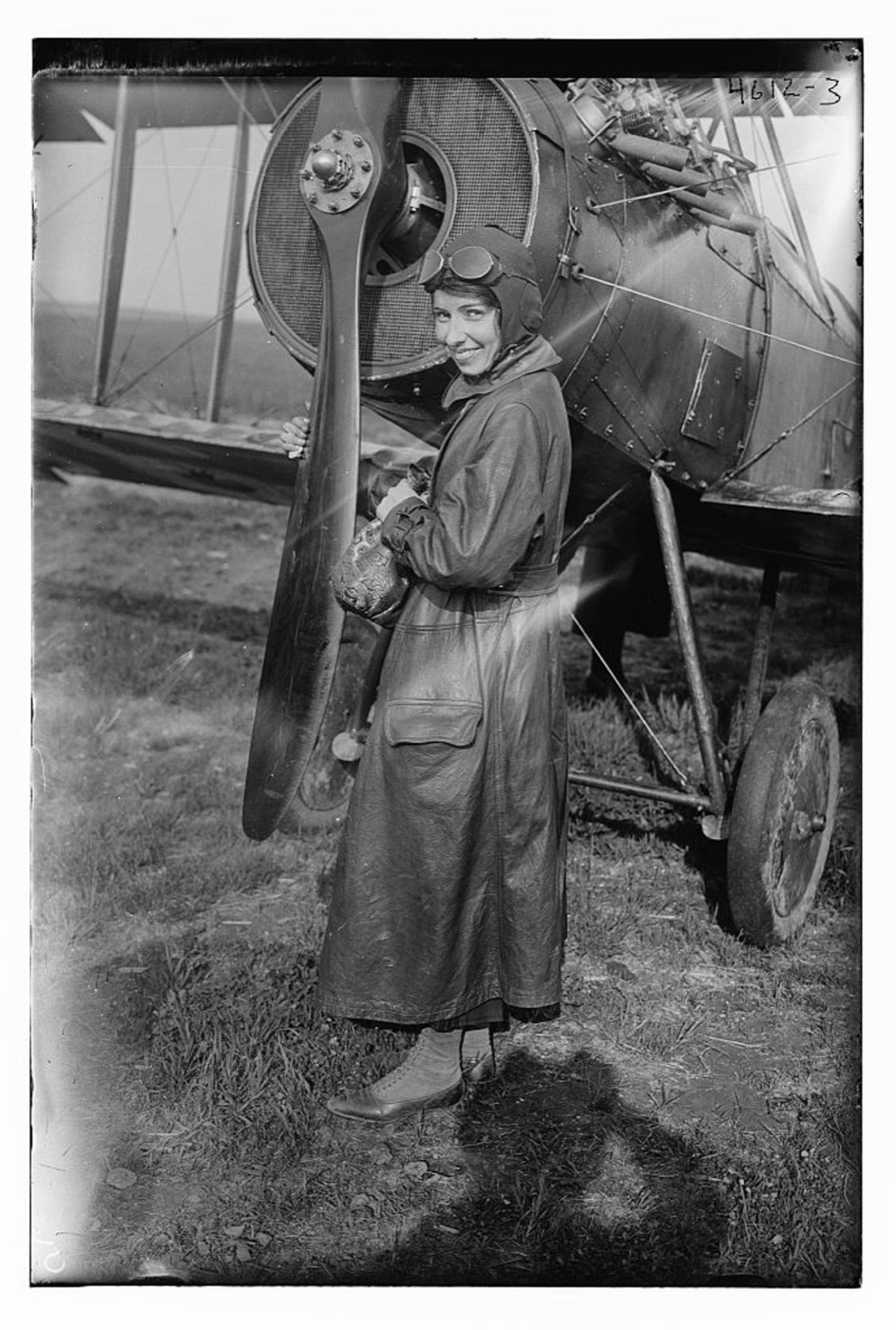
Few families gave American aviation as much as the Stinsons of Fort Payne, Alabama. Edward and Emma Beavers Stinson had four children, and all four learned to fly. Katherine (1891–1977) was born on February 14, 1891, Eddie (Edward Anderson Stinson Jr., 1893–1932) on July 11, 1893, and Marjorie (1896–1975) on July 5, 1896. Jack was the youngest. Their mother, Emma, ran the business side of nearly everything they did.
Katherine meant to be a concert pianist, but a balloon ride in 1911 changed her mind. In 1912 she learned to fly from Max Lillie in Chicago and became the fourth woman in the United States to earn a pilot's license. In April 1913 she and Emma formed the Stinson Aviation Company in Hot Springs, Arkansas. Billed as the "Flying Schoolgirl," she looped hundreds of times without an accident, flew at night, and spelled "CAL" over Los Angeles with flares, reportedly the first skywriting done in the dark. From December 1916 to mid-1917 she flew exhibitions in Japan and China, the first woman to fly in Asia. In May 1918 she flew mail from Chicago toward New York, and that summer she became the first civilian to fly mail in Canada, between Calgary and Edmonton.
Eddie learned to fly at the Wright School in Dayton in 1913, and Marjorie followed in June 1914, becoming the ninth American woman licensed. The family moved to San Antonio, where Marjorie and Eddie taught on the parade ground at Fort Sam Houston. In 1915 they opened the Stinson School of Flying on land leased from the city. Emma managed it, Katherine financed it, Eddie cleared the mesquite and kept the airplanes running, and Marjorie taught. Canadian cadets came first, then Americans, and the young instructor became known as "the flying schoolmarm." The wartime ban on civilian flying closed the school, but Stinson Field, now Stinson Municipal Airport, is still busy, and the city calls it the nation's second-oldest general aviation airport in continuous operation.
The war also ended Katherine's flying. Turned down as a military pilot, she drove an ambulance for the Red Cross in France and came home with tuberculosis. She went to Sunmount Sanitarium in Santa Fe in 1920, recovered, married World War I pilot Miguel A. Otero Jr. in 1927, and became an admired designer of Pueblo-style houses. She died in Santa Fe on July 8, 1977, and is buried beside her husband in Santa Fe National Cemetery. Marjorie flew exhibitions until 1928, then worked from 1930 to 1945 as a draftsman for the War Department in Washington, and spent her retirement researching aviation history. She died there on April 15, 1975, and her ashes were scattered over Stinson Field. Her papers are at the Library of Congress.
Eddie taught Army pilots at Kelly Field during the war and then barnstormed. In 1920 he and Jack founded a Stinson company in Dayton. Jack later ran his own flying school and became an aeronautical engineer. In December 1921 Eddie and Lloyd Bertaud stayed aloft more than 26 hours, the first endurance record the FAI recognized, and in 1928 he and George Haldeman stayed up more than 53 hours at Jacksonville, Florida. Detroit backers paid for his SB-1 Detroiter, an enclosed-cabin biplane with wheel brakes that first flew on January 25, 1926, and the Stinson Aircraft Corporation was incorporated that May. The SM-1 Detroiter monoplane made the company's name, the smaller Junior followed in 1928, and by 1929 the factory had moved to Wayne, Michigan. That September E.L. Cord bought control. On January 26, 1932, demonstrating a new Stinson Model R in Chicago, Eddie ran out of fuel and struck a flagpole landing on a golf course. He died at 38 with more than 16,000 hours in the air and is buried at Holy Sepulchre Cemetery in Southfield, Michigan.
Our 1931 Stinson Junior S in The Caldwell Collection at Mustang Field, a four-place cabin monoplane, was built in Wayne during Eddie's last full year, when the company carried his name and Cord's money. It comes from the line he started.