
How Did They Get to Work?
The airfield ran on more than airplanes.
A flying field is a small town that has to be rebuilt every morning. Airplanes do not fuel themselves, fires do not put themselves out, the mail does not walk to the airplane, and none of the people who did that work lived at the field. Every one of them had to get there. This is what they came in, and what they used once they arrived.
Serving the Airplanes
These are the vehicles that existed because the airplanes existed.
In the early days of civil and military aviation there was no fuel service on an airport. A pilot who landed either went into town to find gasoline, or he had landed on a field busy enough to keep a fuel truck of its own. The Collection's 1930 Ford fuel truck is an original truck built for that work on a Ford AA chassis, and it wears Shell Oil Company livery on purpose.
Shell belongs on an airfield. Through the 1920s and 1930s it was a leader in developing fuels for flight, and the man who ran that work is one of the famous names in American aviation. James H. Doolittle resigned his regular Army commission on 15 February 1930 and became manager of Shell Oil's Aviation Department. He raced for Shell — the first Bendix Trophy in 1931, the Thompson Trophy in 1932 — and he spent the decade pushing the company toward 100-octane aviation gasoline, persuading it around 1935 to build the refining capacity for it. Colleagues called that one Doolittle's million-dollar blunder. By 1938 the price had fallen to seventeen and a half cents a gallon, and the fuel was there when the war needed it. Doolittle returned to active duty on 1 July 1940, and twenty-one months later he led the raid on Tokyo.
1929 Ford AA fire apparatus — the fire that an airplane starts is the fire the field has to put out itself.
1929 Ford mail truck — the airmail arc. The mail does not walk to the airplane.
1924 Ford Model T one-ton field truck — the general work of the field.
1934 tractor, used as a tug — ground handling. Airplanes are moved more often than they are flown.
“Too far to walk, too short to drive.”
Airside — the Machine That Never Commuted
An airfield is a large place, and its distances are the wrong length: too far to walk, too short to be worth starting a car. The 1937 Salsbury Motor Glide, Aero model exists because one man noticed exactly that.
In 1935 Foster Salsbury watched Amelia Earhart ride a scooter across the airport at Oakland, California, and decided he could build a better one and sell it. He brought in an Oakland inventor named Austin Elmore, and by February 1936 the two of them had a prototype at the National Airplane and Boat Show in Los Angeles. It was shown there by Salsbury's friend Roscoe Turner — the racing pilot who flew for Gilmore Oil and carried a lion cub named Gilmore in the cockpit with him. Salsbury gave Turner the first Motor Glide. Turner became the public face of the business, so visible that a good many people assumed he owned it, and he wanted the machine named the Roscoe Turner. Salsbury called it the Motor Glide instead.
So the scooter was thought of on an airfield, watching a flyer, and launched by another flyer. That is why it is in this room. Pilots, mechanics and line crews on a field this size had ground to cover, and this was a better way to cover it than a car.
Getting There — the Commute
Then there is the other half of the question, which is how the people got to the field in the first place.
1940 Chevrolet Master 85 Town Sedan — the commute, in a car. The base series, not the deluxe: this is the car of someone who worked for a living.
1943 Cushman Auto-Glide, 30 Series — the wartime answer for a man who had a car and could not feed it. Gasoline rationing went nationwide on 1 December 1942, and an ordinary “A” sticker was worth three gallons a week, cut to two in March 1944.
1943 Simplex Servi-Cycle, Model G — the answer for a man who never had a car at all. About $149 new, a hundred miles to a gallon, no garage and no battery.
The bicycles of 1939 and 1941 — the last four miles, and for a good many people the whole distance.
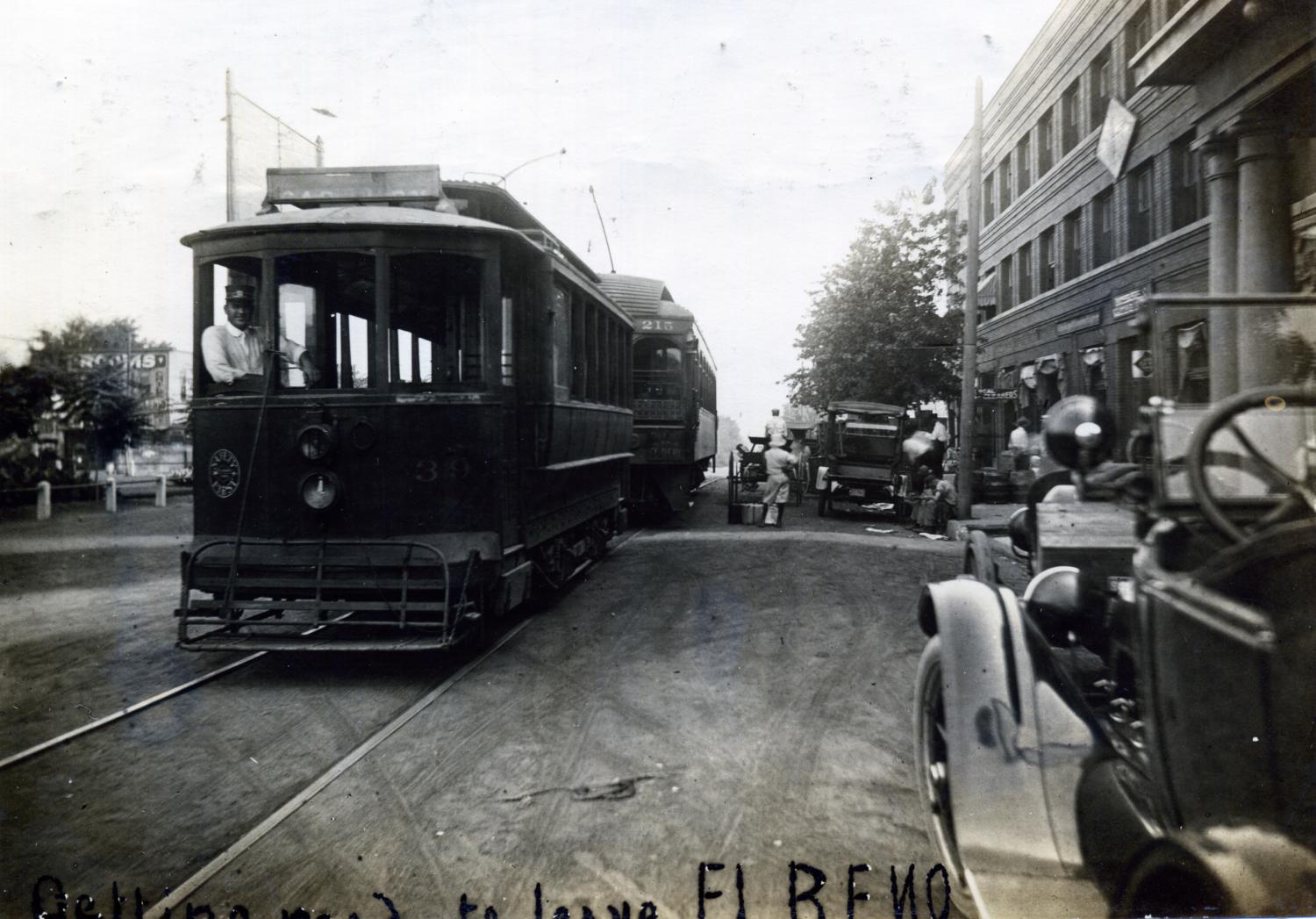
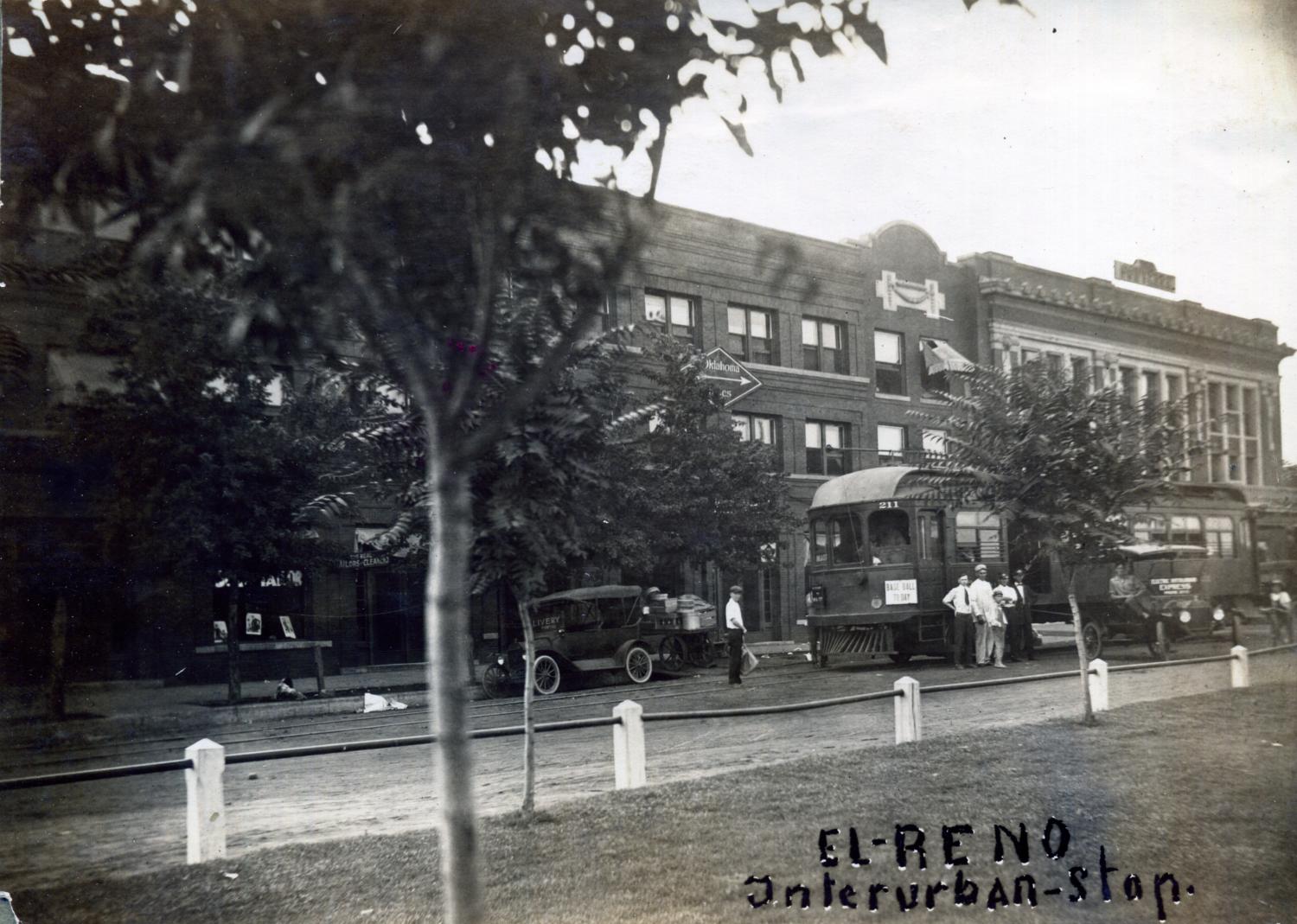
The interurban — an electric trolley car from downtown Oklahoma City all the way to El Reno, every hour, starting at five-thirty in the morning. From there it was the last four miles south to the field. Read more: Tony’s Field Notes post
The Army Was Here Too
1943 Ford GPW — the 320th Army Air Forces Flying Training Detachment was resident at Mustang Field, and the Army moved on its own wheels.
The Car the Flyer Drove
The Collection's 1925 Rickenbacker D-6 Touring belongs to a different story, the car the flyer drove. Eddie Rickenbacker raced in the Indianapolis 500 before the First World War, then came home from France as America's ace of aces, credited with 26 victories, and was later awarded the Medal of Honor. In 1922 the Rickenbacker Motor Company of Detroit put cars bearing his name and his squadron's Hat in the Ring emblem on the market. The company failed in 1927, and he went on to run the Indianapolis Motor Speedway and, from 1935, Eastern Air Lines, which he and his associates bought in 1938. Our D-6 carries his name and his Hat in the Ring. Read his full story in The Visionaries.
Read the whole story in Tony’s Field Notes post, How Did They Get to Work?.
The Collection does not claim that these particular vehicles worked at this field. It claims only that vehicles exactly like them did the work, on fields exactly like this one.
The vehicles are on the hangar floor and are not behind rope.