Ross W. Judson (c. 1881–1946), William R. Angell (1877–1950) and Robert Insley
The car-engine men who gave America the W670 radial and the little flat-four
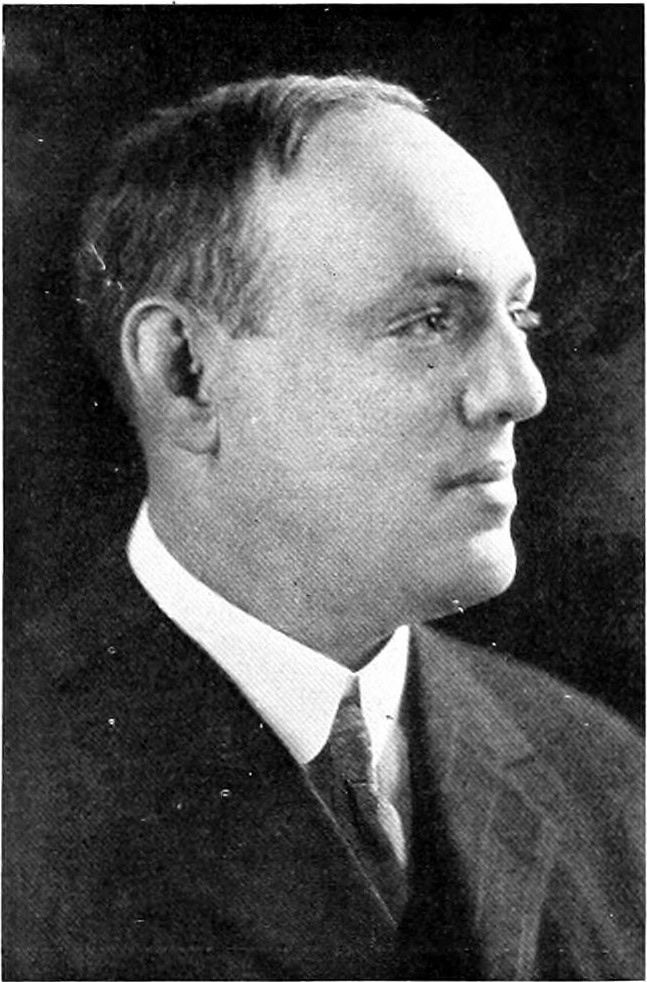
Many of the engines in our hangars carry the Continental name, and they come from a company that built motors for automobiles. Ross W. Judson grew up in Chicago and studied at the Armour Institute of Technology. In a small machine shop there he built a four-cylinder engine with an L-head and sold it in June 1902 to Henry T. Truby of Joliet, Illinois. That September he went into partnership with his brother-in-law, Arthur W. Tobin, and his sister, Ione Tobin. The company became the Continental Motor Manufacturing Company in February 1905 and began production in Muskegon, Michigan, on May 15, 1906. A Detroit plant followed in 1911. By the 1920s Continental supplied engines to dozens of carmakers. Judson was also a flying executive who traveled in the company's own Fokker trimotor, and in March 1926 he announced that Continental would build engines for airplanes.
Judson had two men to carry it out. William R. Angell was born in Jesup, Iowa, in 1877, raised in Muskegon and trained as a lawyer at Kent College of Law. He helped refinance Continental in 1916 and rose to corporate secretary and then vice president. Robert Insley, a 1916 graduate of Hamilton College, had been assistant chief of the Power Plant Section at the Army's engineering division at McCook Field and was co-author of the 1926 textbook *Aircraft Power Plants*. By 1926 he was working for Continental. Continental showed its first production aircraft engine, the seven-cylinder A-70 radial, at the New York automobile show early in 1929, and the A-70 received its type certificate that October. In August 1929 the company formed the Continental Aircraft Engine Company, with Angell as president and Insley, "who has been in charge of the development work," as vice president. In 1930 Judson stepped aside, and Angell became president of the whole corporation.
Insley's department enlarged the A-70 into the R-670, which first flew in the company's Waco F-2 on December 14, 1931, and was renamed the W670 in the mid-1930s. It powered Waco's F-series biplanes, including the UPF-7 that the Civilian Pilot Training Program used widely, and, as the R-670-5, the Army's Stearman PT-17 trainer. A version also went into the M3 Stuart light tank. At the light-plane end, Insley told engineers in April 1931 that cheap airplanes needed an engine of about 35 horsepower, and that "analysis had led him personally to the adoption of the four-cylinder horizontal-opposed type." The 37-horsepower A-40 received its certificate that May and made the Taylor Cub possible. Harold Morehouse, whose little opposed engine had powered Jean Roché's prototype for what became the Aeronca, joined Continental in 1932. He worked on the A-40 and the larger A-50, from which grew the A-65 that was certificated in 1939 and powered the prewar light-plane boom. Morehouse later moved to Lycoming.
Insley left in 1933 for United Aircraft and Menasco, then returned to Continental in the 1940s as vice president of engineering. Judson died at his winter home in Miami Beach on March 12, 1946, at 65. Angell kept Continental solvent through the Depression and resigned in 1939. He put his fortune into North Manitou Island in Lake Michigan and into a foundation for young people. He was struck and killed by a Detroit city bus on January 25, 1950. No burial place has been found for any of the three, and no death date has been found for Insley.
A cutaway W670 is on display in our hangars, and the same radial flies in our 1933 Waco UBF-2, 1934 Waco UMF-3, 1940 Waco UPF-7 and 1941 Waco UPF-7, and in our 1942 Boeing-Stearman PT-17. Our 1937 Taylor-Young Model A carries the A-40 type, and our 1939 Luscombe 8A carries the A-65. Our 1972 Rose-Rhinehart Parrakeet A4-C flies behind an O-200, a later engine in the same flat-four family.
Our engines from this story
- Continental W670 / R-670 (cutaway on display)
- Continental A-40
- Continental A-65
- Continental A-75
- Continental O-200
- Flies in: 1933 Waco UBF-2 N13444
- Flies in: 1934 Waco UMF-3 N13571
- Flies in: 1940 Waco UPF-7 N30107
- Flies in: 1941 Waco UPF-7 N32071
- Flies in: 1942 Boeing-Stearman PT-17 N67412
- Flies in: 1937 Taylor-Young Model A N19832
- Flies in: 1939 Luscombe 8A NC23000
- Flies in: 1972 Rose-Rhinehart Parrakeet A4-C N14882