Ed Heath and the Henderson Brothers
Two Detroit brothers built a four-cylinder motorcycle, and a Chicago flier made it an airplane engine
The little engine on display in our hangars has two family trees. William G. Henderson was born in Cleveland on November 29, 1882. His father, Thomas W. Henderson, had helped Alexander Winton found the Winton Motor Carriage Company and served as its vice president, and Will's older brother Tom was Winton's sales manager. Their father advanced the money for Will's prototype motorcycle. In 1911 the brothers formed the Henderson Motorcycle Company at 268 Jefferson Avenue in Detroit. Will was the designer and Tom handled the business. Their in-line, four-cylinder Henderson Four went on sale in January 1912 for $325, and in 1912 and 1913 Carl Stearns Clancy rode one around the world. In 1913 Tom, as company president, was elected president of the National Association of Motorcycle Manufacturers.
Late in 1917 the brothers sold it to Ignaz Schwinn, the Chicago bicycle maker who also built Excelsior motorcycles. Production moved to Chicago, with Will as chief engineer and Tom as sales manager. Tom left early in 1919 to export Hendersons. Will left in 1919 as well, and that fall he and Max Sladkin formed the Ace Motor Corporation in Philadelphia, and their Ace four came out in 1920. On December 11, 1922, while he was testing an Ace on a Philadelphia street, a car struck him. He died in Frankford Hospital without regaining consciousness and is buried at Westwood Cemetery in Oberlin, Ohio. Schwinn built Hendersons until 1931.
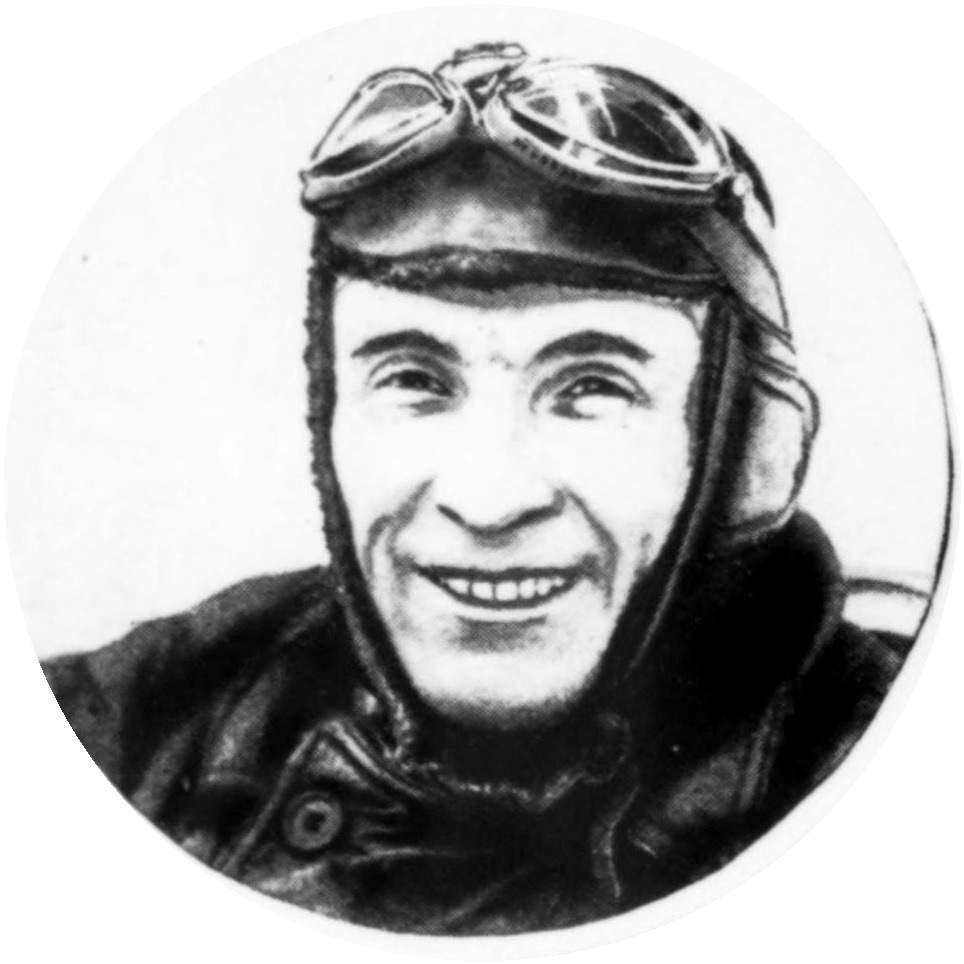
Edward Bayard Heath was born in Brooklyn on November 17, 1888. His father, a machinist, died when he was three, and he attended Chicago's Lane Technical High School. He built his first airplane, patterned after a Blériot monoplane, at his uncle Chester Johnson's machine shop in Amsterdam, New York, about 1909 or 1910. He worked for Glenn Curtiss at Hammondsport, and in 1912 he bought the Bates aeroplane works in Chicago. His E. B. Heath Aerial Vehicle Company, later the Heath Airplane Company, sold parts and surplus aircraft, ran a flying school and, as early as 1919, offered "knockdown machines" that customers put together themselves.
Heath won his money in races. With Claire Linstedt he built the Tomboy, which won the light-plane events at the 1926 National Air Races in Philadelphia. With the prize money they built the Parasol, a single-seat monoplane with surplus Thomas-Morse Scout wings and a converted Henderson motorcycle engine, announced early in 1927 at $575 ready to fly. The first complete Heath construction kit followed in February 1927. In 1928 Heath won the light-plane race at the National Air Races in Los Angeles in his tiny Baby Bullet at 111 miles per hour. Over the same years he reworked the Henderson De Luxe engine, changing its lubrication and valves, into the Heath-Henderson B-4, about 30 horsepower. By 1931 a Super Parasol cost $975 ready to fly or $199 as a kit shipped in eleven groups. The Museum of Flight credits Heath with selling about 1,000 kits.
On Sunday, February 1, 1931, Heath took his new low-wing design up for testing near Morton Grove, Illinois. A wing strut failed at about 1,500 feet, and he was killed instantly. He was 42. His mother sold the company, which moved to Niles, Michigan, and went bankrupt in 1934. In 1935 Howard Anthony bought what remained at an auction for $300 and moved it to Benton Harbor, Michigan. In 1947 the Heath Company sold its first electronic kit, an oscilloscope. Heathkits were sold until 1992.
The Heath-Henderson B-4 on display in our hangars carries both stories. Étienne Dormoy had already adapted a Henderson motorcycle engine himself and won a 1924 race with it. Our 1923 Dormoy Bathtub reproduction is the airplane that shows the Henderson motorcycle engine's earlier use in aviation.