
Frederick Rentschler (1887–1956) and George Mead (1891–1949)
The businessman and the engineer who founded Pratt & Whitney Aircraft and gave America the Wasp
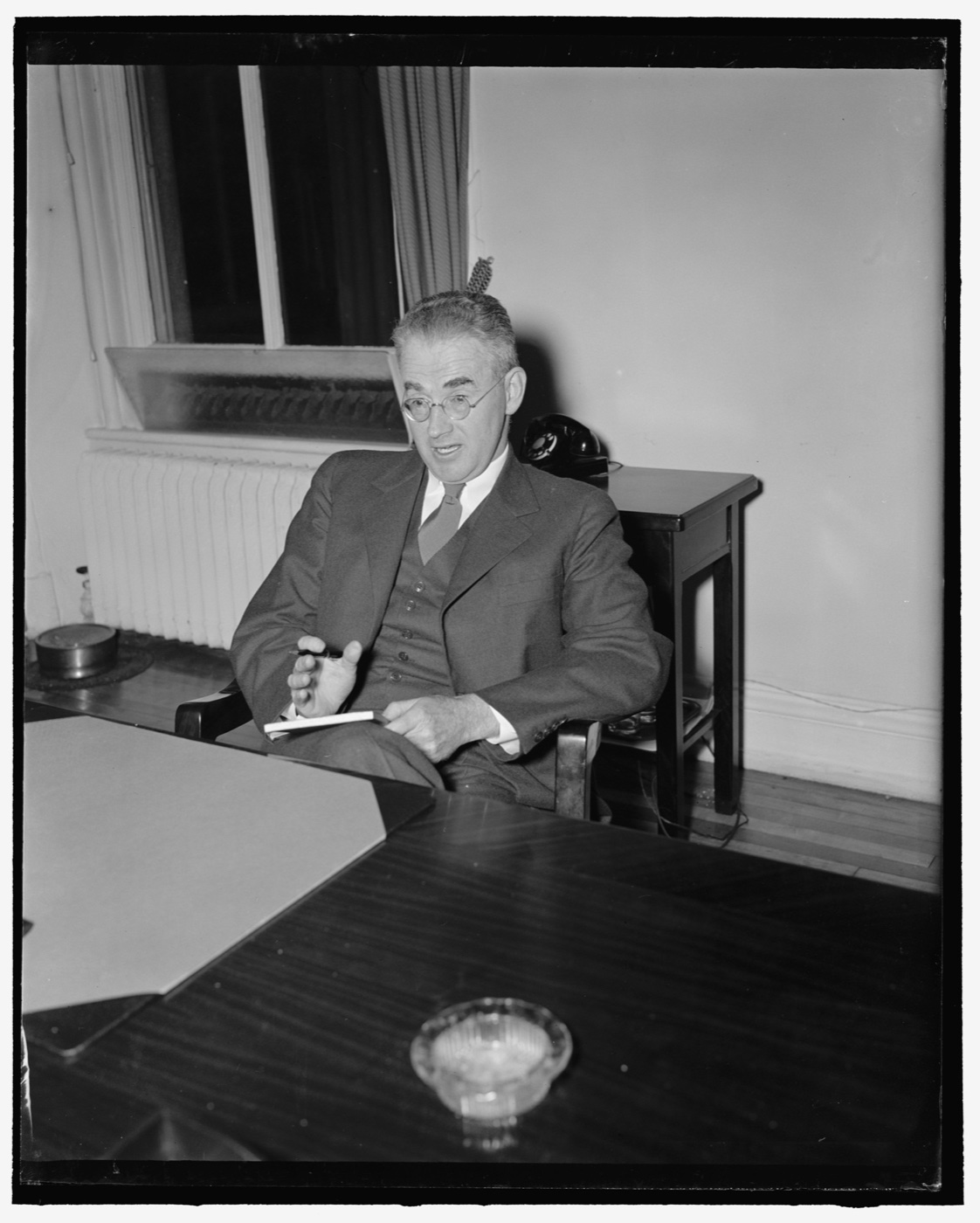
In June 1925 two engineers in a New Jersey garage began drawing an airplane engine for a company that did not yet exist. Frederick Brant Rentschler, born in Hamilton, Ohio, on November 8, 1887, came from a family of manufacturers and graduated from Princeton in 1909. In the First World War the Army made him an inspector of the Hispano-Suiza engines being built under license at the Wright-Martin plant in New Brunswick, New Jersey. George Jackson Mead, born in Everett, Massachusetts, on December 27, 1891, left MIT in 1915 because of poor health and became an experimental engineer, by 1916 at Wright-Martin.
After the war Rentschler became president of the new Wright Aeronautical Corporation in Paterson, New Jersey, and Mead its chief engineer. When his board of investment bankers refused to put Wright's profits into a bigger air-cooled engine, Rentschler resigned on September 1, 1924. The Navy wanted an air-cooled engine of at least 400 horsepower, and Rentschler found backing for one in Hartford, Connecticut, at the Pratt & Whitney Company, a machine-tool maker with cash and empty floor space. Pratt & Whitney Aircraft Company was incorporated on July 23, 1925. The tool company put up $250,000, machinery and a factory for half the stock, and Rentschler and Mead held the other half. Rentschler was president and Mead vice president for engineering.
The two engineers were Mead and the designer Andrew Willgoos, working in Willgoos's garage in Montclair, and in August the team moved into the old Pope-Hartford automobile factory on Capitol Avenue in Hartford. Their engine was a nine-cylinder air-cooled radial of 1,340 cubic inches. Rentschler's wife, Faye, named it the Wasp. The first one was finished on Christmas Eve 1925 and within days made 425 horsepower on the test stand at about 650 pounds. It passed its Navy qualification test in March 1926, the Navy ordered 200 that October, and the Wasp soon powered Navy fighters and Boeing's Model 40A mail planes. The larger Hornet began shipping in March 1927. In 1929 the company moved to a large new plant in East Hartford, and its flying field was soon named Rentschler Field.
That same year Rentschler parted from the tool company, kept the Pratt & Whitney Aircraft name, and joined William Boeing in forming United Aircraft and Transport Corporation, with Rentschler as president. In November 1929 Pratt & Whitney first ran the Wasp Junior, a smaller nine-cylinder engine of 985 cubic inches, certificated at 300 horsepower in January 1930. It grew to 450 horsepower, and more than 39,000 were built by 1953. After the Air Mail Act of 1934 barred manufacturers from owning airlines, the combine was split into Boeing, United Air Lines and United Aircraft Corporation, which Rentschler led with Pratt & Whitney, Hamilton Standard, Vought and Sikorsky.
Mead headed Pratt & Whitney engineering until about 1935. After disagreements with Rentschler he left United Aircraft's board by 1939. Roosevelt named him to the National Advisory Committee for Aeronautics in October 1939, and in 1940 he took charge of the aeronautical section of the National Defense Advisory Commission on William Knudsen's recommendation. He received the Medal for Merit in 1946 and died in Hartford on January 20, 1949. His papers are at the American Heritage Center of the University of Wyoming. Rentschler led United Aircraft through the war, when the Wasp family grew to include the R-2800 Double Wasp of the Thunderbolt, Hellcat and Corsair. He died at his winter home in Boca Raton, Florida, on April 25, 1956, and is buried in Fairview Cemetery in West Hartford.
Our 1931 Curtiss-Wright Travel Air B-14-R Speedwing flies today behind a 450-horsepower Pratt & Whitney R-985 Wasp Junior, a direct descendant of the engine Rentschler and Mead built in Hartford. It originally had a Wright R-975, built by the company the two men left behind, so one airplane carries both chapters of their story.