
Sherman M. Fairchild
1896–1971
The camera inventor who built airplanes to carry his cameras
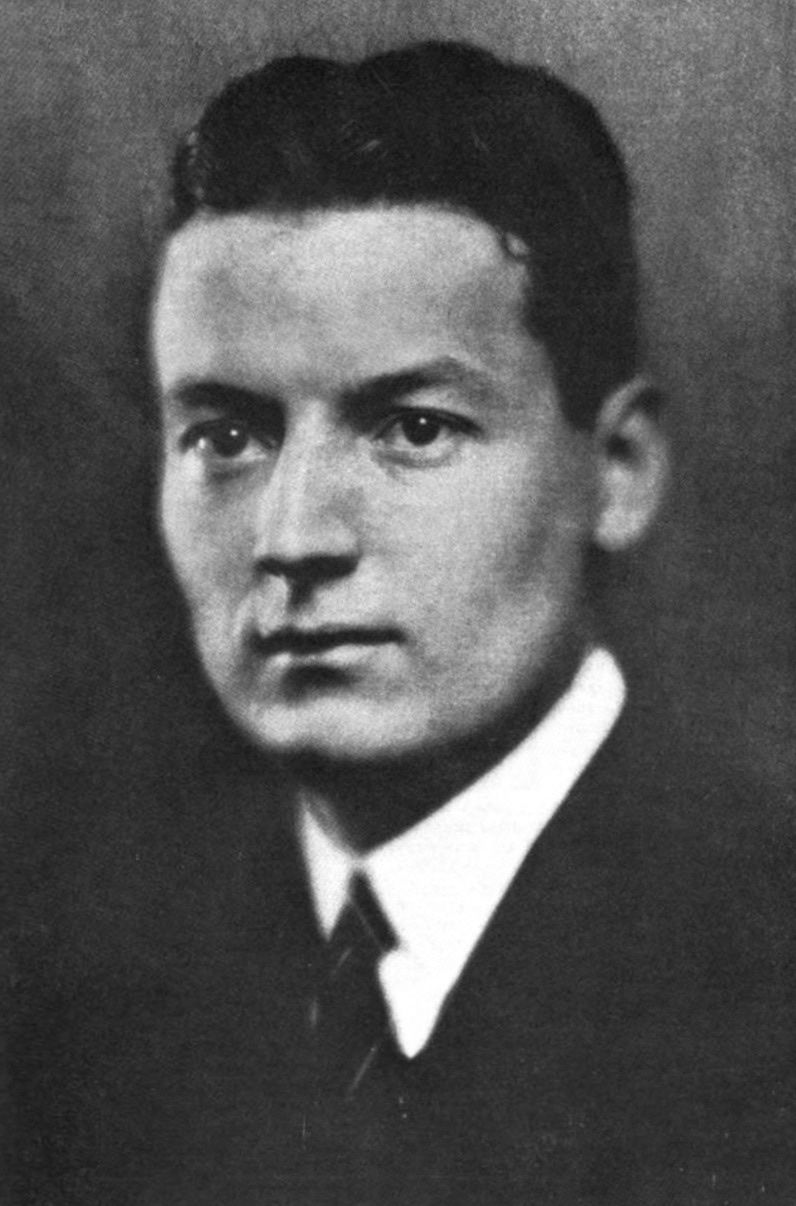
Sherman Fairchild went into the airplane business because he needed a better place to put a camera. He was born in Oneonta, New York, on April 7, 1896, the only child of George W. Fairchild, a congressman and a founder and first chairman of the Computing-Tabulating-Recording Company, which took the name International Business Machines in 1924. Sherman entered Harvard in 1915, where as a freshman he worked out a synchronized camera shutter and flash. Illness, described as tuberculosis, sent him to the University of Arizona, and he later studied at Columbia, but he never took a degree.
In 1917 he and his father won a government contract for an improved aerial camera with its shutter built between the lenses. He founded the Fairchild Aerial Camera Corporation in 1920, and his K-3 became standard Army equipment. To find civilian work for it he started Fairchild Aerial Surveys, and in 1921 his company assembled a map of Manhattan Island from 100 photographs taken at 10,000 feet. When his father died in 1924, Sherman inherited his IBM stock and remained the company's largest individual shareholder for the rest of his life.
The open-cockpit airplanes his survey crews flew were poor camera platforms, so he built his own. His FC-1 had an enclosed cockpit, a cabin for photographers and cameras, and windows in the floor. The production FC-2 followed in 1926, and the camera-equipped FC-2W grew into the Fairchild 71, a favorite of bush pilots in Canada and Alaska. In 1929 Fairchild bought a controlling interest in Kreider-Reisner of Hagerstown, Maryland, builder of the Challenger biplanes, and by 1931 his aircraft headquarters had moved there. Hagerstown produced the Fairchild 22 in 1931, the Fairchild 24 cabin monoplane in 1932, and the PT-19 primary trainer, which first flew in 1939. In 1936 his aircraft and engine interests were reorganized as Fairchild Engine and Airplane.
His camera company became Fairchild Camera and Instrument in 1944, and in 1957 it put up about $1.3 million to launch Fairchild Semiconductor with eight young engineers who had walked out of William Shockley's laboratory, the group remembered as the "traitorous eight," among them Robert Noyce and Gordon Moore. That company helped make Silicon Valley. Fairchild never married. He loved jazz, dancing, tennis and cooking, and he lived in a Manhattan townhouse on East 65th Street that the designer George Nelson helped design. He died at Roosevelt Hospital in New York City on March 28, 1971, and is buried in Glenwood Cemetery in Oneonta. The records of his aviation companies are at the National Air and Space Museum.
The Caldwell Collection at Mustang Field holds four airplanes from his companies. Our 1930 Fairchild KR-21 is a Kreider-Reisner design he kept in production, our 1933 Fairchild 22 C7E is on its way to our hangars, our 1934 Fairchild 24 C8A is one of the first five of its type built, and our 1943 Fairchild PT-19A comes from the trainer line that carried his name into the war.