
Bernard H. Pietenpol
1901–1984
The Minnesota mechanic who drew an airplane anyone could build
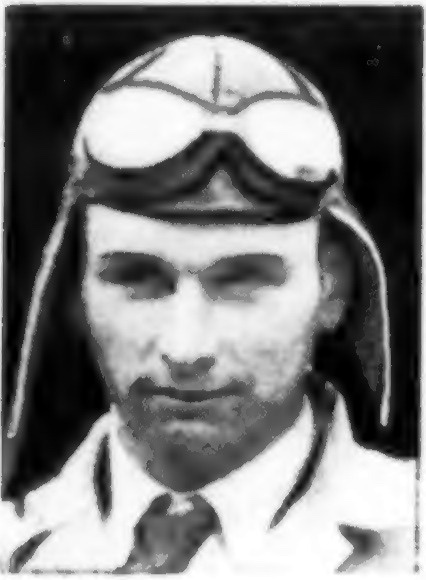
Most airplane designers measure success in airplanes sold. Bernard Pietenpol measured his in airplanes other people built. Bernard Harold Pietenpol was born in 1901 and spent nearly his whole life in Cherry Grove, a tiny hamlet in Fillmore County in southeastern Minnesota. He left school after the eighth grade and became the town's mechanic, opening a repair business in his father's barn around 1919 and putting up the small workshop in 1921 where he would build every one of his prototypes.
He began experimenting with airplanes about 1920. His first was a biplane with a Ford Model T engine, and by his own account he flew it about twenty times without knowing how to land, breaking something each time, until a gusty day finished it. A high-wing monoplane with a converted Model T engine flew in 1928. When Ford brought out the Model A, Pietenpol bought the parts from his local dealer, assembled an engine himself, and in May 1929 flew the two-seat parasol monoplane that became the Air Camper. It worked from the start. "The motor got all the credit," he later wrote, "and the ship got none."
Weston Farmer, an editor at Modern Mechanics and Inventions in Minneapolis, doubted that an automobile engine could fly an airplane. On April 14, 1930, Pietenpol and his friend Don Finke answered him by flying two Model A airplanes up from Cherry Grove. The magazine introduced Pietenpol to its readers that July, serialized his building instructions in the spring of 1931, and printed them as a four-part series in its 1932 Flying and Glider Manual under the name Air Camper. Within a year several hundred sets of blueprints had sold at $7.50 each. For readers who had only a Model T, he designed the single-seat Sky Scout, published in the 1933 manual. In the mid-1930s a young neighbor, Orrin Hoopman, redrew the Air Camper plans, and that set is still sold today.
Before the Second World War, Pietenpol taught flying in the Civilian Pilot Training Program. After the war the plans business dwindled, and he supported his family by repairing radios and televisions. He kept building airplanes, more than twenty in all, flown from his grass strip west of town, and in the 1960s adapted the air-cooled Chevrolet Corvair engine. He flew until about eighty and died in Spring Valley on January 11, 1984. His workshop is on the National Register of Historic Places, one of his hangars stands at the Experimental Aircraft Association's Pioneer Airport in Oshkosh, and the EAA named him to its Homebuilders Hall of Fame in 1994. Since 1976, Air Camper builders have gathered each July at Brodhead, Wisconsin, for the Pietenpol reunion.
Pietenpol never became a manufacturer. Instead he sold drawings, and his real legacy is the thousands of people who built their own airplanes from them. Our 2013 Pietenpol Air Camper was built by Gene Rambo from those plans. It is not a lesser version of the real thing. It is the design working exactly as Bernard Pietenpol intended.