Victor H. Roos
1888–1964
The most traveled of the pioneers
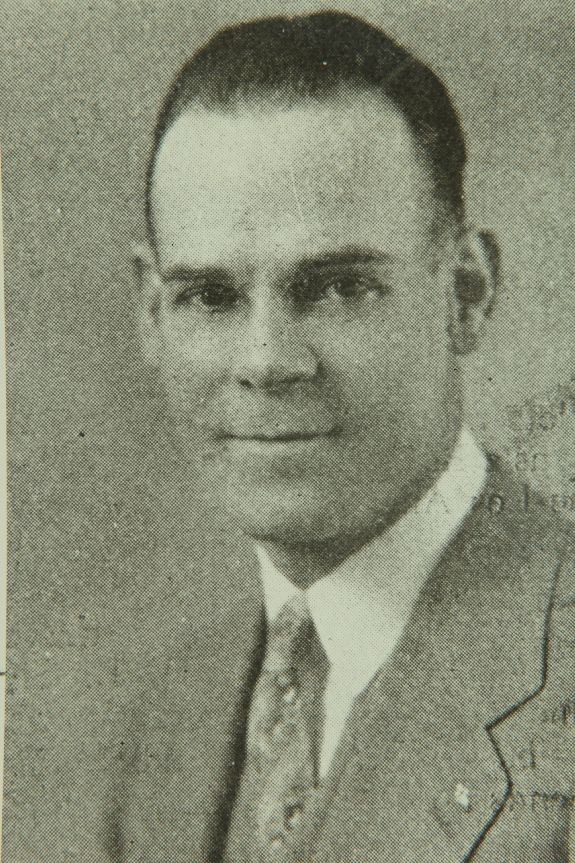
Few men in early American aviation put their names on as many factory doors as Victor H. Roos. Between 1922 and 1931 he helped start or run five airplane companies in Nebraska and Kansas, and he crossed paths with Giuseppe Bellanca, Clyde Cessna and the Swallow company along the way. Roos was born on April 26, 1888, and he was a businessman rather than an engineer. In 1917 he was distributing Harley-Davidson bicycles in Omaha, and he became one of the largest distributors in the Midwest.
In 1922 Roos and his partner A. H. Fetters bought the aviation assets of the Maryland Pressed Steel Company and formed the Roos-Bellanca Aircraft Company in Omaha, also called the Omaha Aircraft Company, to build Bellanca's CF. The CF, a cabin monoplane, first flew on June 8, 1922, at Fort Crook, Nebraska, and won races, but at $5,000 it could not compete with cheap war-surplus airplanes. Only one was built, and the company dissolved in 1924.
In September 1927 Roos joined Clyde Cessna in Wichita as partner and second-largest shareholder in the new Cessna-Roos Aircraft Company. He served as secretary-treasurer and helped secure the factory site, but he soon sold his interest back to Cessna, and by December the firm was the Cessna Aircraft Company. The Swallow Airplane Company, where Walter Beech and Lloyd Stearman had first cut their teeth, had gone into receivership that August, and in November a group of Wichita businessmen bought it. They hired Roos as general manager beginning January 1, 1928, and he retired at the end of his one-year contract in November 1928.
In January 1929 Roos became president and general manager of the Lincoln Aircraft Company in Lincoln, Nebraska, the firm Ray Page headed, whose Lincoln-Page biplanes showed a strong Swallow resemblance. Its PT trainer won its type certificate in July 1929. When the Depression bankrupted the American Eagle Aircraft Corporation of Kansas City, Kansas, early in 1931, the Lincoln company bought its assets on May 14, 1931, and formed the American Eagle-Lincoln Aircraft Corporation at Fairfax Airport, with Roos as president. Most of its effort went into the Eaglet, a small parasol monoplane designed by Edward Porterfield, until the Depression ended that too. Roos then formed the Victor H. Roos Aircraft Company to keep selling the Eaglet, and in 1934 Ben Howard built his Bendix-winning racer "Mister Mulligan" in the empty factory with Roos's permission.
After the Second World War Roos founded the Automatic Coin Machine Company in Kansas City to distribute jukeboxes. He died on October 6, 1964, and is buried in Omaha.
The Caldwell Collection at Mustang Field holds two airplanes from his career. Our 1929 Lincoln-Page PT-W is one of the Warner-powered trainers from the Lincoln factory he ran. Our 1931 American Eagle Eaglet 230 is closer still: it was built and sold new by his American Eagle-Lincoln company, on a factory bill of sale dated July 16, 1931, to its first owner, Everett L. Miller of Huntington, West Virginia.
Our airplanes from this story
- 1929 Lincoln-Page PT-W N561M
- 1931 American Eagle Eaglet 230 NC548Y (built and sold new by his company)
Part of the story told in The Founders’ Tree, the founders posters in the museum.