Clayton Brukner, Sam Junkin and Buck Weaver
Three young men, a rented dance hall, and the name on more biplanes than anyone else's
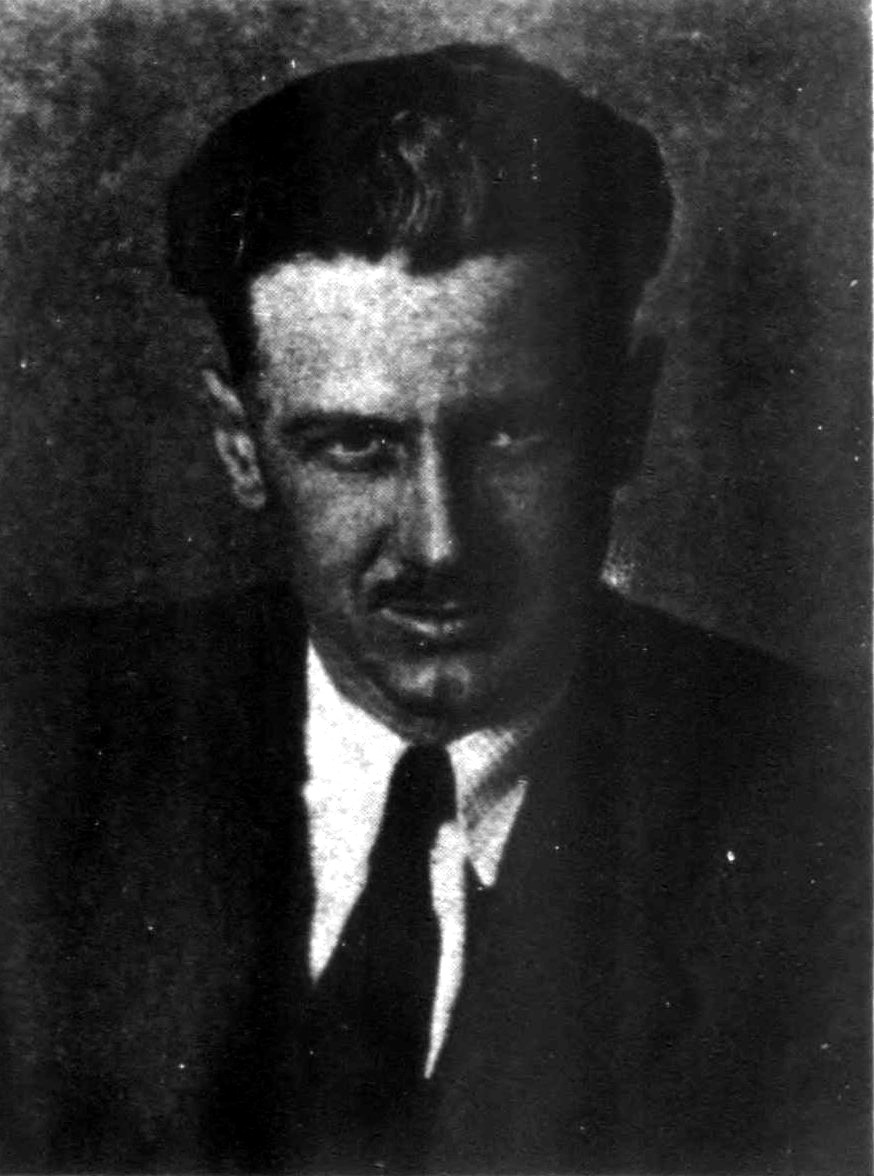
Every Waco in our hangars carries the name of a man who died five years before the oldest of them was built. The company began with two friends from Battle Creek, Michigan. Clayton John Brukner (1896–1977) was born on December 18, 1896, in Ravenna, Nebraska, and grew up in Battle Creek, where he and his schoolmate Elwood J. "Sam" Junkin (about 1897–1926) built gliders before the First World War. Both went on to work for aircraft builders in the East, including Curtiss in Buffalo and Aeromarine in New Jersey. In 1919 they set up shop with Harold Deuther in Lorain, Ohio, renting space in a dance hall to build their own designs.
In Lorain they met George E. "Buck" Weaver (1895–1924), a Chicago-born exhibition pilot who had learned to fly in 1914 and spent three summers touring with flyers including Katherine Stinson. During the war he was a civilian flying instructor at Rich Field in Waco, Texas. In 1920 the three formed the Weaver Aircraft Company, and the name for its airplanes came from the first letters of "Weaver Aircraft" and the abbreviation of "company." Their first design, a little parasol monoplane called the Cootie, crashed in February 1920 with Weaver at the controls, and the partners rebuilt it as a biplane. The company moved to Medina, Ohio, in April 1922 and to Troy, Ohio, in the spring of 1923. Weaver dropped out of the business, and Brukner bought his share. Weaver died in Chicago on July 31, 1924, at 29.
In Troy, Brukner and Junkin chartered the Advance Aircraft Company in April 1923 and kept the Waco name on the airplanes. Junkin was its first president and Brukner its treasurer. The two designed the three-place Waco 9 in 1925 around the war-surplus Curtiss OX-5 engine, and it became the company's first real success. Junkin had a heart condition, and he died on November 1, 1926, at 29, before the Waco 10 that replaced the Nine went into full production in 1927. Brukner became president. In June 1929 Advance renamed itself the Waco Aircraft Company, and by then Waco was America's leading builder of small commercial airplanes, a place it held into the early 1940s.
Brukner ran Waco for the rest of its life. In May 1930 he hired A. Francis Arcier as chief engineer, and under Brukner the company built the F-series open biplanes and the cabin Wacos of the 1930s. During the Second World War Waco designed the Army's troop and cargo gliders, among them the CG-4A, and built 1,607 gliders itself while other firms built thousands more to its designs. In 1947, with the postwar private-plane boom collapsing, Brukner took Waco out of the airplane business. The company made parts and machinery until he sold it in 1963. He gave much of his fortune to Troy, including the land that became the Brukner Nature Center and a wing of Stouder Memorial Hospital. He died on December 26, 1977, and is buried at Lyons Lake Cemetery in Marshall, Michigan. He was enshrined in the National Aviation Hall of Fame in 1997. The WACO Air Museum in Troy now tells the company's story beside its own grass airfield. The name, by the way, is pronounced WAH-co, to rhyme with taco.
The Caldwell Collection at Mustang Field holds ten Wacos from the company these three men started. Our 1929 Waco CSO, the only one built before the F-series, comes from the line that grew out of the Waco 10. The rest come from Brukner's Waco company of the 1930s and early 1940s: the 1930 Waco RNF, 1933 Waco UBF-2, 1934 Waco UMF-3, 1935 Waco YMF-5, 1936 Waco ZPF-6, 1940 Waco UPF-7, 1941 Waco UPF-7 and 1941 Waco ZPF-7, which together cover every F-series model, and the 1936 Waco YKS-6 cabin biplane.