Lloyd Stearman
1898–1975
From the Swallow to the Kaydet
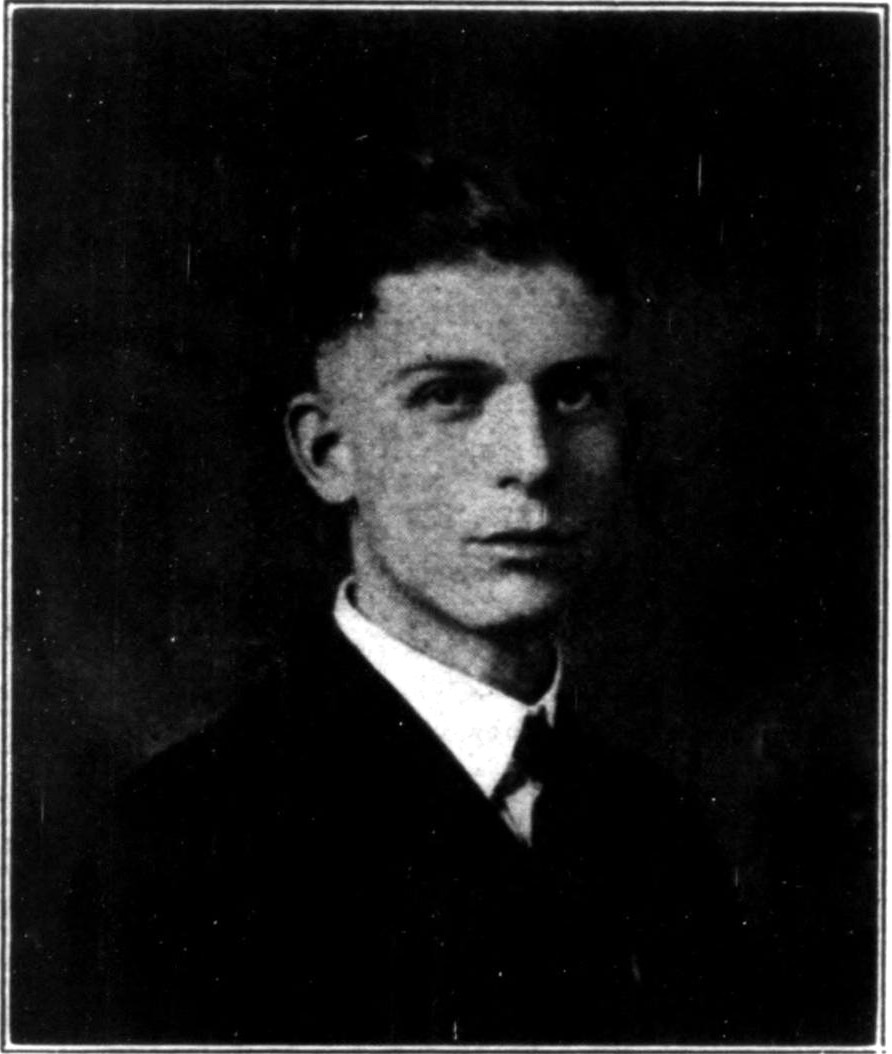
Thousands of American pilots learned to fly in an airplane that carried Lloyd Stearman's name, though he had left the company years before the first Kaydet was built. Lloyd Carlton Stearman was born on October 26, 1898, in Wellsford, Kansas, and grew up in Harper, where his father ran a construction business. He entered Kansas State Agricultural College in Manhattan in 1917 to study engineering and architecture, then enlisted in the Naval Reserve in 1918 and trained at San Diego, where he learned to fly the Curtiss N-9 seaplane.
In 1919 the E. M. Laird Company in Wichita hired him as a draftsman and mechanic. There he worked alongside Walter Beech. After Laird left in 1923, the renamed Swallow Airplane Company made Stearman its designing engineer, and his New Swallow first flew in December of that year. Stearman and Beech wanted to build airplanes with welded steel-tube fuselages, and when Swallow's management showed no interest, the two left and joined Clyde Cessna to form Travel Air in Wichita early in 1925. Stearman engineered the Travel Air Model A, a three-seat, open-cockpit biplane, and the Travel Air biplanes that followed descended from it.
In October 1926 he resigned to build airplanes under his own name in California. Stearman Aircraft set up shop in Venice, with final assembly at Clover Field in Santa Monica, and its first design, the C1, flew in March 1927. When a group of Wichita businessmen led by Walter P. Innes Jr. raised operating capital, he brought the company to Wichita that fall. The first Wichita-built Stearman went to Varney in December 1927. The C3 series became the company's mainstay, carrying the mail on feeder routes and serving sport and business flyers. In August 1929 Stearman Aircraft joined United Aircraft and Transport Corporation, the holding company that included Boeing, and Stearman resigned in July 1931.
In 1932 he and his partners bought the assets of the bankrupt Lockheed Aircraft Company. As president he oversaw the design of the twin-engine Electra. He left in the mid-1930s for the federal Bureau of Air Commerce, formed the Stearman-Hammond Aircraft Corporation with Dean Hammond in 1936, managed an aircraft department at Harvey Aluminum during the war, and afterward converted surplus Kaydets into crop sprayers. In 1955 he rejoined Lockheed as a senior design specialist and stayed until 1968. He died at his home in Northridge, California, on April 3, 1975. He was inducted into the National Aviation Hall of Fame in 1989.
Meanwhile the Wichita factory he founded, by then a Boeing division, built the Model 75 Kaydet: more than 8,500 complete trainers, or the often-quoted 10,346 when airframes built as spare parts are counted. The Caldwell Collection at Mustang Field traces that whole arc. Our 1927 Travel Air 3000 and 1929 Travel Air B4000 come from the line he engineered at Travel Air, our 1928 Stearman C3MB is a mail and sport biplane from his own company, and our 1942 Boeing-Stearman PT-17 is a Kaydet from the factory that still bore his name.
Our airplanes from this story
- 1927 Travel Air 3000 NC1084
- 1929 Travel Air B4000 N13906
- 1928 Stearman C3MB N6487
- 1942 Boeing-Stearman PT-17 N67412
Part of the story told in The Founders’ Tree, the founders posters in the museum.