Visit Collection Browse Aircraft by Type The EnginesThe Founders’ TreeThe VisionariesHow Did They Get to Work? Our Story Restoration Shop Events Donate Loan an Aircraft Volunteer Blog & News Waldo Wright's Flying Service Resources
Plan Your Visit
THE COLLECTION

The Engines of the Collection

Twenty-nine engine types from seventeen manufacturers, and nearly all of them still fly.

Every airplane in this museum is really two inventions sharing one airframe. The wings and the fuselage get most of the attention, but none of it leaves the ground without the engine up front, and in the 1920s and 1930s the engine was where some of the boldest entrepreneurship in American aviation took place. A machine-tool company in Cincinnati, automobile builders in Detroit, a motorcycle-engine converter in Chicago and a small shop in Holland, Michigan all believed they could build the motor that would carry the country into the air age. Some of them were right. A good many were not. We think both kinds of story are worth telling.

So in addition to collecting and displaying a very wide variety of Golden Age airplanes, the Caldwell Collection collects the aircraft engines of the period. Most of ours are doing exactly what they were built to do, powering airplanes that fly. Alongside the fleet, we have a growing collection of engines on static display, where you can step up close and see how each one was designed and built, and how differently their makers went about solving the same problem.

That matters to us more than it might seem. Many collections display their airplanes and never fly them. Even the museums that do fly tend to build their fleets around a few engine types, because a handful of engines is far easier to support than a hangar full of different ones. We understand why, and some of our engines are close relatives. But we believe it is important to keep demonstrating the technology created by entrepreneurs from literally dozens of manufacturers, the famous ones and the forgotten ones, because that variety is the real story of the Golden Age. A three-cylinder Szekely sounds nothing like a Jacobs. A Warner Scarab has to be greased by hand every few hours. A Ford Model A engine hangs on the nose of a homebuilt Pietenpol. You can read about all of that. You understand it when you hear them run.

UP CLOSE

The Engine Display

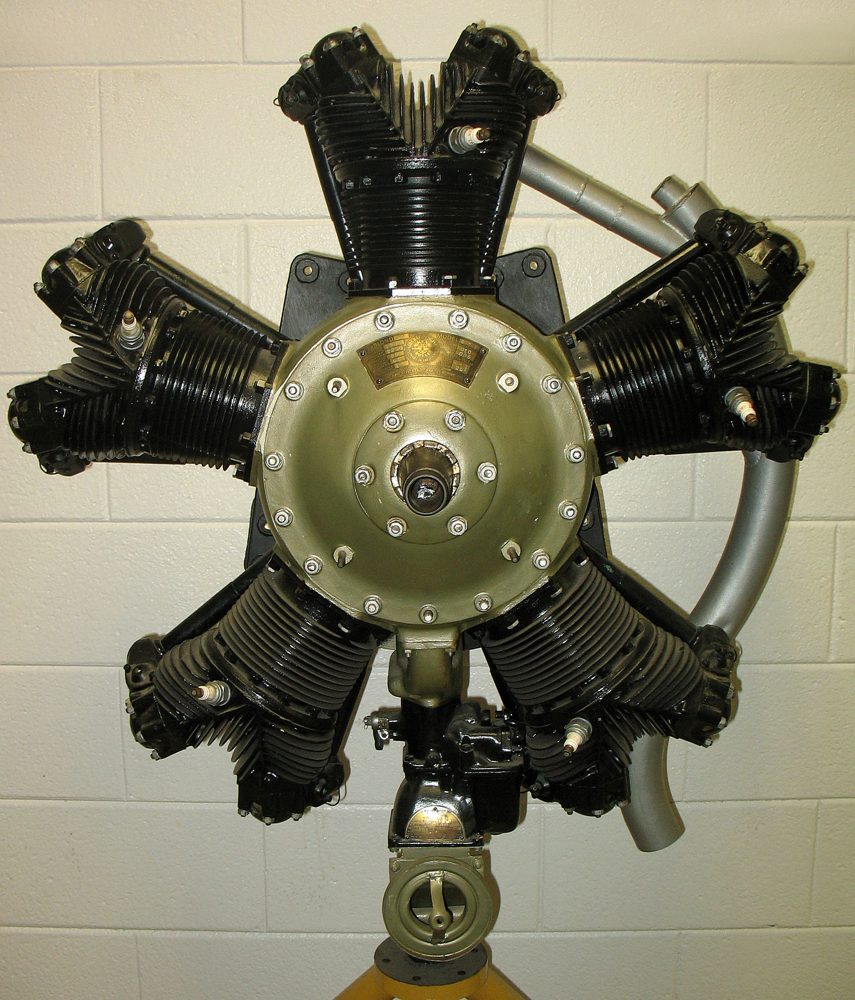
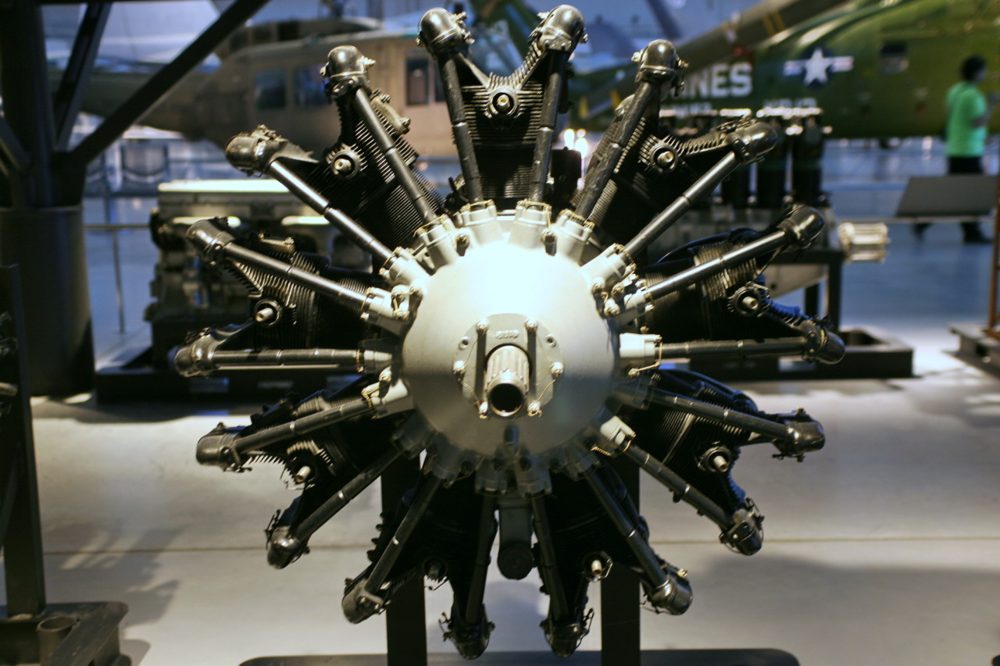
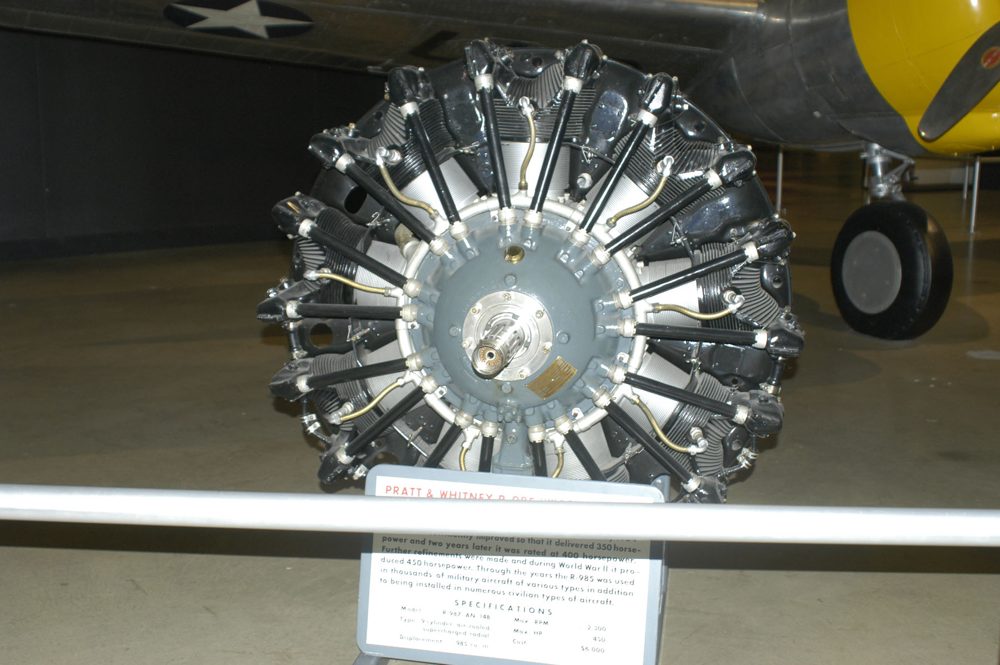
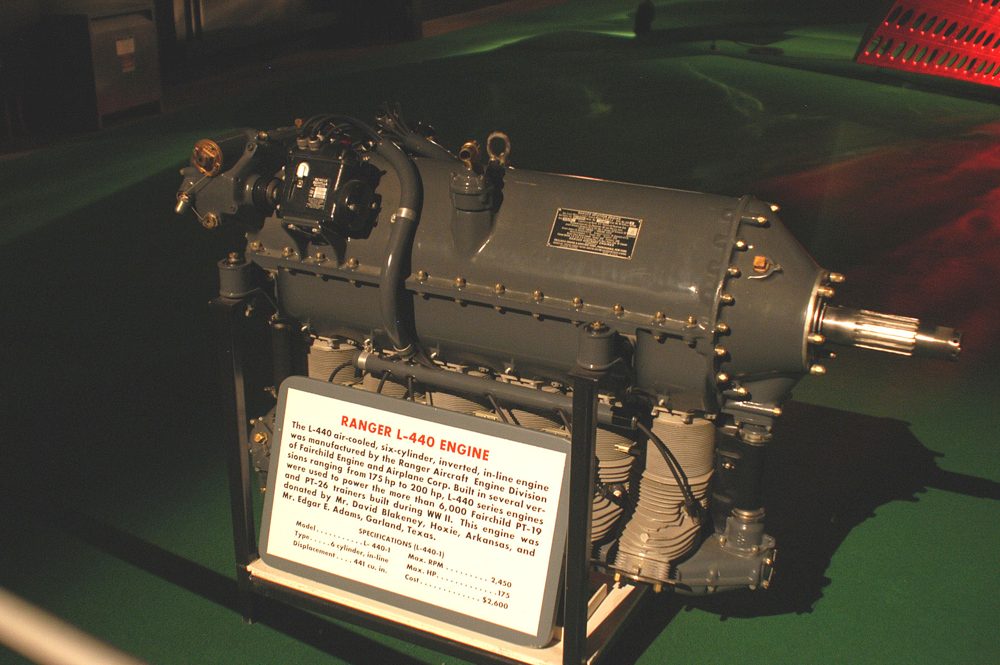
In the museum, a row of engines sits where you can look at them from inches away. The star of the row is a rare and important Continental W670 cutaway, on loan from Don Sanders. It was built by Continental for the U.S. Navy during World War II to help instruct pilots and mechanics on the inner workings of a radial engine, and it is unique because every part of it is cut away, so every part of the engine’s operation can be seen. Even the magnetos are opened up, so you can watch them work as they fire the spark plugs in each cylinder. And it isn’t only cut away. It is powered, so you can watch the engine go through its operations in real time.

Around it stand engines from across the Golden Age: a Wright Whirlwind R-760-8, a Lycoming R-680, a 200-horsepower Ranger, an Aeronca E-113, a Heath-Henderson B-4 (Ed Heath’s aircraft conversion of the Henderson motorcycle engine), a Kinner K-5, and a pair of early LeBlond fives, the 60-horsepower 5D and the 70-horsepower 5DE. A display Szekely three-cylinder, donated by Ken and Lorraine Morris, will join them soon. Every engine on display has a poster beside it that tells its maker’s story and points to the airplane in the hangar that flies behind its relatives.

“Most museums build their fleets around a few engines because it’s easier. We’d rather show you what dozens of builders dreamed up.”
EVERY ENGINE IN THE COLLECTION

Listed alphabetically by maker

Each entry links to the airplanes it powers. Engines marked On Display can also be seen up close in the museum. Until we photograph our own engines this winter, each card carries a photograph from Wikimedia Commons, credited under the image. Where no free photograph of the exact model exists, the caption says what is shown.

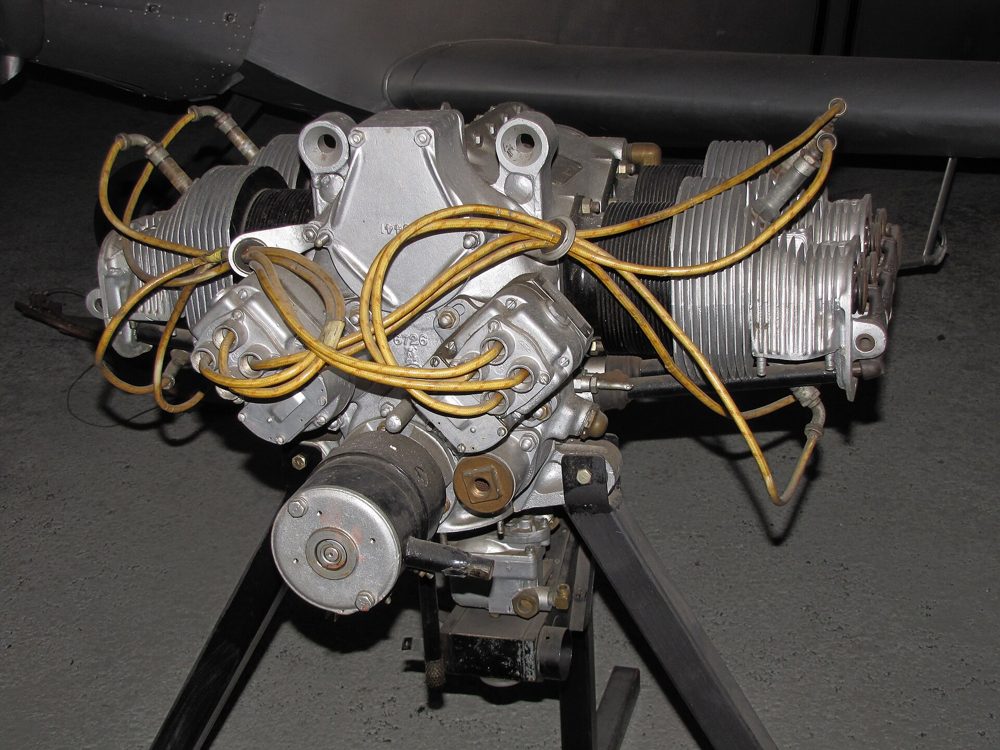
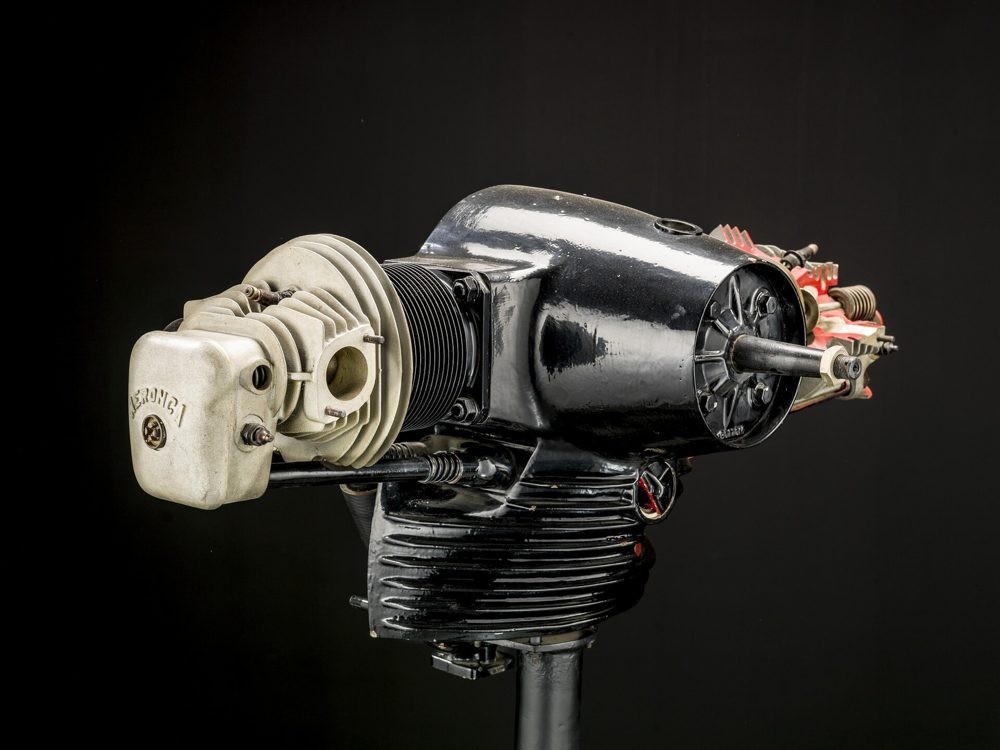
Aeronca E-113 two-cylinder opposed engine (museum cutaway).
Aeronca E-113 two-cylinder opposed engine (museum cutaway). Image: Digital Public Library of America, CC0 (public domain dedication), via Wikimedia Commons

Aeronca E-113On Display

Maker
Aeronautical Corporation of America (Aeronca)
Type
Two cylinders, horizontally opposed, air-cooled; 113.5 cubic inches
Power
36 to 40 horsepower, depending on version
Introduced
1931 (type certificate No. 71, April 24, 1931)

Why it matters. Regarded in its day as the most powerful two-cylinder aircraft engine built. The first version borrowed its cylinders from the Warner Scarab. It powered the little Aeronca C-2 and C-3, which taught a generation of Depression-era students to fly for the price of a used car.

In the Collection: On static display
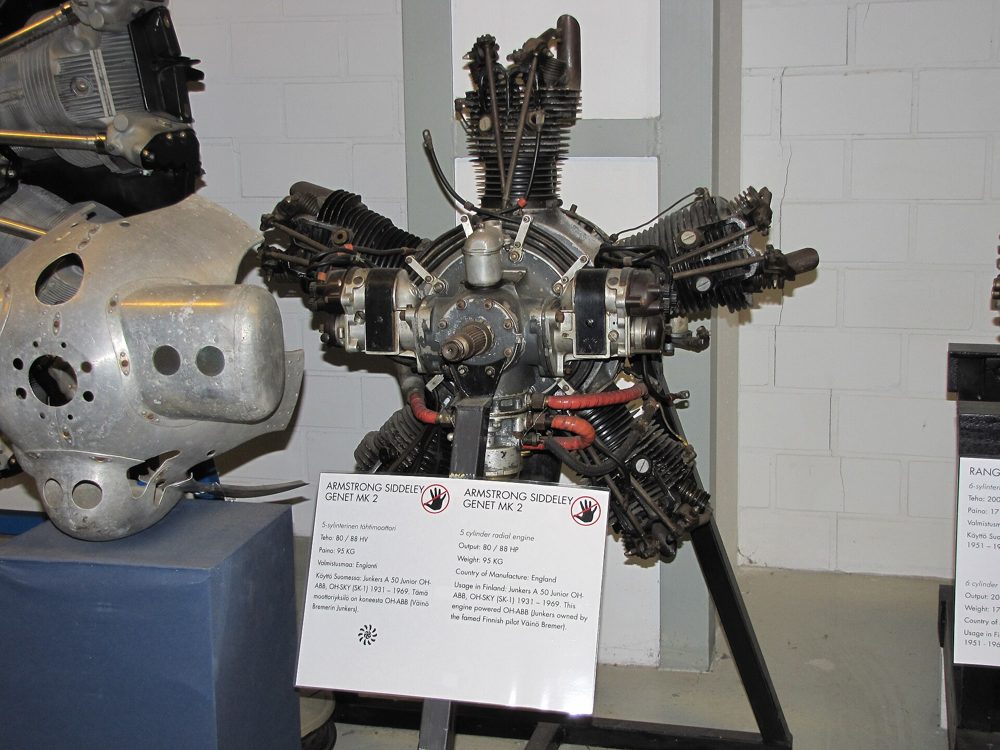
Armstrong Siddeley Genet Mk II five-cylinder radial.
Armstrong Siddeley Genet Mk II five-cylinder radial. Photo: MKFI, public domain, via Wikimedia Commons

Armstrong Siddeley Genet Mk II

Maker
Armstrong Siddeley Motors, Coventry, England
Type
Five-cylinder radial, air-cooled; 251 cubic inches
Power
About 80 horsepower
Introduced
1926 (first run)

Why it matters. A small, dependable British radial for the light airplanes of the late 1920s and 1930s, including the Avro Avian, early de Havilland Moths and the Cierva autogiros. One of only two British-built engines in the Collection.

In the Collection: Nicholas-Beazley NB-8G N12518

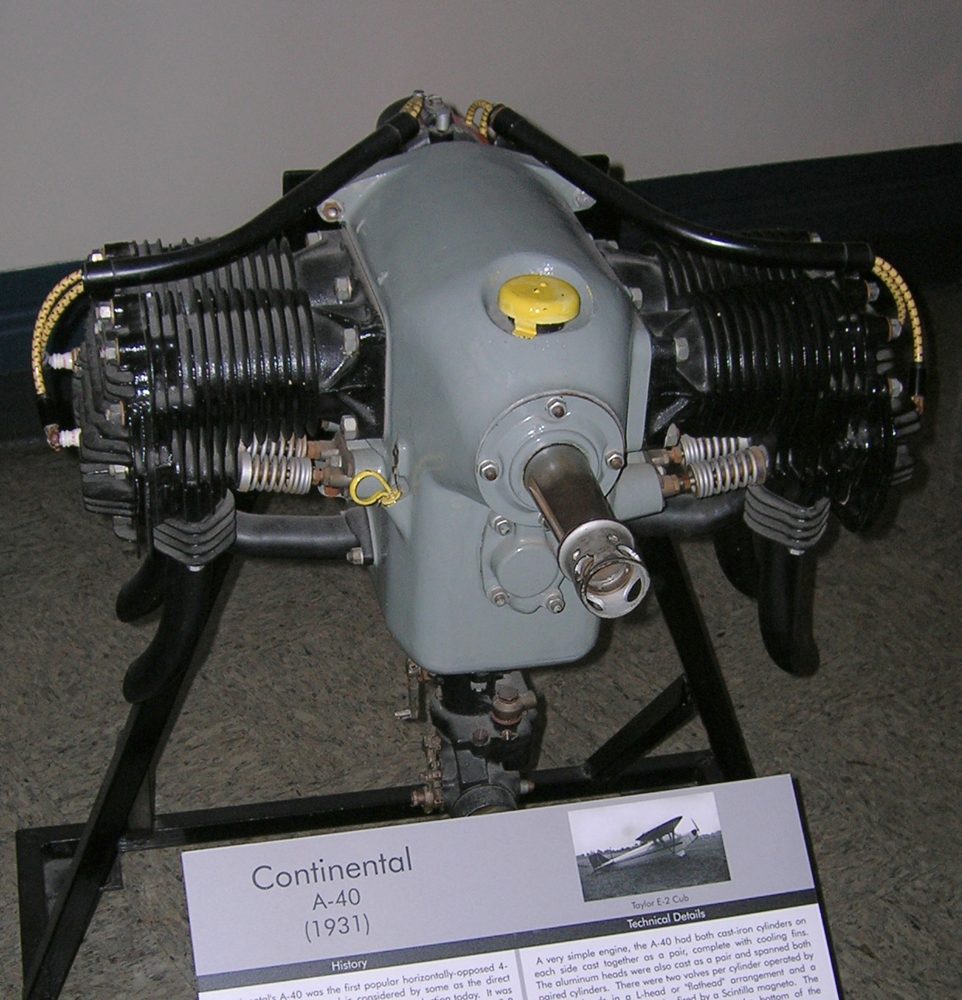
Continental A-40 four-cylinder opposed engine (1931).
Continental A-40 four-cylinder opposed engine (1931). Photo: Greg Goebel, CC BY-SA 2.0, via Wikimedia Commons

Continental A-40

Maker
Continental Motors, Detroit, Michigan
Type
Four cylinders, horizontally opposed, air-cooled; 111 cubic inches
Power
37 to 40 horsepower, depending on model
Introduced
1931 (Approved Type Certificate No. 72, May 19, 1931)
Number built
More than 2,600

Why it matters. One of the first horizontally opposed four-cylinder engines built for light airplanes, and the start of Continental’s long line of flat engines. It powered the Taylor E-2 Cub and the first Taylorcrafts.

In the Collection: Taylor-Young Model A N19832

The people behind this engine: Continental's engine men

Continental A-65 four-cylinder opposed engine.
Continental A-65 four-cylinder opposed engine. Photo: MKFI, public domain, via Wikimedia Commons

Continental A-65

Maker
Continental Motors
Type
Four cylinders, horizontally opposed, air-cooled; 171 cubic inches
Power
65 horsepower
Introduced
1938 (type certificate February 1939)

Why it matters. The engine that made flying affordable for ordinary Americans: the Cubs, Champs, Taylorcrafts and Luscombes of the late 1930s, and the Army’s liaison “Grasshoppers” in World War II, where it was known as the O-170. No starter and no generator; you propped it by hand.

In the Collection: Aeronca C-3 N17419; Luscombe 8A NC23000

The people behind this engine: Continental's engine men

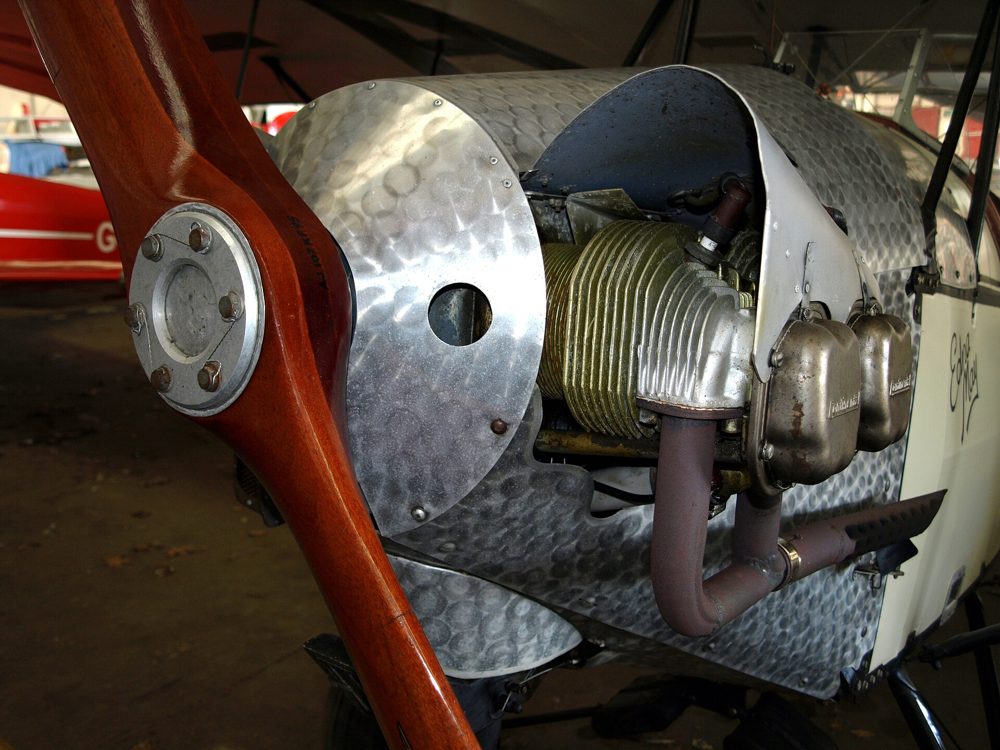
Continental A-65, installed with the cowling open. The A-75 is the same engine design at higher rpm, and outwardly it is nearly identical.
Continental A-65, installed with the cowling open. The A-75 is the same engine design at higher rpm, and outwardly it is nearly identical. Photo: Nimbus227, public domain, via Wikimedia Commons

Continental A-75

Maker
Continental Motors
Type
Four cylinders, horizontally opposed, air-cooled; 171 cubic inches
Power
75 horsepower
Introduced
1939 (type certificate May 11, 1939)

Why it matters. The A-65’s bigger brother: the same bore and stroke, with more power from higher rpm. It powered light Pipers, Stinsons and Luscombes, and the Culver Cadet.

In the Collection: Culver Cadet LCA N20988

The people behind this engine: Continental's engine men

Continental O-200 four-cylinder opposed engine.
Continental O-200 four-cylinder opposed engine. Photo: MKFI, public domain, via Wikimedia Commons

Continental O-200

Maker
Continental Motors
Type
Four cylinders, horizontally opposed, air-cooled; 201 cubic inches
Power
100 horsepower
Introduced
Postwar; the C-90 and O-200 family share a type certificate first issued around 1947

Why it matters. The engine of the Cessna 150, and the youngest engine design in the hangar. Rolls-Royce built it under license in England.

In the Collection: Rose-Rhinehart Parrakeet A4-C N14882

The people behind this engine: Continental's engine men

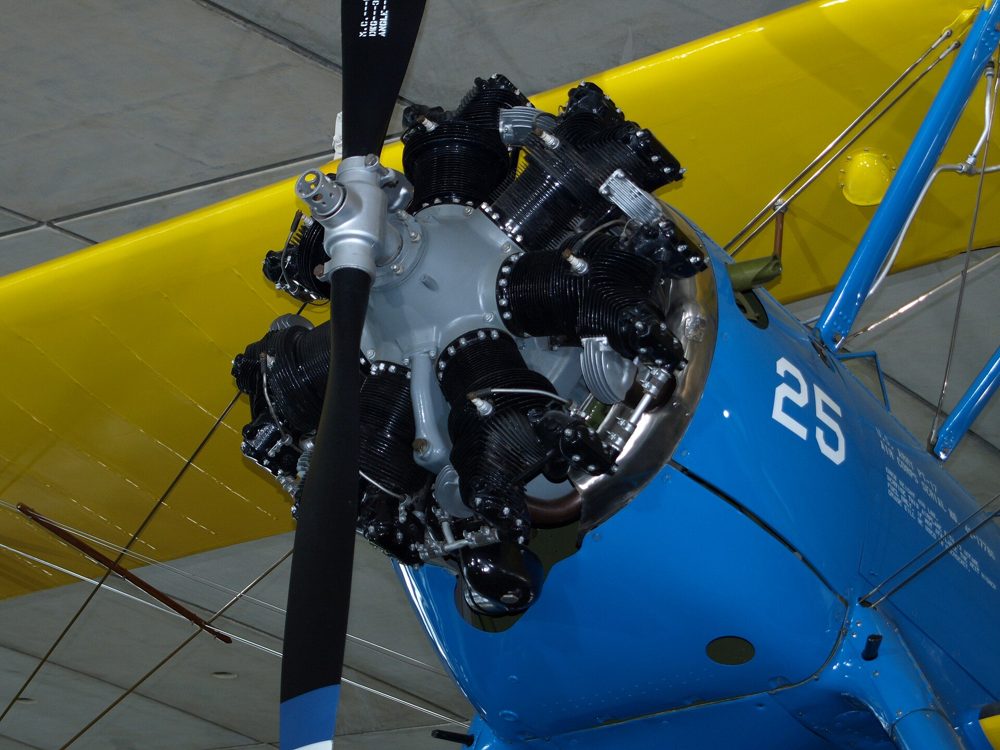
Continental R-670 radial installed on a Boeing-Stearman.
Continental R-670 radial installed on a Boeing-Stearman. Photo: Nimbus227, public domain, via Wikimedia Commons

Continental W670 / R-670On Display (cutaway)

Maker
Continental Motors, Detroit, Michigan
Type
Seven-cylinder radial, air-cooled; 668 cubic inches
Power
210 to 220 horsepower in the Collection’s examples
Introduced
First flew December 14, 1931, in a Waco F-2; Approved Type Certificate No. 80, August 21, 1933

Why it matters. The engine of the Stearman primary trainer that taught America’s World War II pilots to fly, and, with a strengthened crankshaft, of the M3 Stuart light tank. It first flew in a Waco F-2, the same model as the Collection’s UBF-2. The most common engine in our hangar.

In the Collection: Waco UBF-2 N13444; Waco UMF-3 N13571; Waco UPF-7 N30107; Waco UPF-7 N32071; Boeing-Stearman PT-17 N67412

The people behind this engine: Continental's engine men

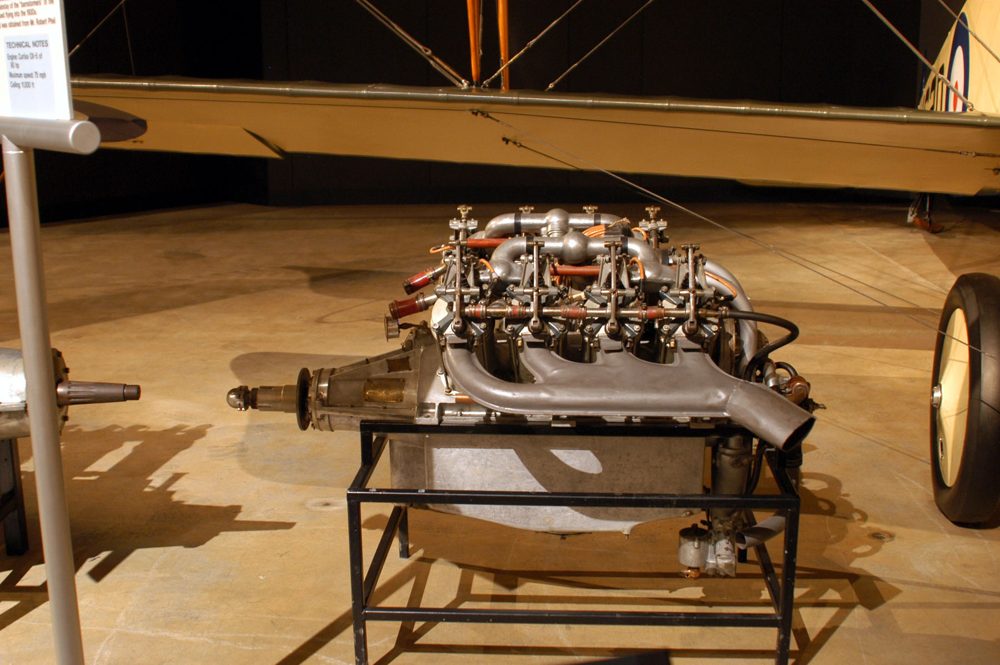
Curtiss OX-5 water-cooled V-8 (National Museum of the U.S. Air Force).
Curtiss OX-5 water-cooled V-8 (National Museum of the U.S. Air Force). Photo: U.S. Air Force, public domain, via Wikimedia Commons

Curtiss OX-5

Maker
Curtiss Aeroplane and Motor Company, and licensed builders
Type
V-8, water-cooled; 503 cubic inches
Power
90 horsepower
Introduced
1915
Number built
More than 10,000 during World War I

Why it matters. The first mass-produced American aircraft engine and the engine of the Curtiss JN-4 “Jenny.” After the war, cheap surplus OX-5s powered the boom in civil flying; as late as 1929 more than a third of the licensed airplanes in America flew behind one.

In the Collection: Alexander Long Wing Eaglerock N5910

The people behind this engine: Glenn Curtiss and Charles Kirkham

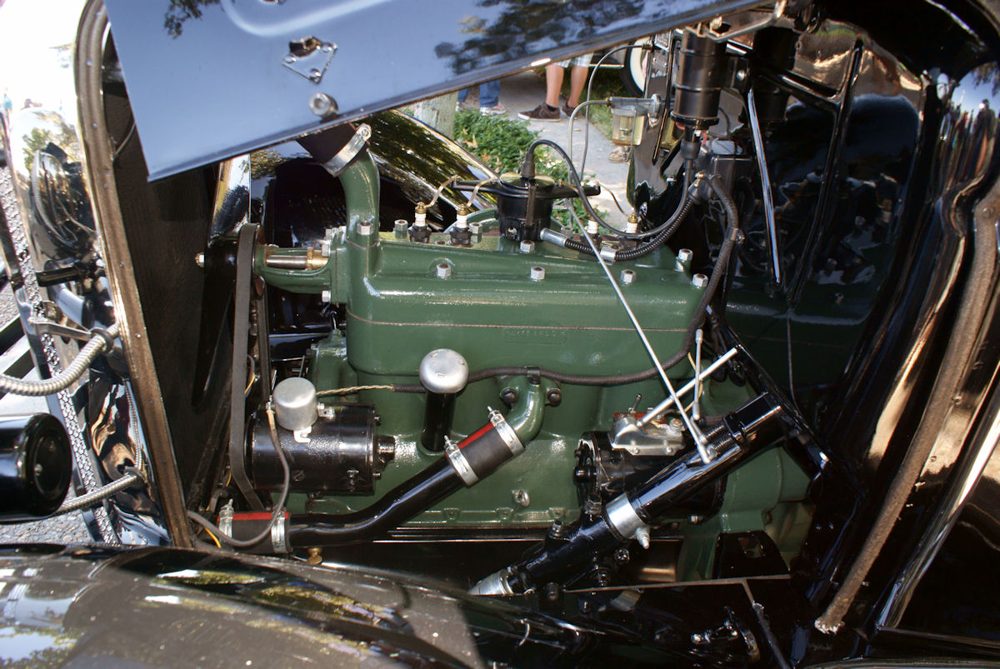
Ford Model A four-cylinder engine in a 1931 Model A car.
Ford Model A four-cylinder engine in a 1931 Model A car. Photo: Valder137, CC BY 2.0, via Wikimedia Commons

Ford Model A

Maker
Ford Motor Company
Type
Inline four, water-cooled; 201 cubic inches
Power
40 horsepower
Introduced
October 1927; Bernard Pietenpol first flew one in an airplane in 1929
Number built
Nearly five million Model A cars and trucks, 1928 to 1931

Why it matters. The engine a farmer could buy at the local Ford dealer. Pietenpol’s decision to hang it on the nose of his Air Camper made homebuilt flying possible for people who could never afford an aircraft engine.

In the Collection: Pietenpol Air Camper NX898H

The people behind this engine: Henry Ford

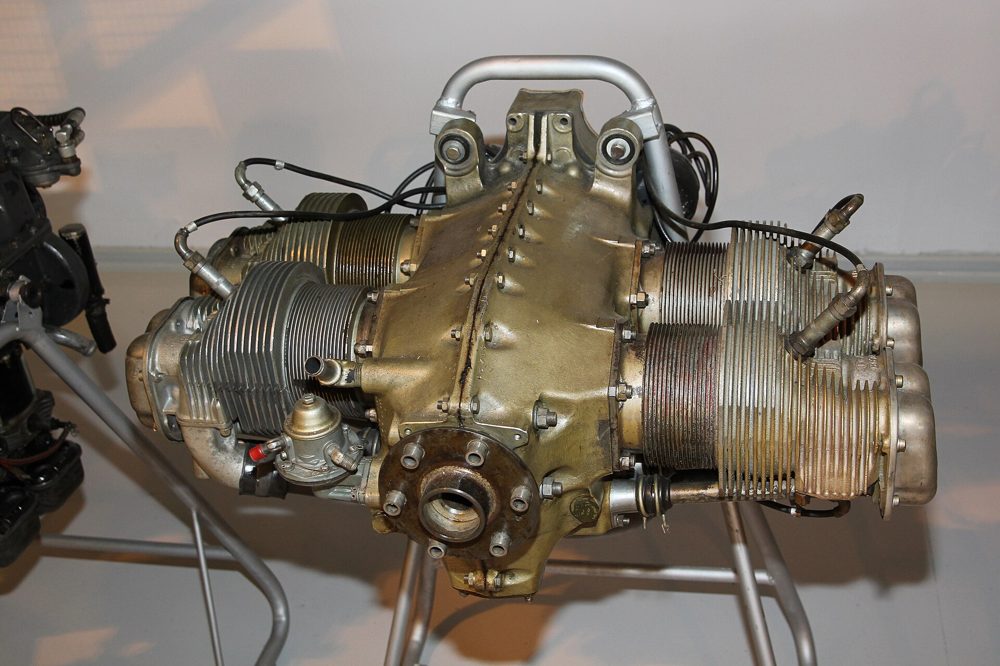
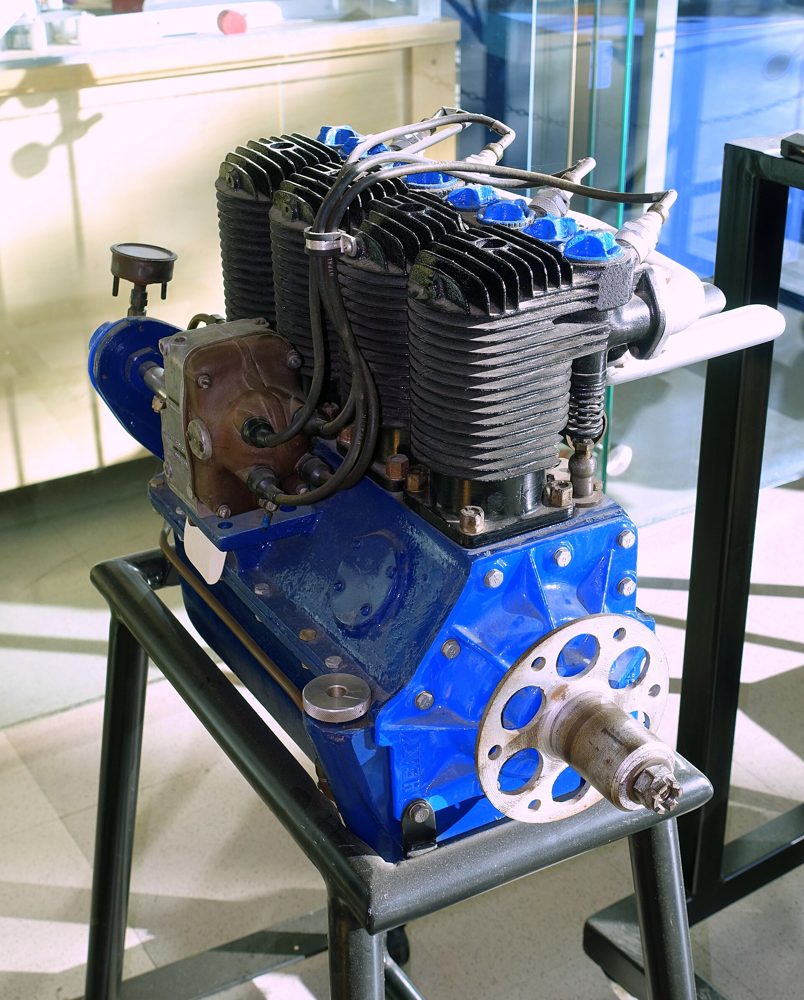
Heath-Henderson B-4 four-cylinder engine (Evergreen Aviation & Space Museum).
Heath-Henderson B-4 four-cylinder engine (Evergreen Aviation & Space Museum). Photo: Daderot, CC0 (public domain dedication), via Wikimedia Commons

Heath-Henderson B-4On Display

Maker
Heath Airplane Company, Chicago, converting the Henderson motorcycle engine
Type
Inline four, air-cooled; 83 cubic inches
Power
Sources disagree; not stated here
Introduced
1927

Why it matters. Ed Heath took the cheapest good engine in America, the Henderson motorcycle four, reworked its lubrication and valves, and sold it with a propeller for $325. Three years earlier, Étienne Dormoy had adapted a Henderson motorcycle engine himself for his Bathtub and won the Rickenbacker Trophy with it at the 1924 International Air Races. Heath’s company later became Heathkit.

In the Collection: On static display; the Collection’s Dormoy Bathtub reproduction carries a different engine

The people behind this engine: Ed Heath and the Henderson brothers

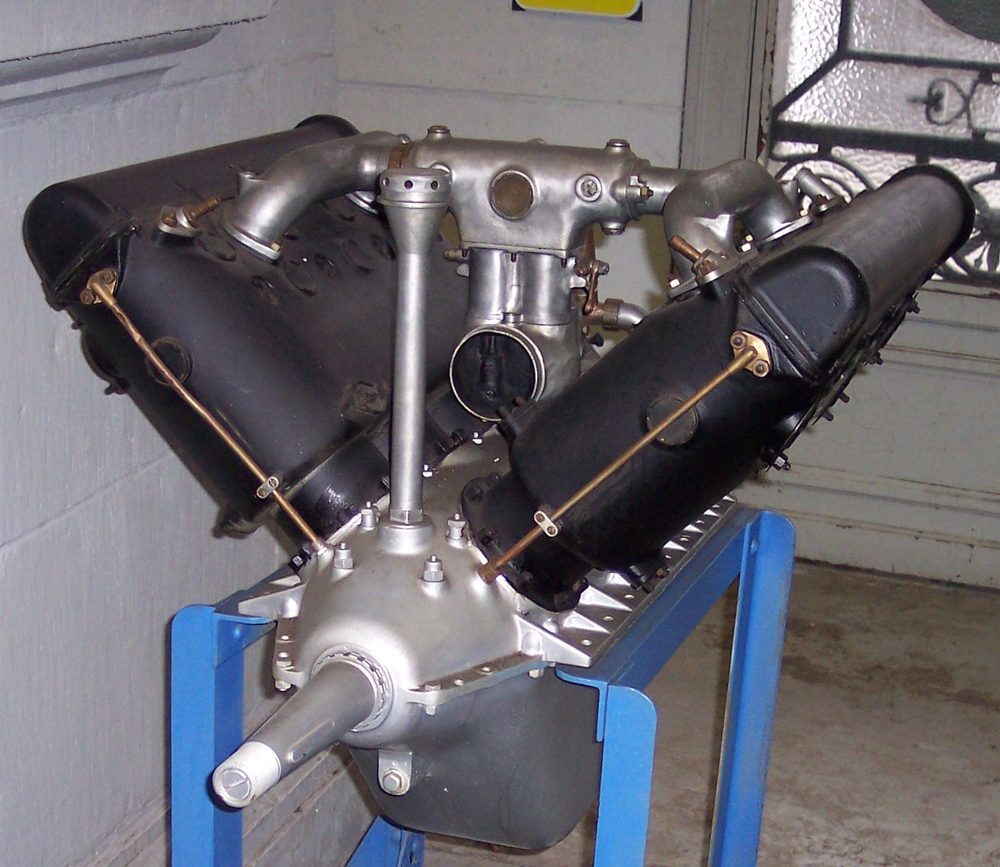
Hispano-Suiza 8A water-cooled V-8 (Brussels Air Museum).
Hispano-Suiza 8A water-cooled V-8 (Brussels Air Museum). Photo: Stahlkocher, CC BY-SA 3.0, via Wikimedia Commons

Hispano-Suiza V-8

Maker
Designed by Marc Birkigt for Hispano-Suiza; built under license in the U.S. by Wright-Martin, later Wright Aeronautical
Type
V-8, water-cooled; 718 cubic inches
Power
150 horsepower (Model A)
Introduced
1915 in France; American production from 1916

Why it matters. A First World War fighter engine that came home as war surplus and gave 1920s biplanes nearly twice the power of an OX-5. The Collection’s Travel Air 3000 was converted to Hispano power in April 1928, which is what made it a Model 3000.

In the Collection: Travel Air 3000 NC1084 (under restoration)

The people behind this engine: Marc Birkigt

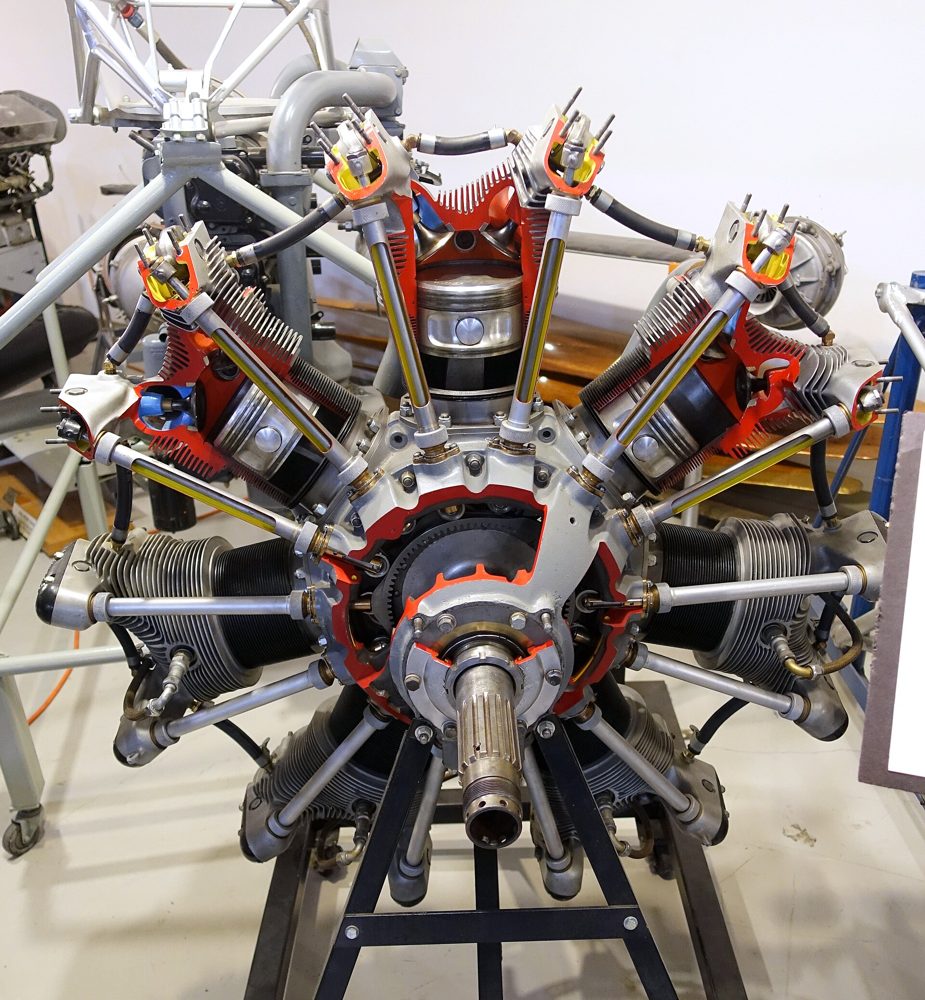
Jacobs R-755 (L-4) seven-cylinder radial, partly sectioned (Hiller Aviation Museum).
Jacobs R-755 (L-4) seven-cylinder radial, partly sectioned (Hiller Aviation Museum). Photo: Daderot, CC0 (public domain dedication), via Wikimedia Commons

Jacobs L-4

Maker
Jacobs Aircraft Engine Company, Pottstown, Pennsylvania
Type
Seven-cylinder radial, air-cooled; 755 cubic inches
Power
225 horsepower
Introduced
First run 1933; Approved Type Certificate 1934
Number built
About 20,300 Jacobs engines of all models in World War II

Why it matters. The civil forerunner of the military R-755 series. Jacobs radials powered the Beech Staggerwing and the Cessna “Bamboo Bomber.” In Waco’s model code the letter Y means a Jacobs, which is why this airplane is a YMF.

In the Collection: Waco YMF-5 N14134

The people behind this engine: Al Jacobs

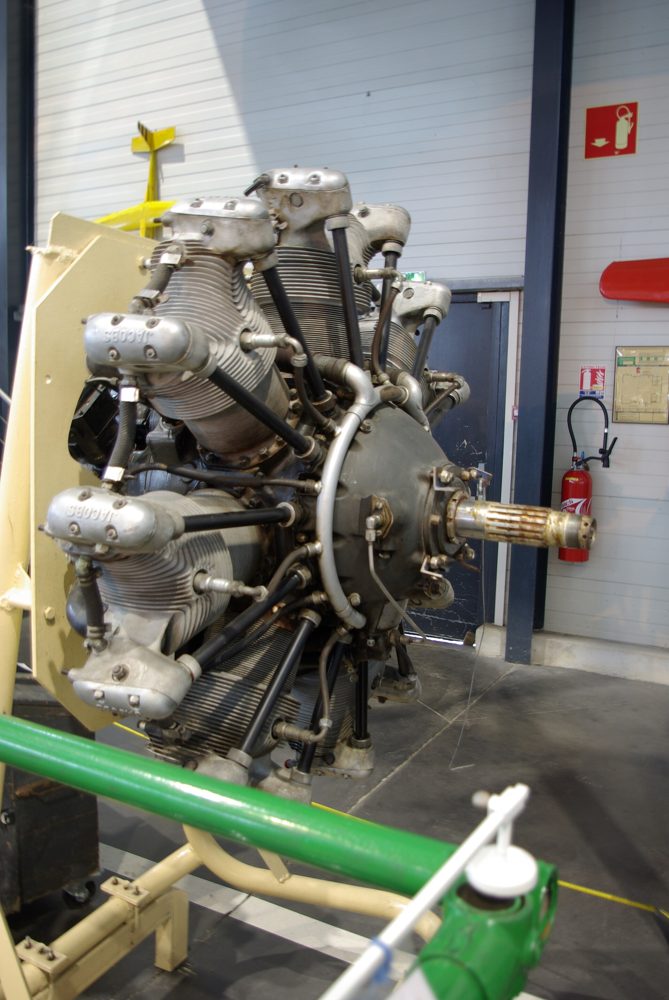
Jacobs R-755 seven-cylinder radial.
Jacobs R-755 seven-cylinder radial. Photo: Duch, CC BY-SA 4.0, via Wikimedia Commons

Jacobs R-755-B2

Maker
Jacobs Aircraft Engine Company, Pottstown, Pennsylvania
Type
Seven-cylinder radial, air-cooled; 757 cubic inches
Power
275 horsepower
Introduced
1933, the same engine as the L-4 under its R-755 designation

Why it matters. The B-series Jacobs, rated for a controllable-pitch propeller. In Waco’s model code the letter Z means this engine.

In the Collection: Waco YKS-6 NC16576; Waco ZPF-7 N32018

The people behind this engine: Al Jacobs

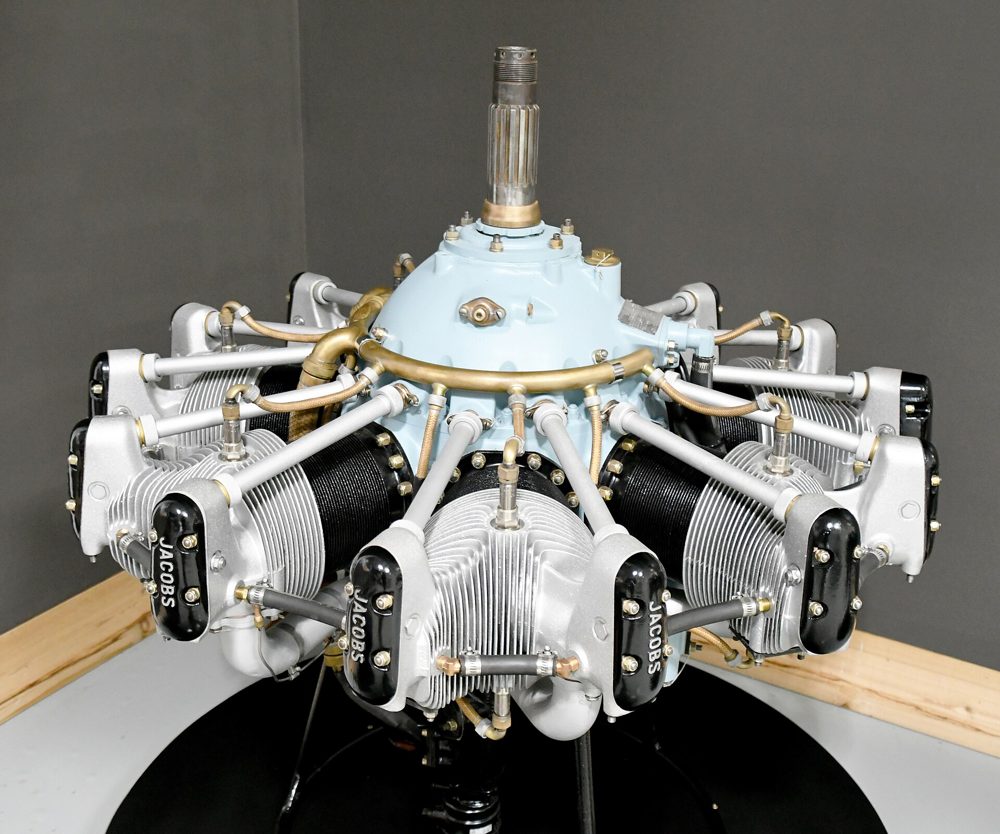
Jacobs R-755 seven-cylinder radial.
Jacobs R-755 seven-cylinder radial. Photo: Eric Friedebach, CC BY 2.0, via Wikimedia Commons

Jacobs R-755, 300 hp

Maker
Jacobs Aircraft Engine Company, Pottstown, Pennsylvania
Type
Seven-cylinder radial, air-cooled; 757 cubic inches
Power
300 horsepower
Introduced
Certification basis 1941

Why it matters. The most powerful Jacobs in the hangar, going into the Waco ZPF-6.

In the Collection: Waco ZPF-6 N16579

The people behind this engine: Al Jacobs

Kinner B-5 five-cylinder radial.
Kinner B-5 five-cylinder radial. Photo: FranksValli, public domain, via Wikimedia Commons

Kinner B-5

Maker
Kinner Airplane & Motor Corporation, Glendale, California
Type
Five-cylinder radial, air-cooled; 441 cubic inches
Power
125 horsepower
Introduced
1930 (type certificate May 31, 1930)

Why it matters. A rough-running but famously reliable five with a separate camshaft for every cylinder. It powered Fleet trainers here and in Canada, and the Army knew it as the R-440.

In the Collection: Fairchild KR-21 N235V. Its predecessor, the Kinner K-5, is on display.

The people behind this engine: Bert Kinner

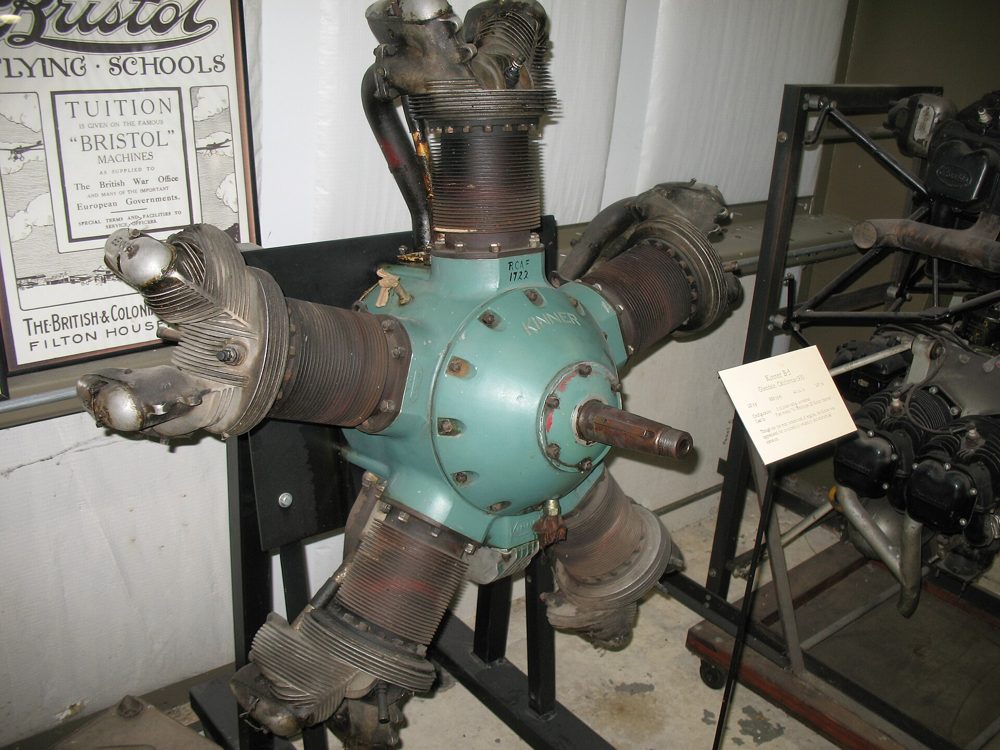
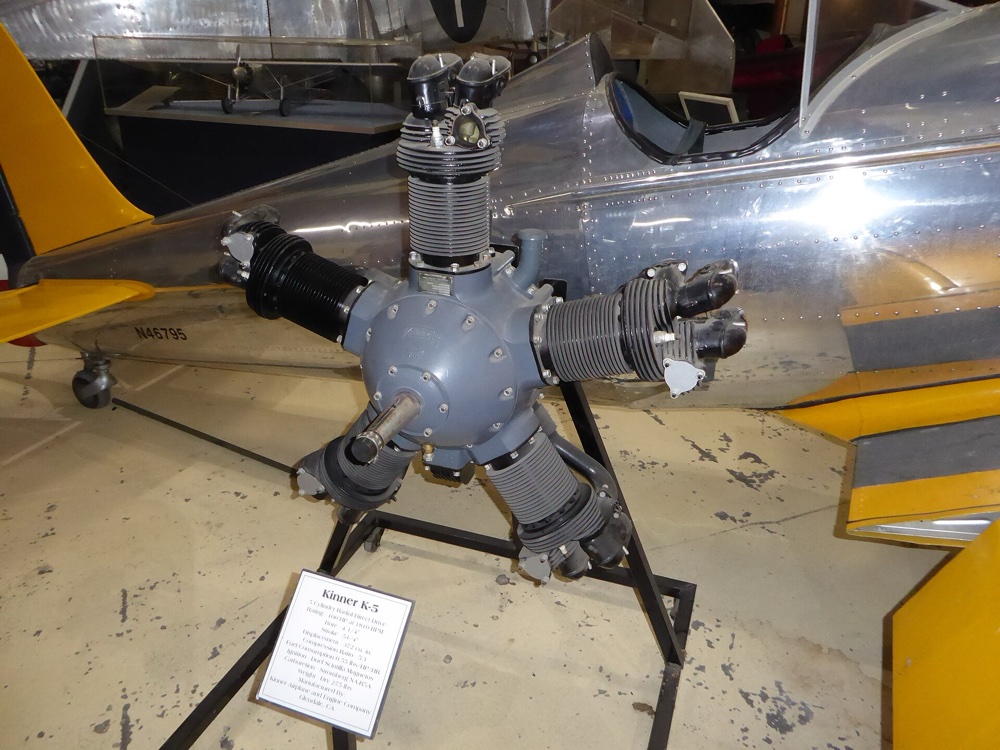
Kinner K-5 five-cylinder radial (San Diego Air & Space Museum).
Kinner K-5 five-cylinder radial (San Diego Air & Space Museum). Photo: Jim1138, CC BY-SA 4.0, via Wikimedia Commons

Kinner K-5On Display

Maker
Kinner Airplane & Motor Corporation, Glendale, California
Type
Five-cylinder radial, air-cooled; 372 cubic inches
Power
100 horsepower at 1,810 rpm, approved April 29, 1930; the first K-5s were rated lower
Introduced
1928 (Approved Type Certificate No. 3, June 18, 1928)

Why it matters. The engine that made Bert Kinner’s name. It sold well in the light-airplane boom that followed Lindbergh’s 1927 flight, powering the Fleet Model 2, the Waco KNF, the Monosport and the Bird. Like every Kinner it was known for a rough, throbbing beat, and it was a good, dependable engine. The bigger B-5 that replaced it bolted onto the same engine mount.

In the Collection: On static display. Its successor, the Kinner B-5, flies on the Fairchild KR-21 N235V.

The people behind this engine: Bert Kinner

The LeBlond Aircraft Engine Corporation seal, from a period advertisement in Aero Digest.
The LeBlond Aircraft Engine Corporation seal, from a period advertisement in Aero Digest. Image: LeBlond Aircraft Engine Corporation seal, from a period Aero Digest advertisement, public domain, via Wikimedia Commons

LeBlond 5D (LeBlond 60)On Display

Maker
LeBlond Aircraft Engine Corporation, Cincinnati, Ohio
Type
Five-cylinder radial, air-cooled; 251 cubic inches
Power
60 horsepower at 1,900 rpm; some sources give 65
Introduced
1928 (Approved Type Certificate No. 12)

Why it matters. LeBlond’s first aircraft engine. The R.K. LeBlond Machine Tool Company bought the assets of the Detroit Aircraft Engine Company in 1928, and Glenn Angle, who had designed Detroit’s Air-Cat, gave the engine a new cylinder. It was the first small engine to pass a Navy type test. It powered light airplanes of the late 1920s and early 1930s, among them the American Eagle A-429, Nicholas-Beazley’s Barling NB-3 and the first Porterfield 35s.

In the Collection: On static display.

The people behind this engine: Richard LeBlond

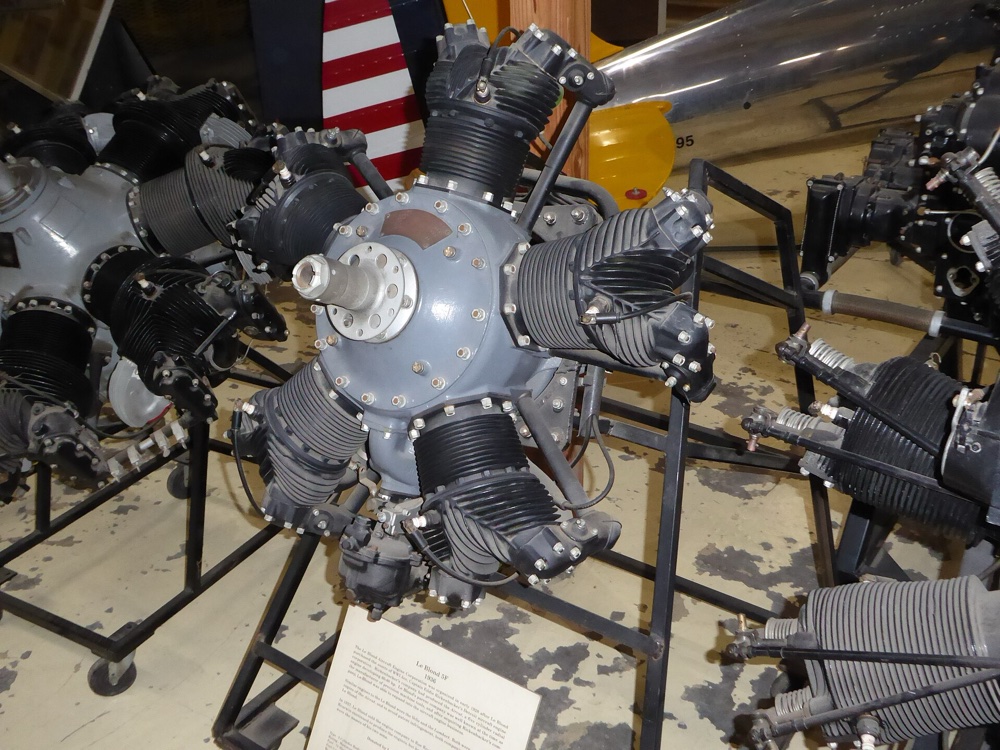
LeBlond 5F, 1936 (San Diego Air & Space Museum), a later LeBlond five.
LeBlond 5F, 1936 (San Diego Air & Space Museum), a later LeBlond five. Photo: Jim1138, CC BY-SA 4.0, via Wikimedia Commons

LeBlond 5DE (LeBlond 70)On Display

Maker
LeBlond Aircraft Engine Corporation, Cincinnati, Ohio
Type
Five-cylinder radial, air-cooled; 251 cubic inches
Power
70 horsepower at 1,950 rpm
Introduced
1930 (Approved Type Certificate No. 48, May 3, 1930)

Why it matters. The 5D’s bore, stroke and weight with new cylinders modeled on the larger 5DF, for ten more horsepower. It is the engine the Porterfield 35-70 was built around: the 70 in the airplane’s name is this engine’s horsepower. In 1936 LeBlond added a higher-compression version, the 5E, to the same certificate, and after Rearwin bought the line it lived on as the Ken-Royce 5E.

In the Collection: On static display. Our Porterfield 35-70 N326GH flies with the larger LeBlond 5DF.

The people behind this engine: Richard LeBlond

LeBlond 90-5F five-cylinder radial, the 1938 version of the 5DF.
LeBlond 90-5F five-cylinder radial, the 1938 version of the 5DF. Photo: Darkroom, CC BY-SA 3.0, via Wikimedia Commons

LeBlond 5DF

Maker
LeBlond Aircraft Engine Corporation, Cincinnati, Ohio
Type
Five-cylinder radial, air-cooled; 266 cubic inches
Power
85 horsepower at 2,125 rpm as certificated in 1930; LeBlond re-rated it to 90 horsepower at 2,250 rpm in November 1936
Introduced
1930 (Approved Type Certificate No. 46, April 8, 1930)

Why it matters. Built by the engine subsidiary of a machine-tool company famous for building the machines that built everything else. The 5DF was the bigger brother of LeBlond’s 70-horsepower 5DE, with a wider bore and aluminum cylinder heads in place of iron. Rearwin bought the line at the end of 1937 and renamed it Ken-Royce, after Rae Rearwin’s two sons.

In the Collection: Porterfield 35-70 N326GH (engine serial number 737). The Porterfield was built around the 70-horsepower 5DE; ours carries the larger 5DF today. A 5DE is on display in the museum.

The people behind this engine: Richard LeBlond

Lycoming R-680-BA nine-cylinder radial, 1930.
Lycoming R-680-BA nine-cylinder radial, 1930. Photo: Cliff, CC BY 2.0, via Wikimedia Commons

Lycoming R-680On Display

Maker
Lycoming, Williamsport, Pennsylvania
Type
Nine-cylinder radial, air-cooled; 680 cubic inches
Power
About 215 horsepower in its first form; later versions to 300
Introduced
First flew April 3, 1929, in a Travel Air; Approved Type Certificate No. 42, February 4, 1930
Number built
Roughly 25,000

Why it matters. Lycoming’s first aircraft engine, from a company that until then had built engines for Auburn and Cord automobiles. It powered early airliners and the Stearman PT-13 trainer.

In the Collection: Stearman C3MB N6487; Stinson Junior S NC10852

The people behind this engine: E. L. Cord

Pratt & Whitney R-985 Wasp Junior (National Museum of the U.S. Air Force).
Pratt & Whitney R-985 Wasp Junior (National Museum of the U.S. Air Force). Photo: U.S. Air Force, public domain, via Wikimedia Commons

Pratt & Whitney R-985 Wasp Junior

Maker
Pratt & Whitney Aircraft
Type
Nine-cylinder radial, air-cooled, supercharged; 985 cubic inches
Power
300 horsepower at first; 450 horsepower in later versions, including ours
Introduced
1930 (first type certificate, January 1930)
Number built
39,037, built 1929 to 1953

Why it matters. A scaled-down Wasp that powered the Beech 18, the de Havilland Beaver, the Vultee BT-13 and early Sikorsky helicopters. In the one-of-a-kind Speedwing it is the most powerful engine in the Collection.

In the Collection: Curtiss-Wright Travel Air B-14-R Speedwing N12311

The people behind this engine: Frederick Rentschler and George Mead

Ranger L-440 six-cylinder inverted inline engine (National Museum of the U.S. Air Force).
Ranger L-440 six-cylinder inverted inline engine (National Museum of the U.S. Air Force). Photo: U.S. Air Force, public domain, via Wikimedia Commons

Ranger 6-440On Display

Maker
Ranger Engineering, a division of Fairchild, Farmingdale, New York
Type
Six-cylinder inverted inline, air-cooled; 441 cubic inches
Power
175 to 200 horsepower
Introduced
1939 (certificated July 1939)

Why it matters. Built upside down on purpose: with the crankshaft on top and the cylinders hanging below, the slim engine gave a student pilot a clear view over the nose. It powered more than 6,000 PT-19 and PT-26 trainers.

In the Collection: Fairchild PT-19A N464BC

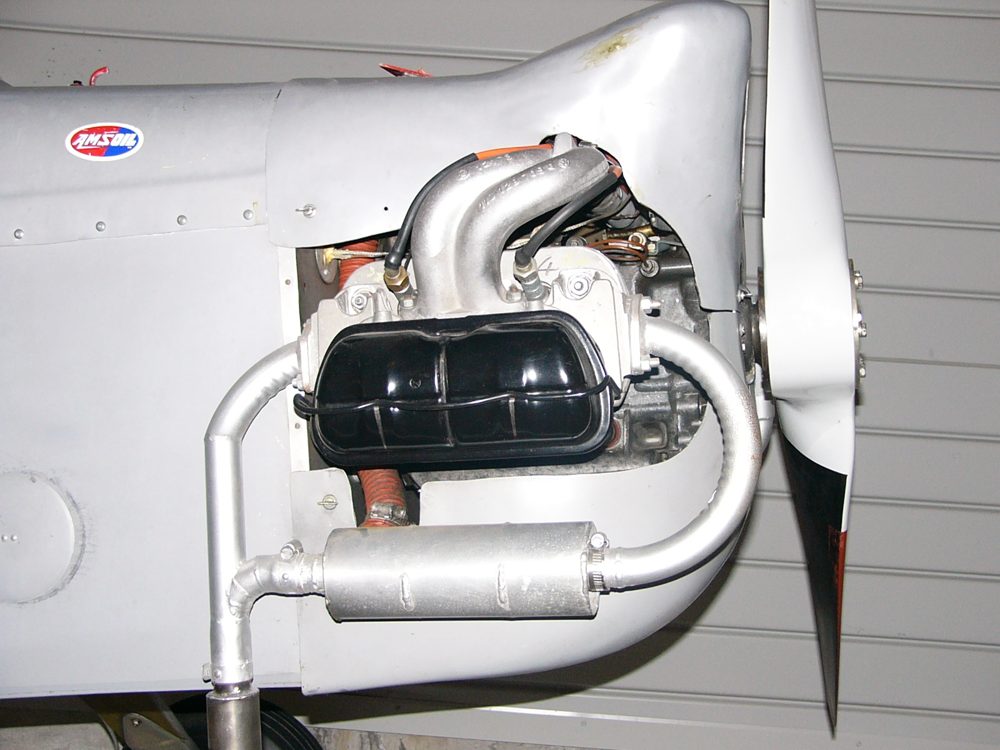
A Volkswagen aircraft conversion installed in a Volksplane.
A Volkswagen aircraft conversion installed in a Volksplane. Photo: Ahunt, public domain, via Wikimedia Commons

Rollason Ardem (Volkswagen conversion)

Maker
Rollason Aircraft & Engines, Croydon, England, from Roger Druine’s Ardem design
Type
Four cylinders, horizontally opposed, air-cooled; Volkswagen-based, about 1,300 cc
Power
About 36 to 40 horsepower
Introduced
1958 (first Rollason Ardem)
Number built
Rollason had built only 32 by early 1963

Why it matters. One of the first certified aircraft conversions of the Volkswagen engine, built for Druine’s little Turbulent. It is the modern stand-in for the motorcycle engine the original Bathtub flew behind.

In the Collection: Dormoy Bathtub reproduction N568AL

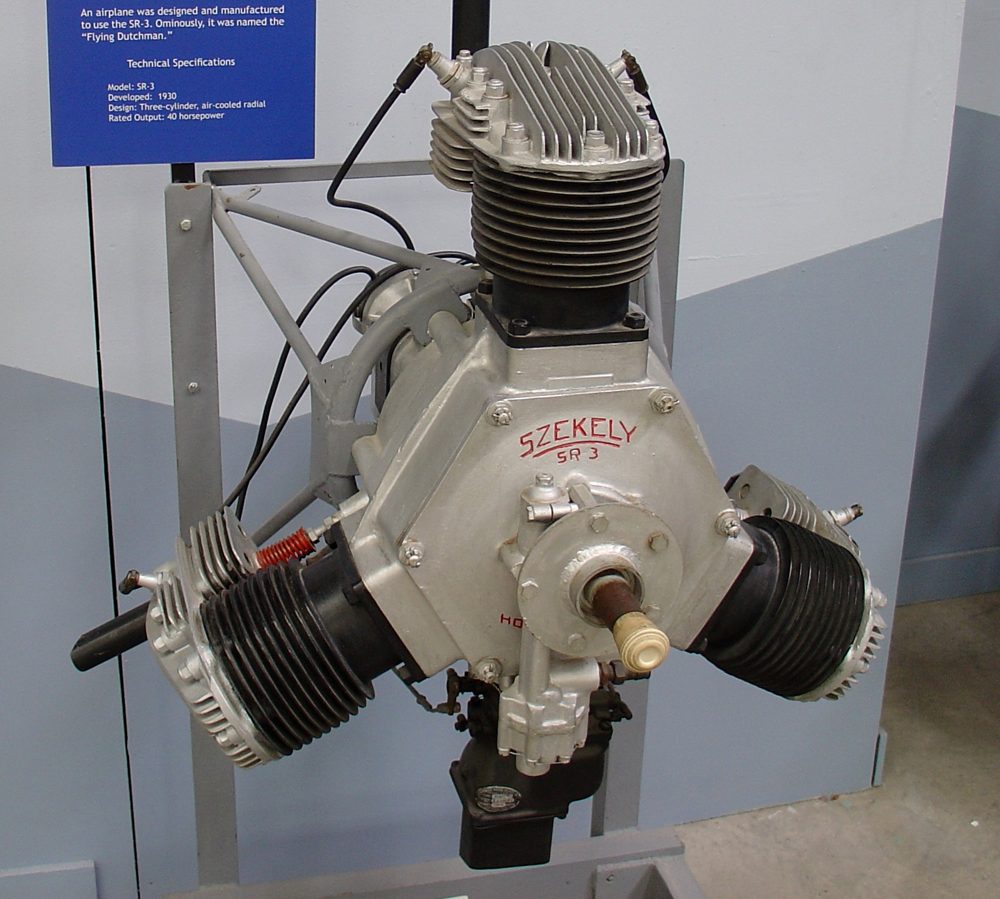
Szekely SR-3 three-cylinder radial.
Szekely SR-3 three-cylinder radial. Photo: Jeff Keyzer from San Francisco, CA, USA, CC BY 2.0, via Wikimedia Commons

Szekely SR-3

Maker
O.E. Szekely Corporation, Holland, Michigan
Type
Three-cylinder radial, air-cooled, overhead valves; 191 cubic inches
Power
45 horsepower
Introduced
1929

Why it matters. A cheap engine for the cheap airplanes of the early Depression, with a reputation its owners never let it forget: a habit of throwing a cylinder in flight. The fix was a steel cable looped around the cylinder heads, not to prevent the failure but to keep a departing cylinder from taking the airplane with it. The company closed in 1932.

In the Collection: American Eagle Eaglet 230 NC548Y (its original engine). A display Szekely from Ken and Lorraine Morris is on its way.

The people behind this engine: Otto Szekely

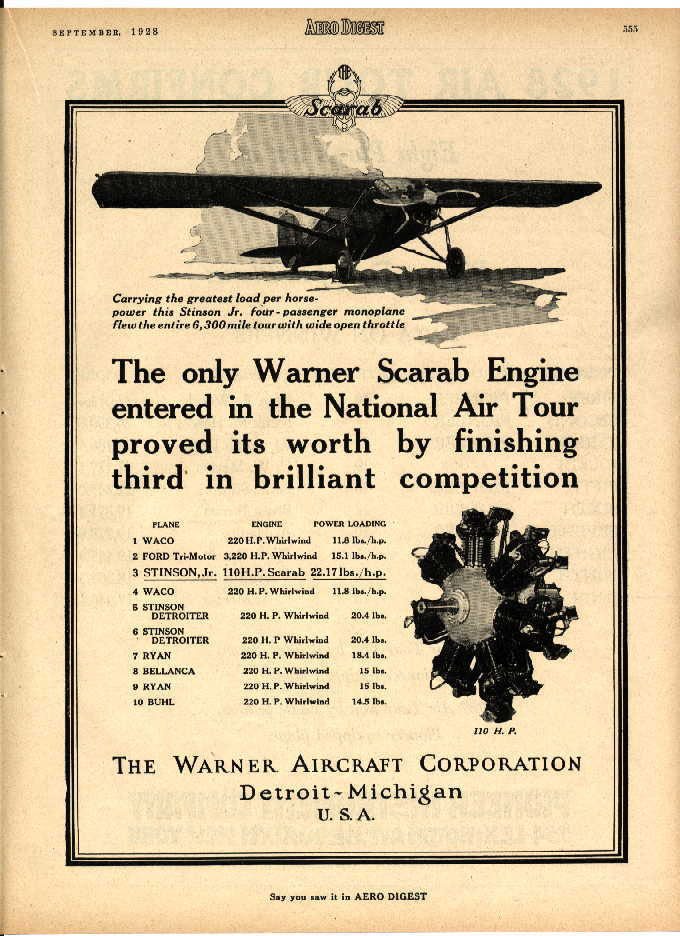
Warner Aircraft Corporation advertisement for the Scarab, Aero Digest, September 1928.
Warner Aircraft Corporation advertisement for the Scarab, Aero Digest, September 1928. Image: Warner Aircraft Corporation advertisement, Aero Digest, 1928, public domain, via Wikimedia Commons

Warner Scarab, 110 hp

Maker
Warner Aircraft Corporation, Detroit, Michigan
Type
Seven-cylinder radial, air-cooled; 422 cubic inches
Power
110 horsepower
Introduced
First run November 1927; introduced at the 1928 National Air Races

Why it matters. Built to replace the war-surplus OX-5 in light airplanes. Scarab-powered airplanes won fourteen events at the 1930 National Air Races. The early Scarabs were “greasers”: the rocker boxes had to be greased by hand every few hours of flying.

In the Collection: Lincoln-Page PT-W N561M

The people behind this engine: William Warner

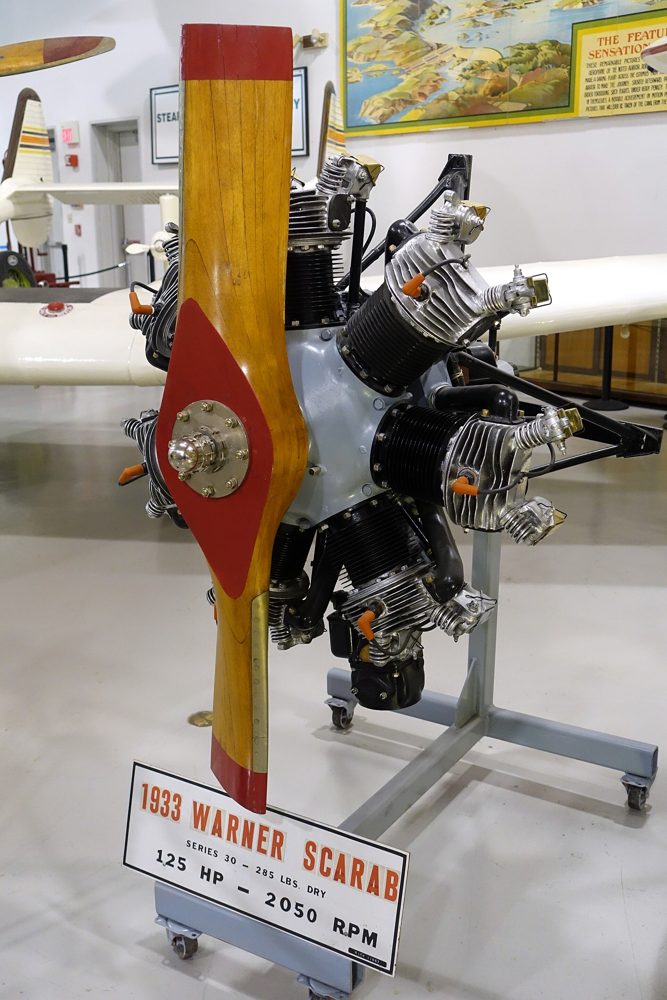
Warner Scarab, 125 hp, 1933 (Hiller Aviation Museum).
Warner Scarab, 125 hp, 1933 (Hiller Aviation Museum). Photo: Daderot, CC0 (public domain dedication), via Wikimedia Commons

Warner Scarab, 125 hp

Maker
Warner Aircraft Corporation, Detroit, Michigan
Type
Seven-cylinder radial, air-cooled; 422 cubic inches
Power
125 horsepower
Introduced
1929

Why it matters. The standard Scarab, after a strengthened crankshaft raised its power. It powered the Monocoupes and Cessnas that dominated their racing classes.

In the Collection: Fairchild 24 C8A N957V; Fairchild 22 C7E N9395

The people behind this engine: William Warner

Warner R-500 Super Scarab 165 (Central Finland Aviation Museum).
Warner R-500 Super Scarab 165 (Central Finland Aviation Museum). Photo: MKFI, public domain, via Wikimedia Commons

Warner Super Scarab, 165 hp

Maker
Warner Aircraft Corporation, Detroit, Michigan
Type
Seven-cylinder radial, air-cooled; 500 cubic inches
Power
165 horsepower
Introduced
1939 (certificated)

Why it matters. The last of the line, with a new cylinder head and higher compression. It finally brought internal lubrication to the heads and valves, and the grease gun stayed in the drawer for good. It also powered the Fairchild UC-61 and the Cessna Airmaster.

In the Collection: Great Lakes 2T-1A N822K

The people behind this engine: William Warner

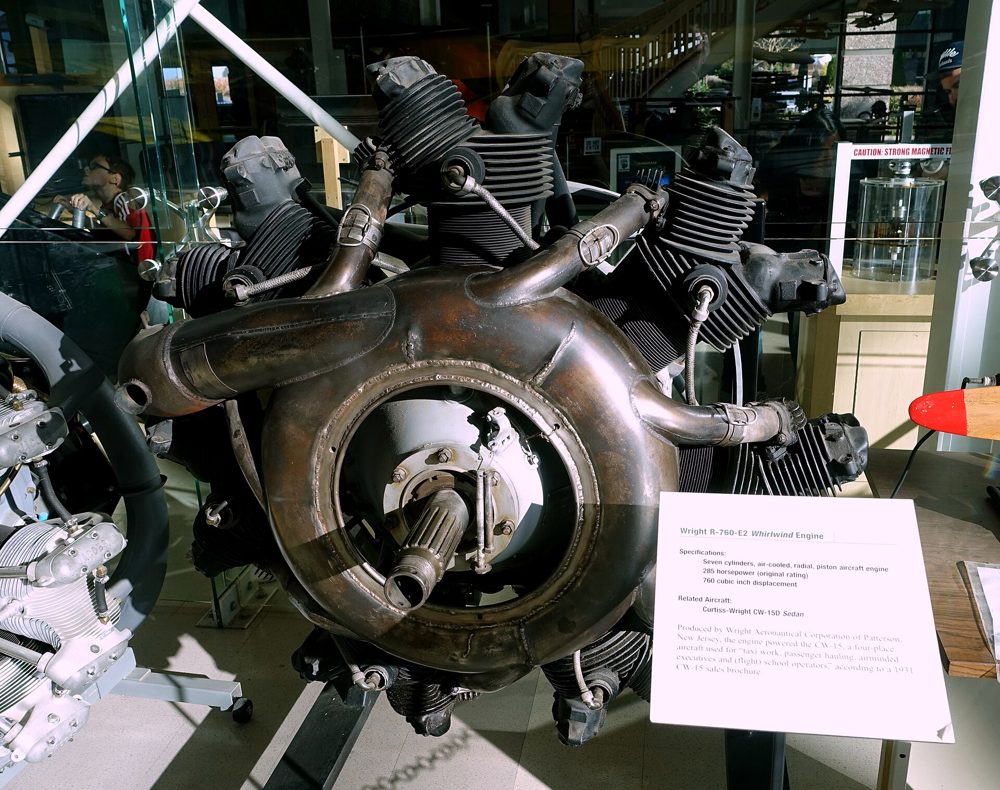
Wright R-760-E2 Whirlwind seven-cylinder radial (Evergreen Aviation & Space Museum).
Wright R-760-E2 Whirlwind seven-cylinder radial (Evergreen Aviation & Space Museum). Photo: Daderot, CC0 (public domain dedication), via Wikimedia Commons

Wright Whirlwind R-760On Display

Maker
Wright Aeronautical Corporation
Type
Seven-cylinder radial, air-cooled; 756 cubic inches
Power
225 to 235 horsepower; the R-760-8 on display is rated 235
Introduced
1928 (J-6 Whirlwind Seven; first certificated 1929)
Number built
About 1,400 built by Wright, plus license-built engines

Why it matters. The seven-cylinder successor to the J-5 Whirlwind that carried Lindbergh’s Spirit of St. Louis across the Atlantic. The R-760-8 was a Navy trainer engine, the power behind the N3N “Yellow Peril.”

In the Collection: Travel Air B4000 N13906; Waco CSO N265M

The people behind this engine: Charles Lawrance

Have a Golden Age engine in a garage or a hangar corner?

We’d love to put it where people can see it, and maybe hear it.

Plan Your Visit Donate or Loan an Aircraft or Engine

Follow the Collection on Facebook.