Walter H. Beech
1891–1950
The pilot and salesman who led Travel Air
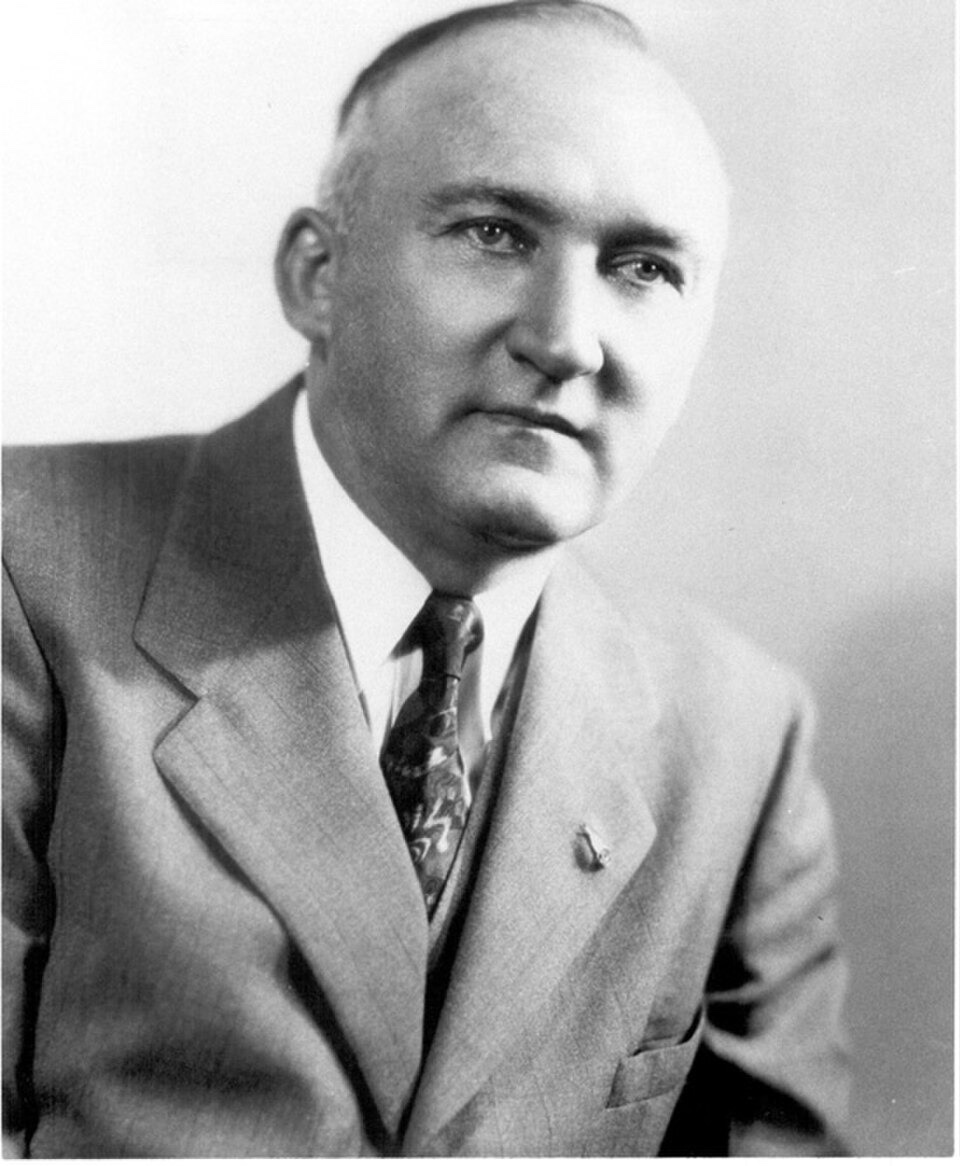
Before there was a Beechcraft, Walter Beech spent the 1920s selling, racing and running Travel Air. Walter Herschel Beech was born on January 30, 1891, on a farm near Pulaski, Tennessee, and built his first glider at fourteen. In 1914 he rebuilt and flew a wrecked Curtiss biplane in Minneapolis. He enlisted in the Army Signal Corps in November 1917, maintained trainer engines in Texas, earned his wings as an enlisted pilot in 1919, and left the service in June 1920 to fly in Kansas.
In 1921 he came to Wichita to fly for the Laird company, demonstrating and racing its Swallow biplane, and rose to general manager of what became the Swallow Airplane Manufacturing Company. Late in 1924 he, Lloyd Stearman and Clyde Cessna set out to form the Travel Air Manufacturing Company, organized in January 1925. Cessna was president, Stearman engineered and Beech sold. In August 1926, with Brice Goldsborough navigating, he flew a Travel Air BW to victory in the Ford Reliability Tour, a 2,585-mile circuit. When Cessna resigned early in 1927, Beech became president. That August a Travel Air 5000 named Woolaroc won the Dole race to Hawaii, and in 1929 the Travel Air Model R "Mystery Ship" won the Thompson Cup at the National Air Races in Cleveland, beating the military's fighters. By 1928 Travel Air was the largest-volume airplane builder in the United States.
In August 1929 Travel Air merged into Curtiss-Wright. Beech became a vice president; Wichita State University's archive records him as president of the Curtiss-Wright Airplane Company and vice president of sales for the parent corporation. The job kept him away from Wichita as the Depression emptied the Travel Air plant. In February 1930 he married Olive Ann Mellor, who had joined Travel Air as a bookkeeper and become its office manager. He resigned in March 1932, and in April the couple founded Beech Aircraft Company in Wichita, with Olive Ann as secretary-treasurer. The first Model 17, the Staggerwing, flew that November. The twin-engine Model 18 followed in January 1937, the company built more than 7,400 military airplanes during the Second World War, and the V-tail Bonanza first flew on December 22, 1945.
Beech fell ill with encephalitis in 1940 and was hospitalized for nearly a year while Olive Ann ran the company. Around 1941 he and attorney Charles Yankey bought the Culver Aircraft Company and moved it to Wichita. He died of a heart attack on November 29, 1950, and is entombed in the Old Mission Mausoleum in Wichita. His and Olive Ann's papers are at Wichita State University, and he entered the National Aviation Hall of Fame in 1977.
The Caldwell Collection at Mustang Field holds four airplanes from companies he led or owned. Our 1927 Travel Air 3000 and 1929 Travel Air B4000 come from his Travel Air years, our 1931 Curtiss-Wright Travel Air B-14-R Speedwing was built under the Curtiss-Wright name after the merger, and our 1940 Culver Cadet LCA comes from the company he later bought.
Our airplanes from this story
- 1927 Travel Air 3000 NC1084
- 1929 Travel Air B4000 N13906
- 1931 Curtiss-Wright Travel Air B-14-R Speedwing N12311
- 1940 Culver Cadet LCA N20988
Part of the story told in The Founders’ Tree, the founders posters in the museum.